What makes great architecture rather than just good? Certainly, I think it has to work on many levels and also include some meaning that lifts it above mere form and function.
Enter Gunnar Asplund, who prior to his conversion to Modernism, was the leader of an exceptionally fine group of Nordic Classicists. He had little interest in Ruskin’s theories of honesty to materials or the expression of structure – for Asplund his aim was to evoke an emotional response and to imbue his creations with a depth of meaning and symbolism.
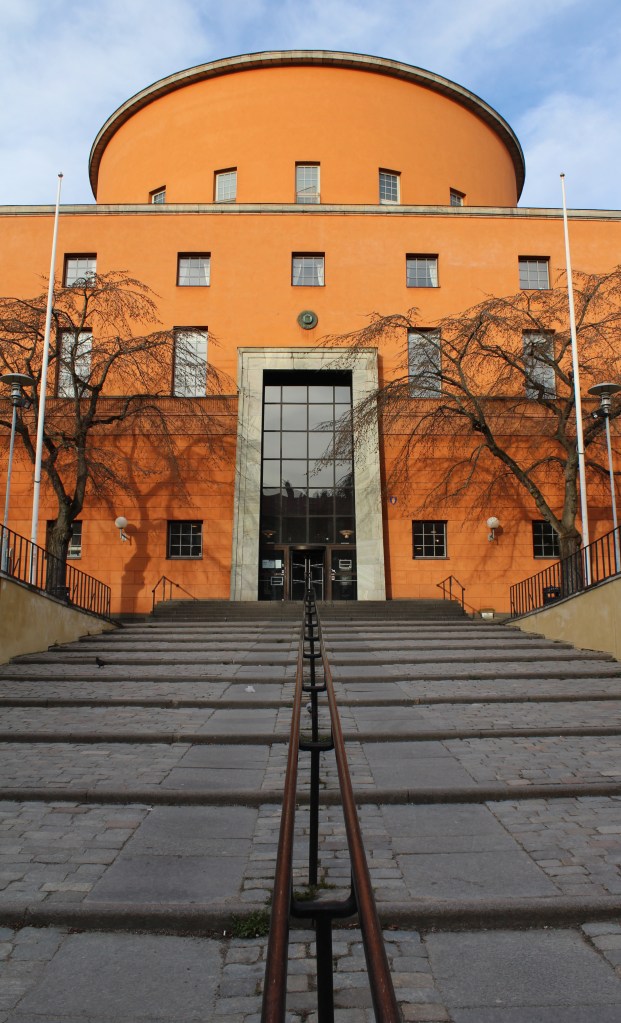
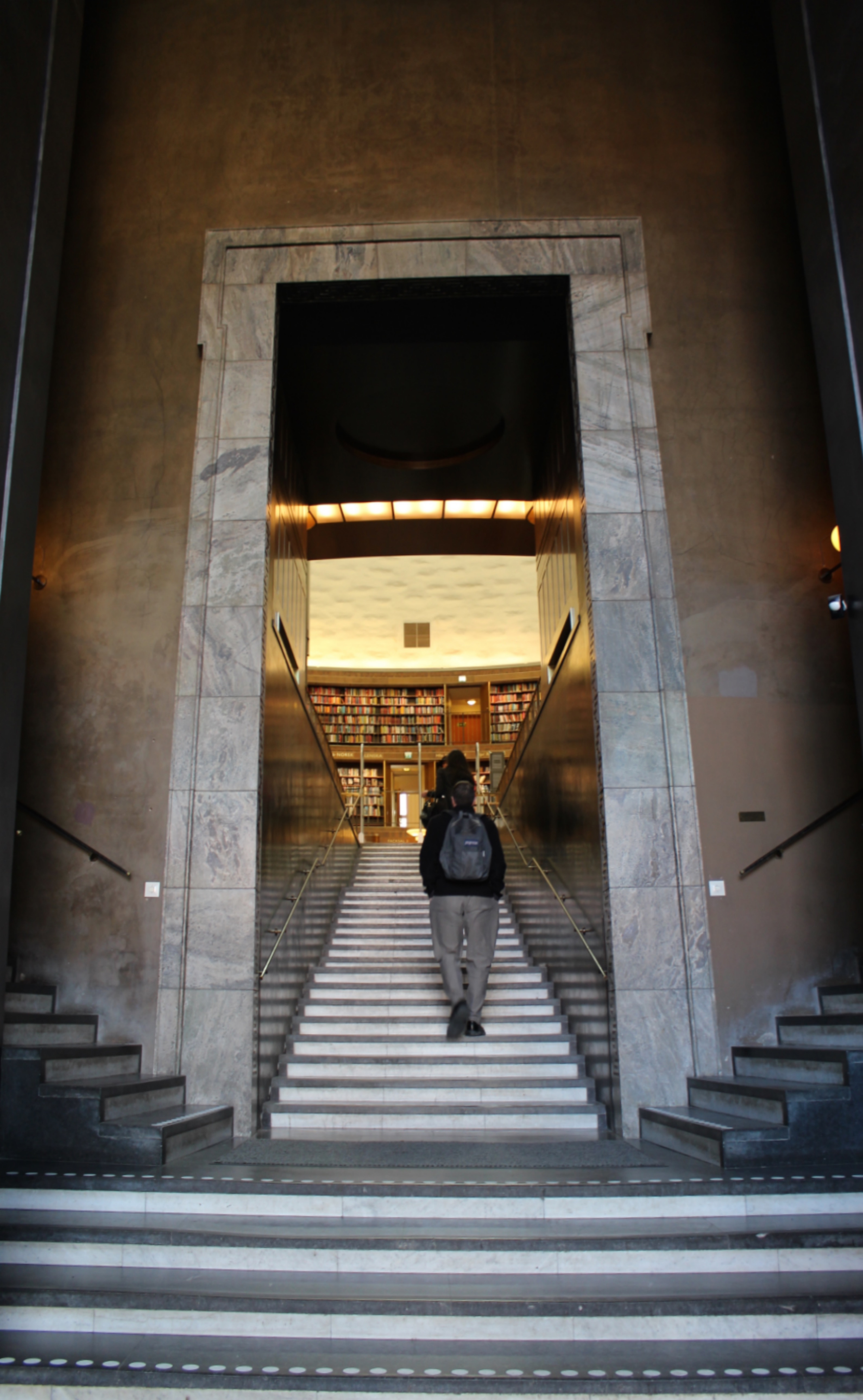
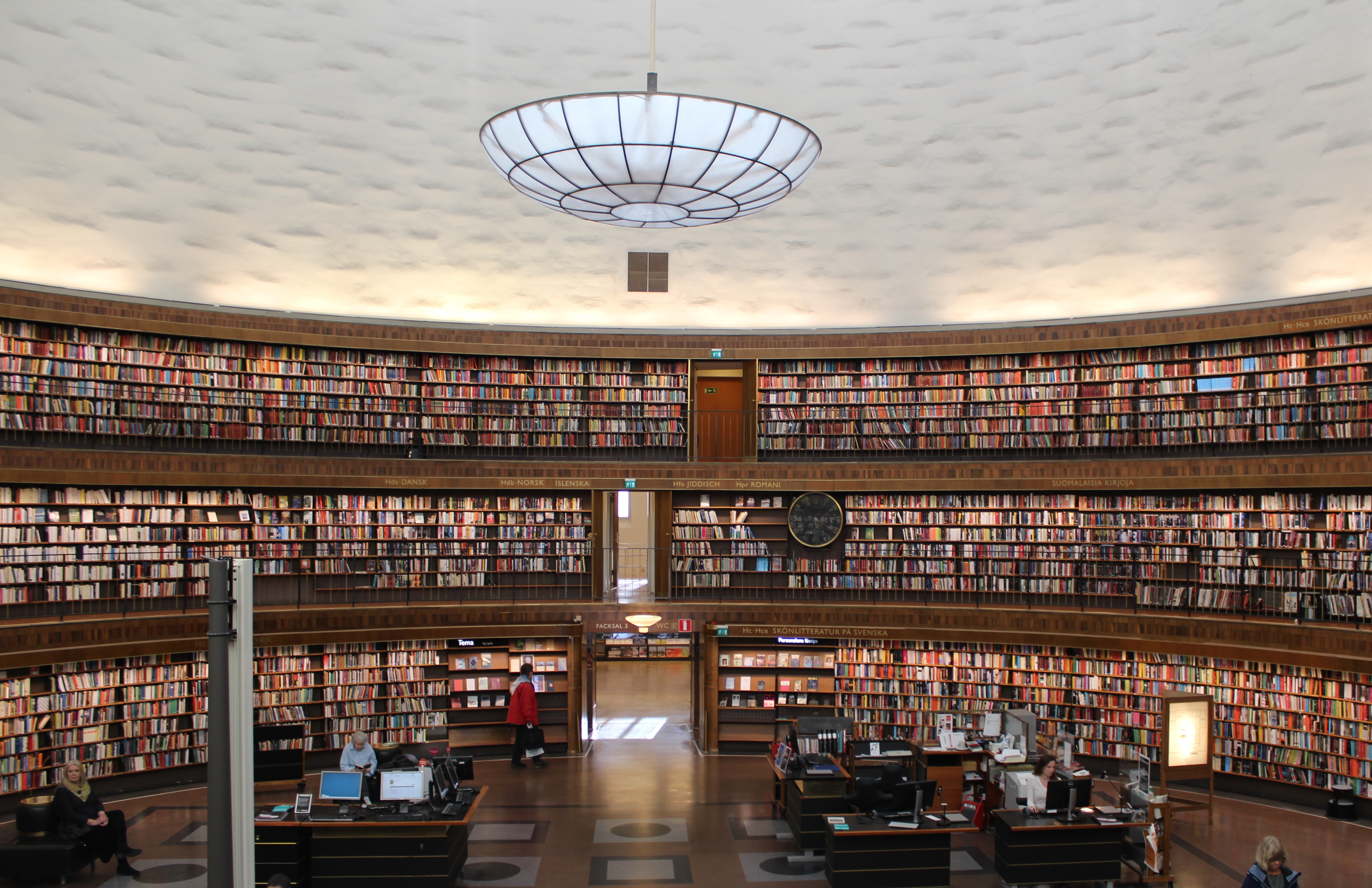
Amongst a group of stunning buildings which he produced during the nineteen twenties, (including his brilliant Woodland Chapel and Lister County Courthouse), his Stockholm City Library (as well as being the first public lending library in Sweden) celebrates the acquisition of knowledge as the key to the progress of civilisation. The building sits on a small hill in the city centre and our journey starts at street level from where we progress upwards on a path to enlightenment, first by a stepped ramp which echoes the ancient streets of classical Greece and Rome, then into the dark entrance with directly ahead, a tall slot like something from an ancient tomb that is cut in the side of the drum, contained within which are three further flights which lead us onwards and upwards towards the light. At the top of these steps we find ourselves in the centre of the drum, surrounded on all sides by books and flooded with daylight from above. We have travelled from the hubbub of the city streets to this calm refuge; from everyday life to a higher plane, from expectation to arrival through constraint and release and from darkness and ignorance into light and knowledge, with Asplund having drawn on our collective architectural memory again and again along the way. Just as importantly, the great drum of books when finally attained (and despite its classical formality), is surprisingly intimate and the library continues to function effectively and provide the gift of knowledge to the citizens of Stockholm almost one hundred years since the first book was borrowed.


It is one of the finest achievements of the Nordic Classical Movement, about which you can read more in my book “Nordic Classicism” which Bloomsbury have now brought out in paperback.
If you don’t want to miss out on future blogs, please follow me on johngooldstewart.com
 John Stewart