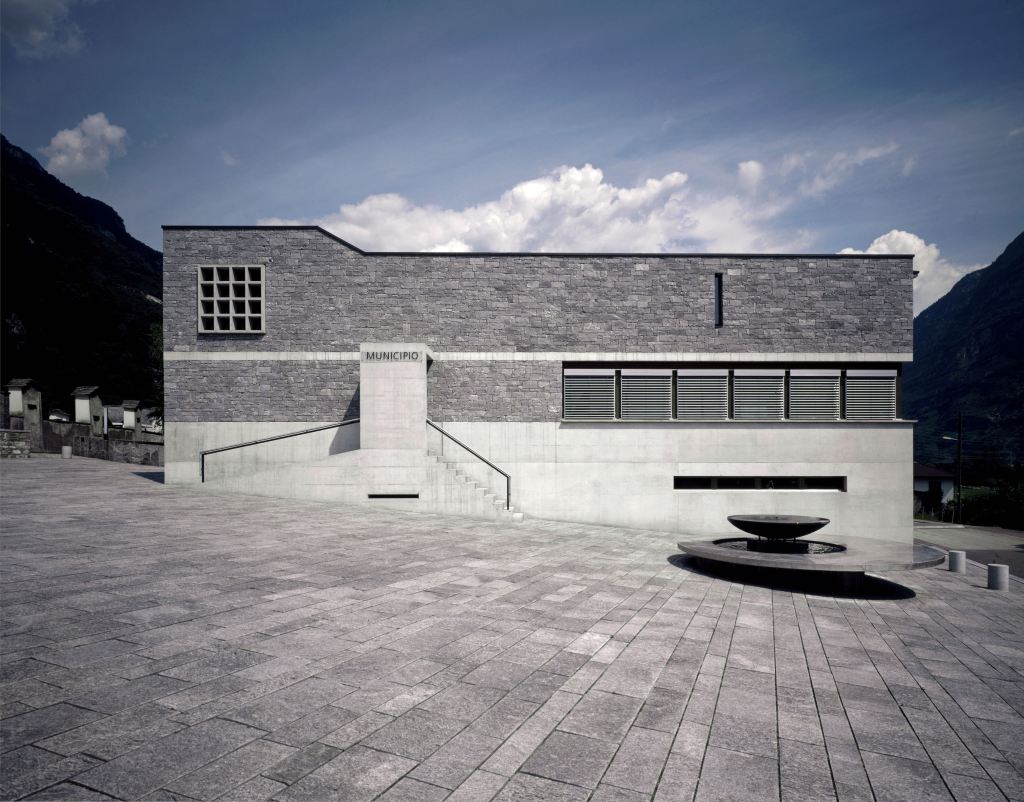
Every so often you come across a little gem. In writing my book on ‘Twentieth Century Town Halls’ I was keen to provide the broadest possible range of case studies in terms of architectural style, location and scale as well as covering every decade of the century. Some periods, notably the 50’s and 60’s, offered an almost overwhelming choice, whereas others were clearly leaner periods for municipal buildings. As a period of economic depression, the early 90’s was notably quiet but I was delighted nevertheless to find the excellent little Iragna Town Hall in Ticino in Switzerland to fill that slot.
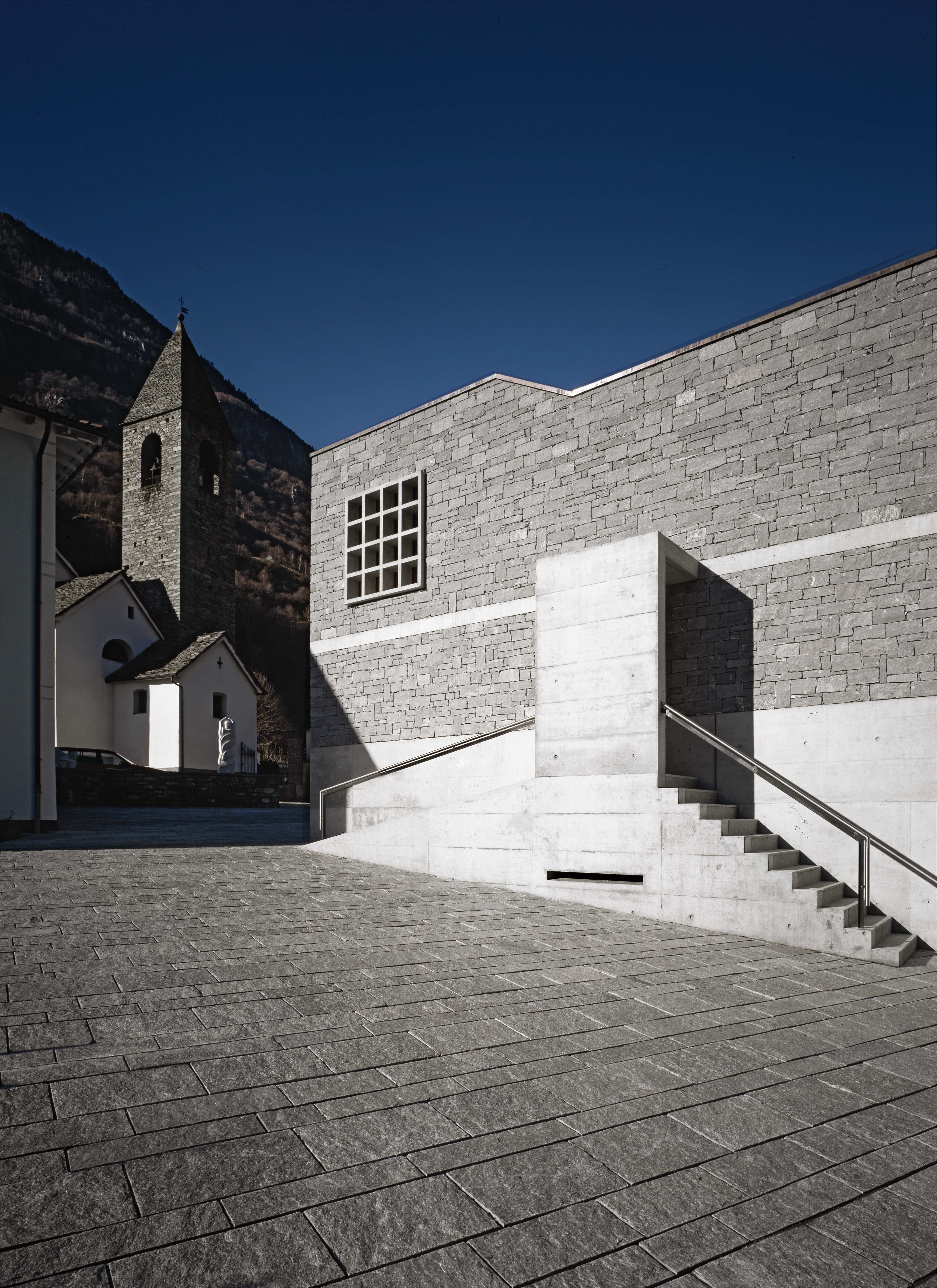
Designed by Raffaele Cavadini in 1991, this is a competitor for smallest building in the book and yet it is so thoughtful and convincingly rooted in its community that it stands comparison with Saynatsalo, Stockholm and Toronto. The town which it serves is built almost entirely of wood from the local chestnut forests and granite from the surrounding mountains and it sprawls across the River Ticino and then up the hillside, with a string of small public spaces marking the route up to the local church. Cavadini’s site is adjacent to and below the church and by placing it at ninety degrees to the road, he has created a new civic square adjacent to his town hall which also acts as a forecourt to the church. Rather than adding a competing tower, by using the same materials he instead ‘borrows’ the campanile of the church to symbolise and unite both church and state.
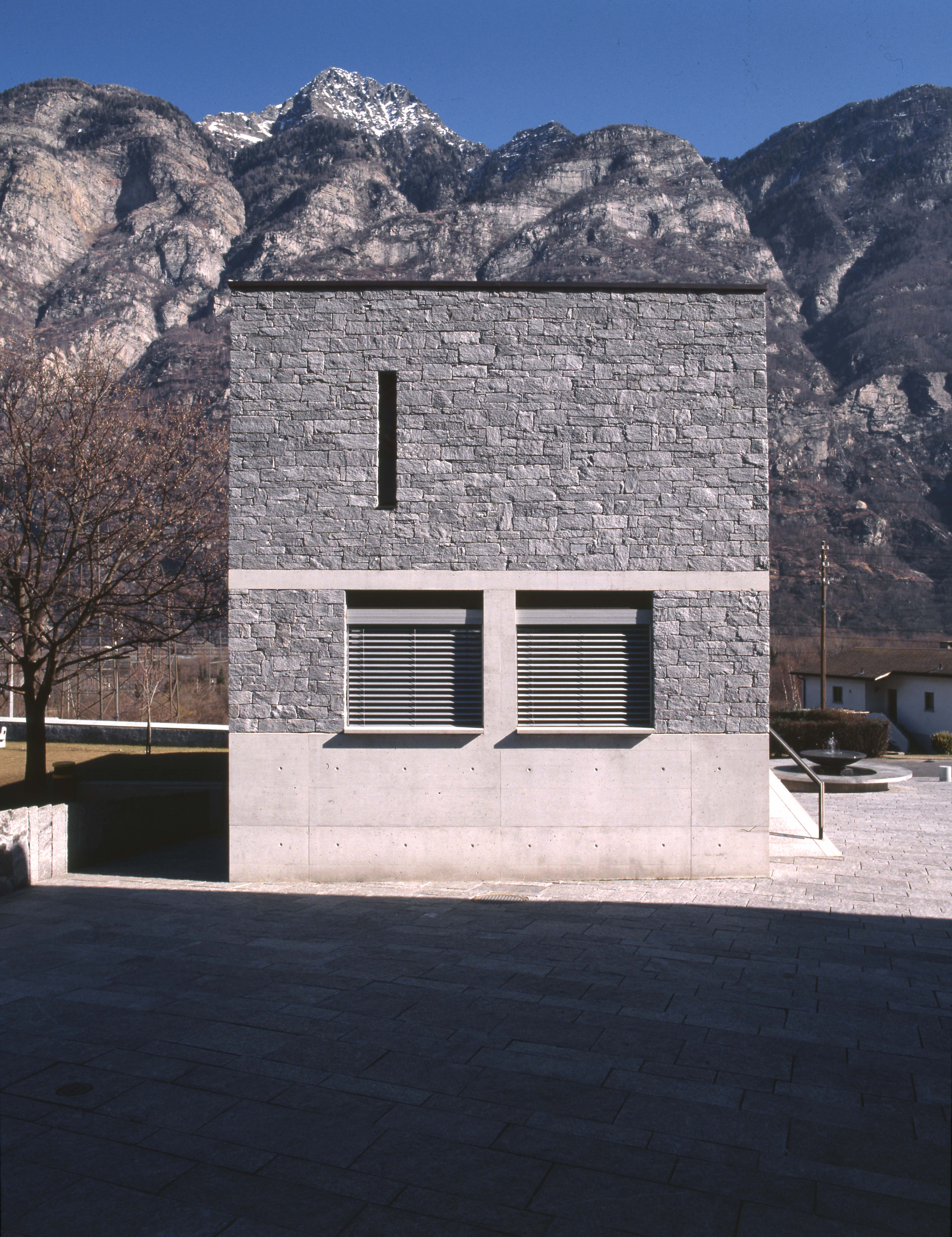
He adopted the local granite, split and laid in the local tradition, but here set on a deep concrete base which echoes the rendered plinths of the local houses, with concrete also used to divide the upper floors and mark the entrance. The modest council chamber is acknowledged externally by the concrete gridded window and a slight step up of the parapet, which visually flags the church above and symbolically places this most important civic space nearest to the most important spiritual space within the town. Every element is exquisitely detailed with an unfaltering rigour in a way which successfully celebrates both the history and the contemporary success of the community.
Having completed the town hall, Cavadini was then commissioned to clear the other small squares of cars and reinstate them as public spaces.
You can read more about Iragna and many other outstanding Town Hall buildings in my book “Twentieth Century Town Halls” which has been published by Routledge.
If you don’t want to miss out on further blogs then please follow me on johngooldstewart.com
 John Stewart