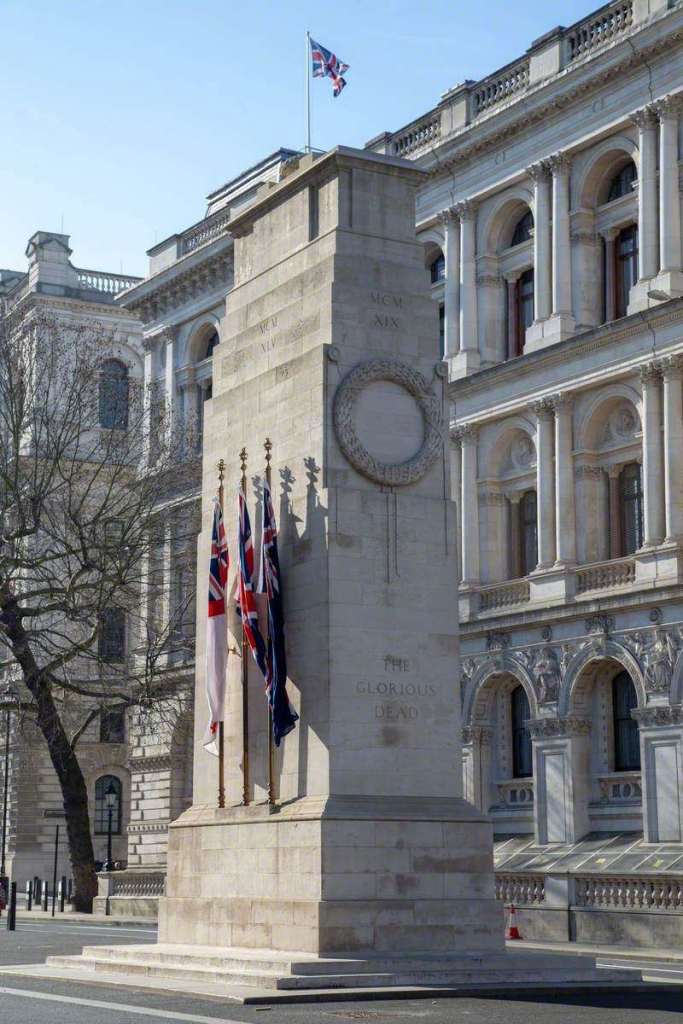
I was watching one of the Remembrance ceremonies this week around Lutyens’s magnificent Cenotaph (above) and it reminded me of the extraordinary work of those architects who were appointed by what was then the Imperial War Graves Commission to commemorate the British Empire’s dead of the First World War. The best of these monuments are surely those by Edwin Lutyens but the ‘Elemental Classicism’ that he employed in the Cenotaph and elsewhere was first developed by Herbert Baker in South Africa in his memorials in Cape Town and Kimberley. The three principal architects of the IWGC were Lutyens, Baker and Reginald Blomfield and they were responsible for most of the monuments in France and Belgium, but there were several other architects who also contributed including Charles Holden, Robert Lorimer and the brilliant Glaswegian architect, John James Burnet. After being appointed by the IWGC, all this group then picked up numerous further commissions for town and city memorials.
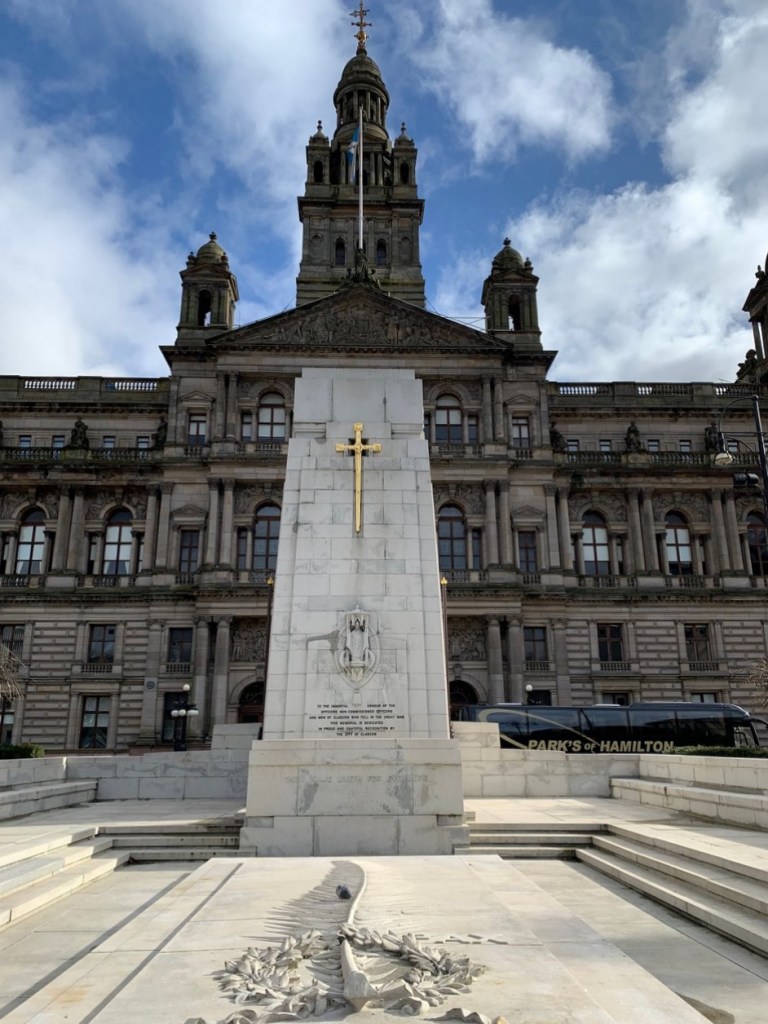
In Glasgow, as elsewhere, there was great debate as to a suitable monument to their war dead which ranged from a new commemorative concert hall to re-naming Sauchiehall Street “Victory Street”. In the end, the City Council decided on a monument in George Square in the very centre of their city and interviewed Lutyens, Lorimer and Burnet for the commission. Lutyens stated that he was too busy and offered a copy of the Cenotaph, and as Lorimer had subsequently been appointed to design the Scottish National War Memorial in Edinburgh Castle, local boy Burnet was chosen. His solution (below) was an equally-beautifully proportioned obelisk and catafalque which further developed Lutyens’s design. His original intention was to create a small court of honour, below ground level in front of his pylon, which would provide a place of tranquillity right in the heart of the city, but sadly, the budget, which had been raised by public subscription, wouldn’t stretch that far.
As in London, it provides the setting for remembrance services every year and unfortunately, with the passing of almost 100 years, fewer and fewer people now realise that Burnet placed his monument at the east end of George Square specifically so that those who gathered in the square would be looking towards the battle fields of France and Belgium while they commemorated those who had lost their lives there.
You will be able to read more about JJ Burnet’s life and architecture in my joint biography of Glasgow architects JJ Burnet and James Miller, which is due to be published in 2021.
If you don’t want to miss out on further blogs then follow me on johngooldstewart.com
 John Stewart