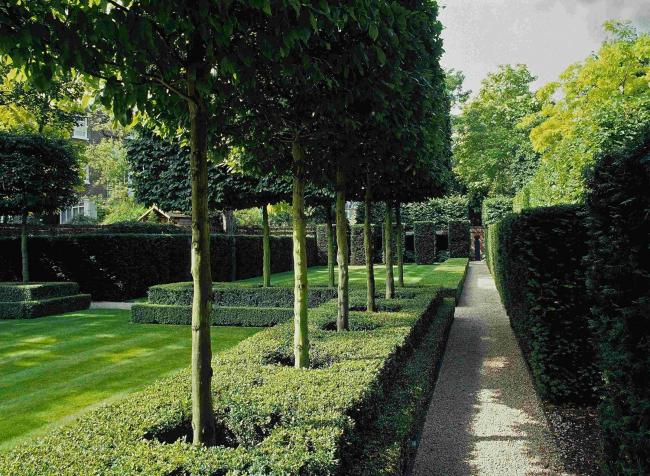
Non-architect friends occasionally ask me who my favourite architect is – a question I find impossible to answer – but when it comes to garden designers, for me, that’s an easy one – Luciano Giubbilei. Growing up in Siena (and fortunately avoiding the career in banking that he once appeared destined for) the Renaissance gardens of Tuscany finally worked their magic upon him and he moved to London with his English girlfriend to study garden design. After graduating, he quickly established his own design practice and with a series of stunning London gardens (above and below) he soon built an international reputation for the quality of his work.
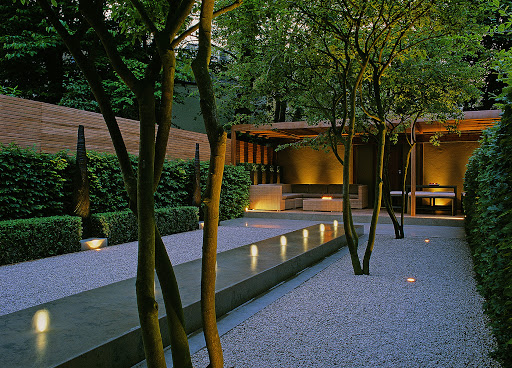
In terms of garden design, what he offered was rather shocking as many of these early London gardens were devoid of flowers, with hedges, topiary and often sculpture or water taking central stage. They were sophisticated and also incredibly restrained, with green (in all its hues), often providing the only colour, and yet, they were rich in form and texture and enlivened by ever changing light during the day and dramatic artificial lighting by night.
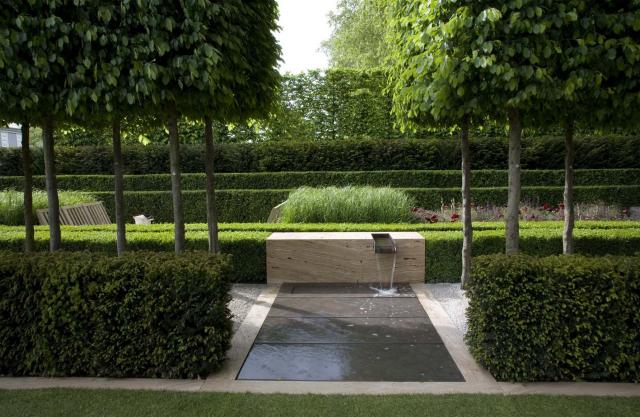
They weren’t child-friendly, family-centred spaces – other designers provided those, if required – what Luciano offered was a retreat into peace and tranquillity in the centre of one of the world’s largest and busiest cities – an antidote to the daily chaos of city life. His first Chelsea Flower Show garden was hugely anticipated – would he include flowers? Could he include flowers? (above) The answer was yes and he brilliantly partnered the sophistication of his layered hedges and topiary with deep red paeonies and blackcurrant irises in a mist of salvia and grasses to win his first Gold Medal.
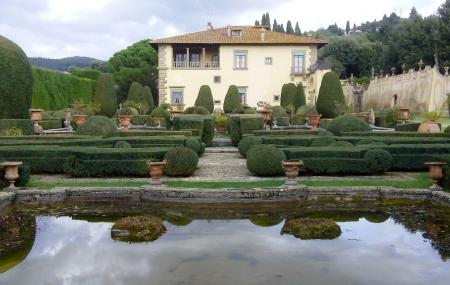
Apart from the sheer pleasure of his gardens, what also fascinates me is that he is quite open about the huge influence that those Tuscan Renaissance gardens had upon his work and when you look at the gardens of the Villa Gamberaia (above) or the Palazzo Piccolomini, you find all the elements of a contemporary Luciano Giubbilei garden. He has taken this historic language of gardening and used it to create something that is completely of our time. His success has brought him opportunities to work in other climates and cultural contexts – an olive grove in Morocco, underplanted with grasses and roses, a roof garden in Geneva and a desert garden on the island of Formentera – in all of which he has responded with his usual combination of imagination, sensitivity and restraint.
His books ‘The Gardens of Luciano Giubbilei’ and ‘The Art of Making Gardens’ are available from Merrell Publishers.
If you don’t want to miss out on further blogs then follow me on johngooldstewart.com
 John Stewart