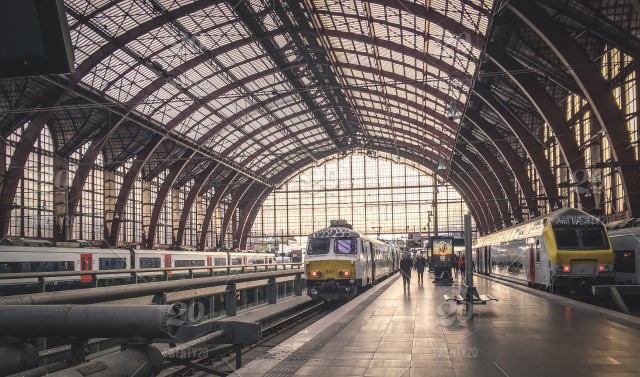
I was watching the rather strangely titled “The Architecture the Railways Built” the other night as it included both James Miller’s brilliant Wemyss Bay Station (see Blog 16) and the new Blackfriars Station in London, which was delivered by Jacobs architecture and engineering team, and it reminded me of one of my other favourite stations. I was due in Antwerp on business and got the train from Schiphol Airport, arriving in Antwerp Station totally unprepared for the architectural magnificence which awaited me. As we slowed to a halt, the first thing that caught my eye was the beauty of the graceful glass and steel vault which enclosed the platforms (above). It is one of those deceptively simple structures which on closer examination revealed not only beautiful detailing but also a very subtle and elegant transition from the curve of the vault to the vertical glazing which formed its side elevations.
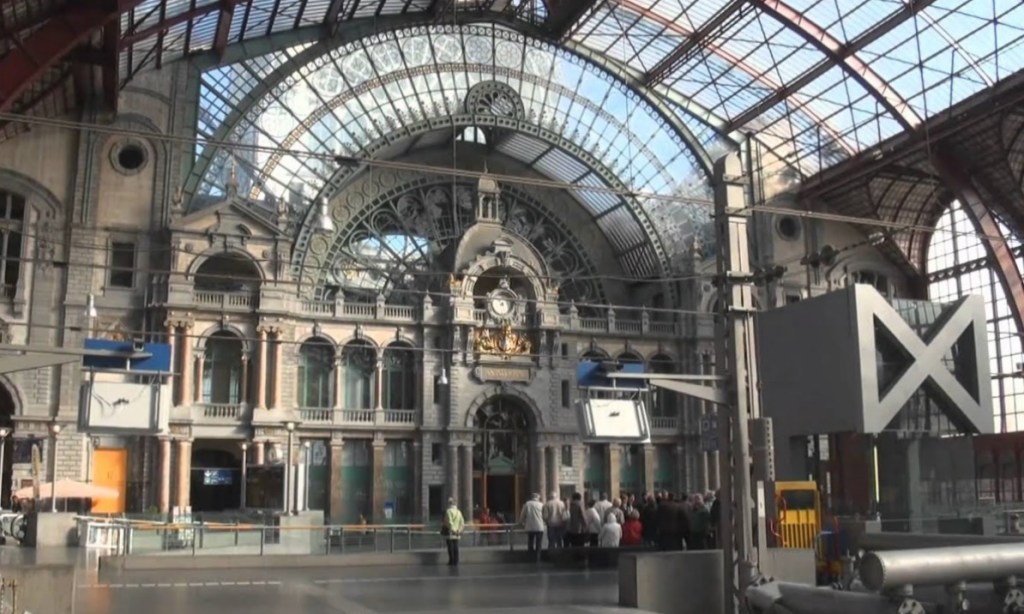
As I then headed for the exit, I was then almost stopped short by the exuberance of the vast Flemish Renaissance main station building itself (above) complete with its central dome and station clock above the city’s coat of arms in gold and framed ‘Antwerp’, hovering over which, the curve of the vaulted roof now provided a frame to this stone centrepiece. I was already mentally placing Antwerp in my list of favourite stations, when I passed through the door into the main station building. I thought by now I’d witnessed the whole opera but soon discovered that I’d only seen the overture to the ticket hall (below).
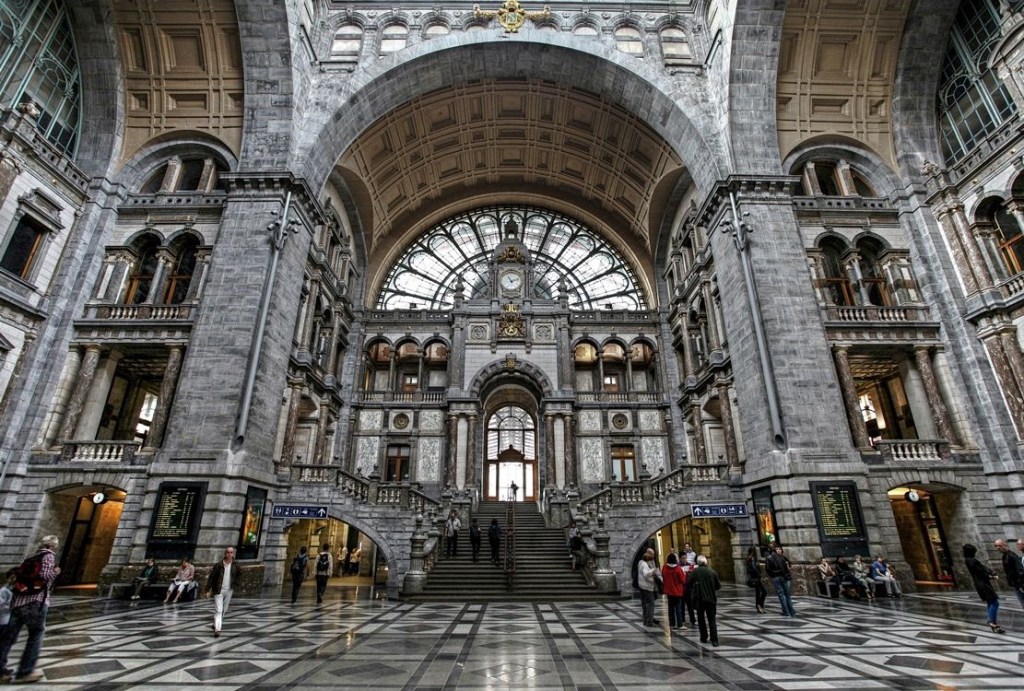
This must be surely one of the most stunning open-access public spaces in the world, which, entirely as intended, leaves the unsuspecting train traveller in a state of shock and awe. It’s the kind of architecture (by Louis Delacenserie 1838-1909) normally reserved for palaces, cathedrals or more recently town halls, and while it succeeds overwhelmingly in its aim of expressing the city’s wealth and power, it also provides its citizens with what must be one of the most uplifting architectural experiences of any daily commute.
Incredibly, (having suffered considerable damage to the steel structure during WW2) this was once all threatened with demolition, but fortunately, was instead restored in the 1980’s, and then at the turn of the century, converted to allow through trains as well, via a tunnel below the existing station, with the original central platforms and tracks removed to provide passenger access to low level platforms (below). While lacking the sophistication of the original building in its design and detailing, this bold and yet sensitive insertion has both brought the station into the 21st century and guaranteed its survival.

If you don’t want to miss out on further blogs then follow me on johngooldstewart.com
 John Stewart