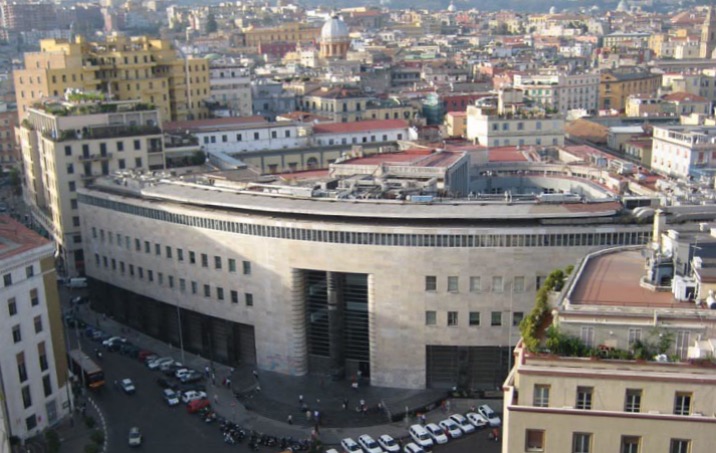
This is another of those buildings that you won’t have come across on your architecture course. There are numerous reasons for this, the main one being that it is categorised as ‘Fascist Architecture’ – which is true – although it still manages to function quite successfully as Naples central post office, despite the tag. It is one of numerous fine buildings in Italy from this period which deserve both greater study and appreciation. While there has been some interest in Mussolini’s new towns such as Littoria and Sabaudia and of course Guiseppe Terragni’s work (Blog 7 – which is so outstanding that he has almost been forgiven for being a committed Fascist), there is also a wealth of excellent architecture from the 1930’s including the work of Adalberto Libera and Giuseppe Vaccaro (1896-1970), who designed this post office.
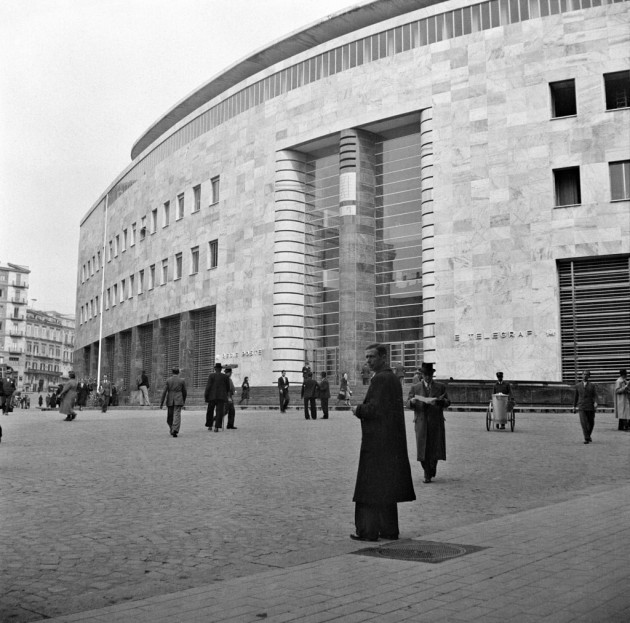
Opened in 1936, this is an excellent example of how to insert a large modern building into an historic urban environment. It is an important civic building and its implied central portico with the single column in black granite and grey marble communicates this quite effectively without the building rising above its neighbours. Similarly, the scale of the great curved elevation could have been overpowering and, while it reflects the status of this institution within the city, by curving back from the square in front of it (also designed by Vaccaro) it defers to the public space, rather than crushing it.

The entire ground floor on either side of the entrance is fully glazed and like Terragni’s Casa Del Fascio in Como, responds to Mussolini’s demand for his public architecture to be ‘like a glasshouse’ – both open to its citizens and with nothing to hide. This offers the people of the city a view of the interior, but more importantly, provides views out and natural light to the main public halls on either side of the triple-height entrance hall. These spaces are simply exemplars of civilised public life.

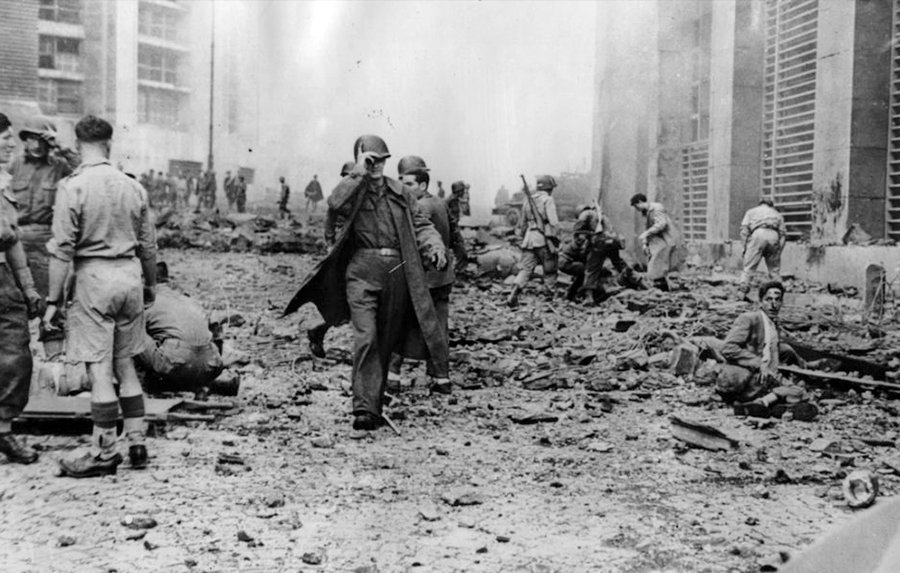
The detailing throughout is exquisite and one has to marvel once more at the degree of sophistication which these young Italian architects brought to what was then the new language of Modernism. Vaccaro designed everything from the furniture to the clocks and signage and fortunately, (like Antwerp Station) despite being at the heart of events in World War II, it survived, has recently been beautifully restored, and continues to serve its original purpose. It’s just another (very fine) example from one of the great periods of Italian architecture.
If you don’t want to miss out on further blogs then follow me on johngooldstewart.com
 John Stewart