
Louis Kahn again, I’m afraid folks – he is just such an interesting Modern architect. Unlike most of his contemporaries, much of his work is formal in its planning, often uses traditional materials and has a very obvious fascination with mass rather than transparency. He made no secret of his interest in the architecture of the past, whether it was the brick arches and concrete vaults of ancient Rome or the Euclidean geometry of its Renaissance palaces. He also, rather unusually, had a particular interest in the castles of Scotland, which proved to have a significant impact on his architecture.
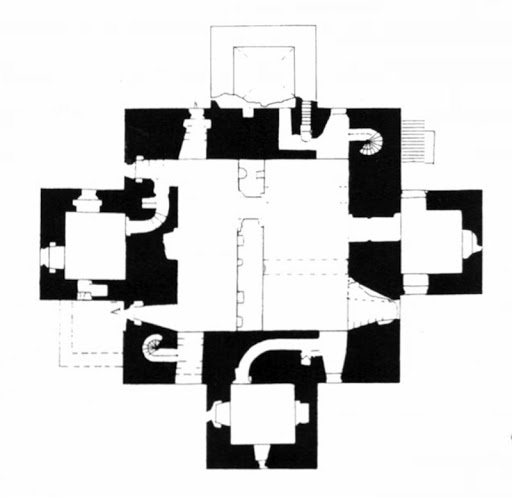
What fascinated Kahn was the great thick defensive stone walls of the castles and as their planning developed, the use of the wall, not just to enclose space in the centre of the castle, but also to be carved out to provide spaces within the thickness of the wall itself. He perceived this as a hierarchy of minor ‘servant’ spaces within the walls, which served the major spaces of the castles which the outer walls enclosed and protected, and he used this model again and again in his own work from his Richards Laboratories in Philadelphia to his Phillips Exeter Library (below).
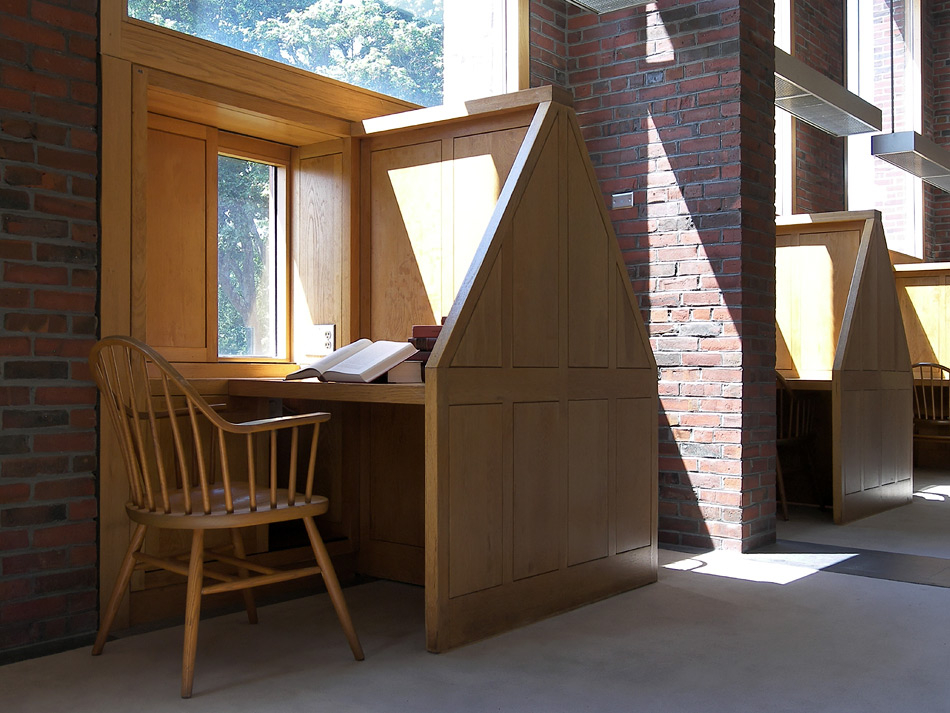
Having then identified that the enclosing walls of a space could themselves provide a number of functions in addition to keeping the enemy out and letting light in, he started to use the depth of his external walls or screens to provide intimate, intermediate spaces on the very edges of his buildings, at the boundary between inside and out.
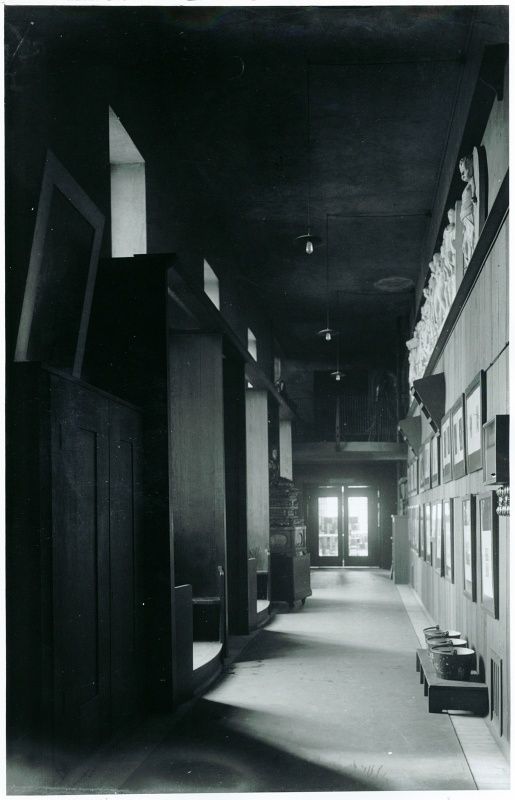
Interestingly, Charles Rennie Mackintosh, who had probably visited a few more Scottish castles than Louis Khan, also played a similar game in his houses and also in the delightful window seats which until recently enlivened one of the corridors in his magnificent Glasgow School of Art. The neat row of fire buckets also tell a tale….
If you don’t want to miss out on further blogs then please follow me on johngooldstewart.com
 John Stewart