Willem Marinus Dudok
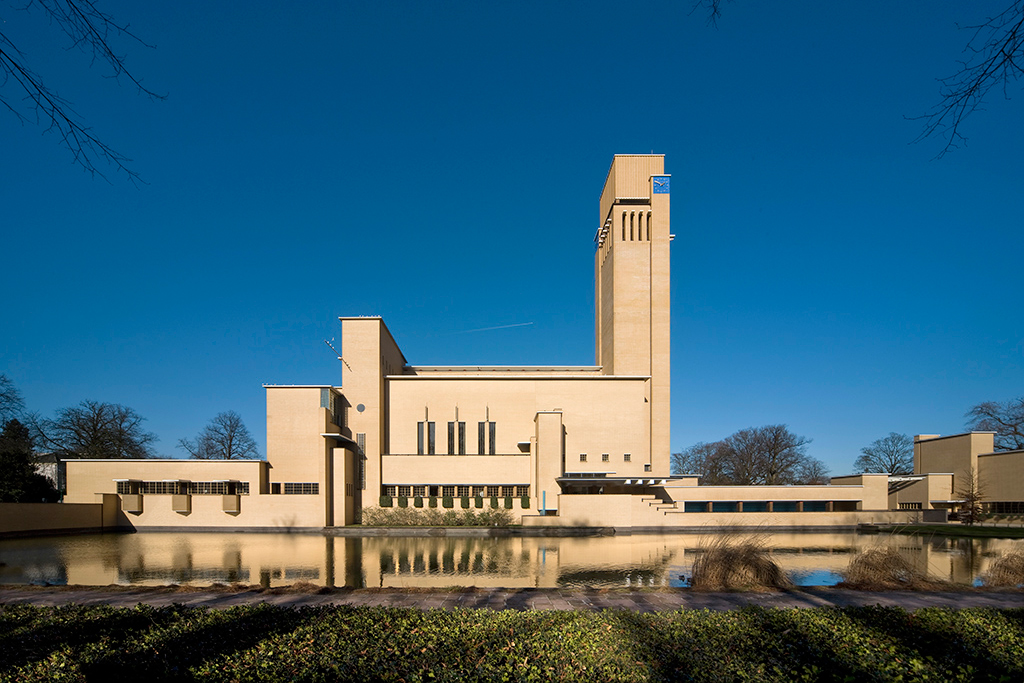
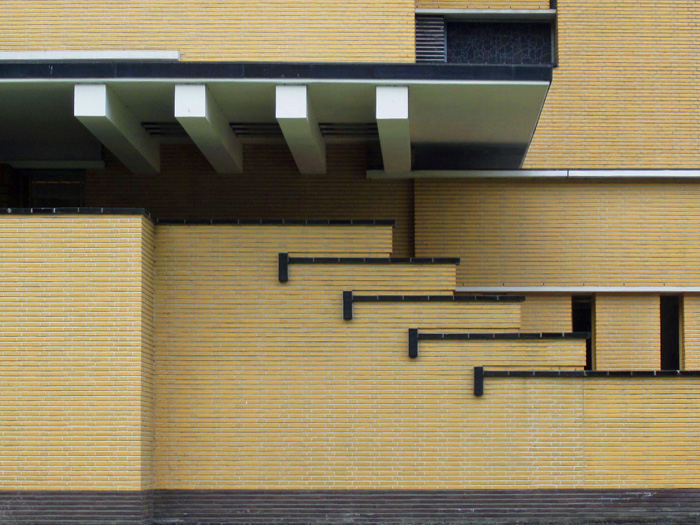
Dutch architect Willem Dudok’s Hilversum Town Hall, which he completed in 1931, is widely recognised not only as an extremely important example of modern architecture, but unusually within that genre, a finely judged and sublimely beautiful composition. Though not a member of the De Stijl group, Dudok was certainly influenced by them and the two-dimensional images of the building could easily be read as a work of Piet Mondrian. Frank Lloyd Wright is somehow also in there too with the Wasmuth Portfolio of his prairie houses and Larkin building having been published in Europe in 1910.
Famous as this building is, few people realise that Dudok was actually the local authority’s architect in Hilversum – appointed as their Director of Public Works in 1915 – rather astonishingly – after a 10-year career in the army. His first task after his appointment was to provide a new plan for the expansion of the town which was fast becoming a popular commuter base for Amsterdam. Such was the rate of growth that you could almost consider 20th century Hilversum to be a new town.
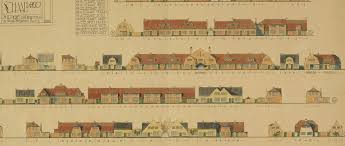
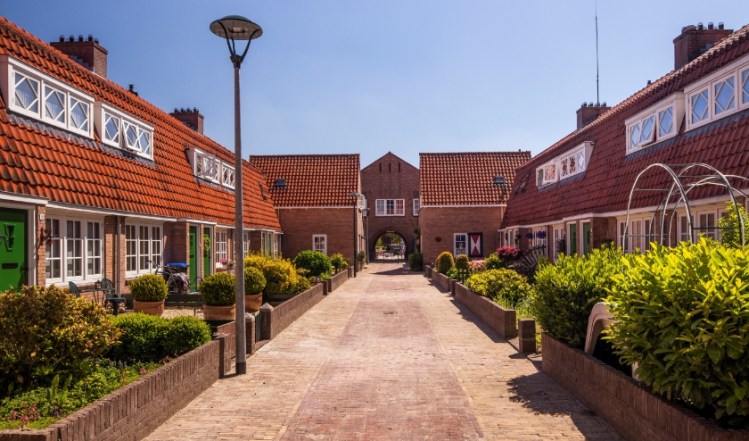
Dudok’s town planning strategy was that the town as a whole should have a degree of consistency within its architecture, which he developed as something of a suburban Amsterdam School style in brick, and within this overall framework, each district of the town should also have its own character. Dudok used the public buildings in each area to both set the standard for design and to provide the lead for the architectural characteristics which were then to be followed in the housing.
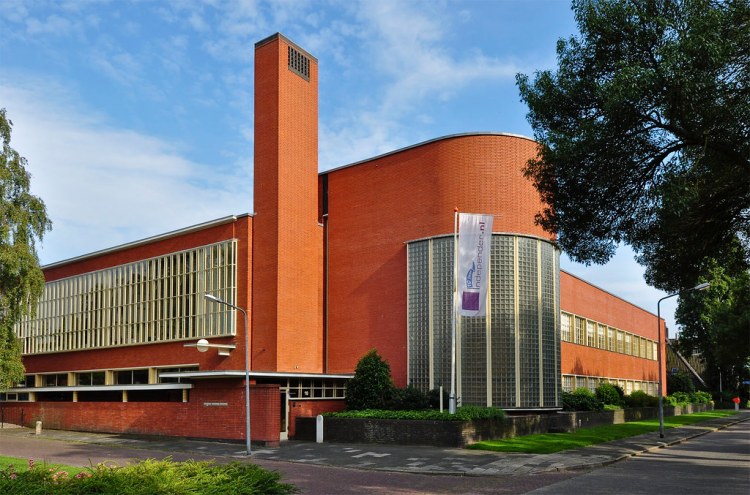
The result was quite an extraordinary range of public building designs which vary from the crisp De Stijl of the town hall, through typically quirky Amsterdam School variants, to quite traditional solutions below clay tiles and even thatched roofs. Many of the buildings he designed himself and while variations within the rules were encouraged, he ensured that there were no departures from his plan. The result is an extremely desirable small garden city which is just as popular now as when it was constructed.
In 1928, Dudok realised that with the design of the town hall underway, he could no longer fulfil his role as Director, from which he resigned with the Council’s support, to become project architect for the town hall, into which he poured all his energies, thus creating the masterpiece which we still enjoy today.
If you don’t want to miss out on further blogs then please follow me on johngooldstewart.com
 John Stewart