The Hoover Dam
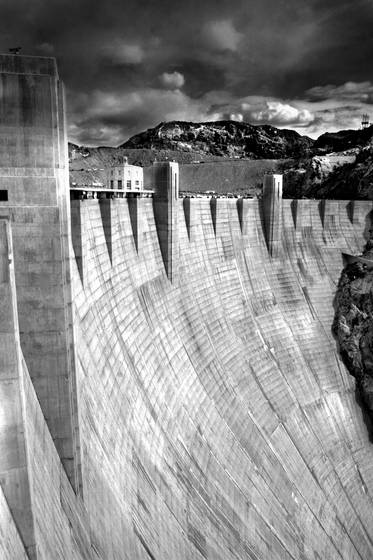
Now and then, engineers produce art of the very highest standard – Brunel’s Clifton Suspension Bridge, Calatrava’s World Trade Center Transit Hub or Joseph Paxton’s Crystal Palace and probably my all-time favourite engineering project – the magnificent Hoover Dam on the border of Nevada and Arizona. Originally known as Boulder Dam, it was constructed to hold back the mighty Colorado River thus providing hydro-electric power, irrigation water and flood control.

Although it became identified as one of the great public projects of the Depression years, it had in fact been in the planning for decades before its budget was approved and work finally started in September 1930. Such was the scale of the project that Boulder City was planned to be constructed nearby as a model urban settlement and a new railroad was built from Las Vegas simply to serve the site. It proved a magnet for the unemployed and long before permanent accommodation was completed ‘Rag City’ – a vast tented encampment – sprung up nearby, where the first workers and their families lived without running water or sanitation in summer temperatures that hit 48oC.

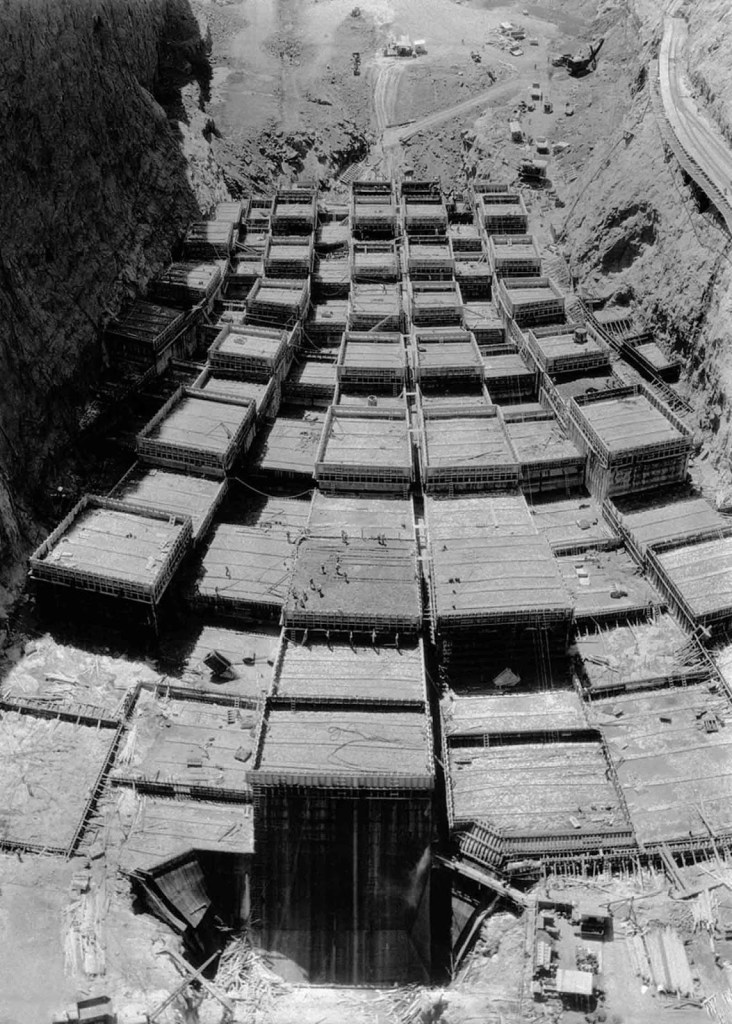
The first construction task was the diversion of the Colorado River, via two smaller dams and four immense drilled tunnels through the rock river banks and so it wasn’t until 1933 that work on the dam itself began. Its design had been carried out by the Federal Bureau of Reclamation led by their Chief Design Engineer John L. Savage who developed the great elegant sloping curve of the concrete arch gravity dam that we know so well today, not least, from Ansel Adams heroic black and white photographs. His engineers calculated that were the dam to be constructed in a single continuous pour of concrete, it would take around 125 years to cool and cure, so instead it was poured in blocks, with each block cooled during construction with refrigerated river water, with the total amount of concrete used capable of building a two-lane highway from San Francisco to New York.
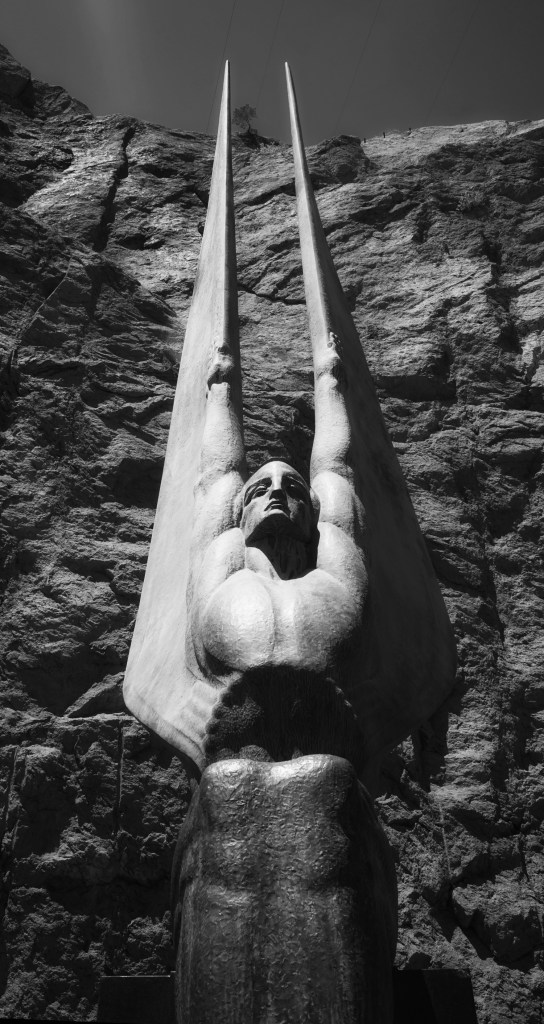
While the dam’s extraordinary power and beauty is derived from the contrast between its perfect man-made curve and the rugged sheer walls of the surrounding rock, it was raised to the sublime by Los Angeles architect Gordon B. Kaufman’s exquisite Art Deco detailing and the addition of several sculptures by Oskar C.W. Hansen, including his two magnificent bronze winged figures and his memorial to the 112 workers who had been killed during construction. Completed in November 1933, it remains one of the great wonders of the modern world.
If you don’t want to miss out on further blogs then please follow me on johngooldstewart.com
 John Stewart