Gothic Revival Architecture
My latest book is on ‘British Architectural Sculpture 1851–1951’ (yes – I know – good luck finding a publisher for that one) which has required me to really study the Victorian architecture which makes up the first half of the book in some depth for the first time. I thought that I already had a pretty good feel for this period – Pugin – Ruskin – Morris – The Arts and Crafts Movement and then before we know it, we’re in the Twentieth Century and Modernism is lumbering into view. What I’ve found is that this is pretty much the taught history of 19th century architecture – largely as an introduction to Modernism and that actually – I didn’t have a clue about most of what was built during Queen Victoria’s reign.
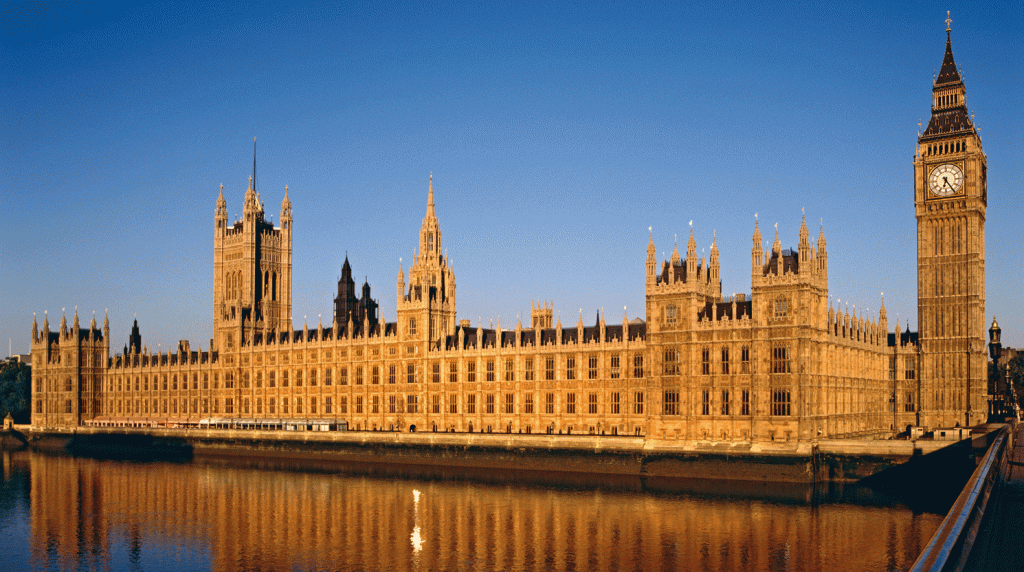
The period is usually categorised as ‘The Battle of the Styles’ between the Greek and Gothic Revivals and while the Greek put up a pretty good fight in commercial, country house and public architecture (and won resoundingly in other countries such as the USA, France and Germany) Gothic soon became the very clear winner in Britain. Pugin characterised it as ‘God’s Architecture’ and his work with Charles Barry on the rebuilding of the Houses of Parliament cemented it in the public psyche as the most appropriate style of architecture for an increasingly pious Christian country. (Classical architecture in contrast, was tainted by its Pagan roots not to mention its association with the immorality of the preceding Georgian period).
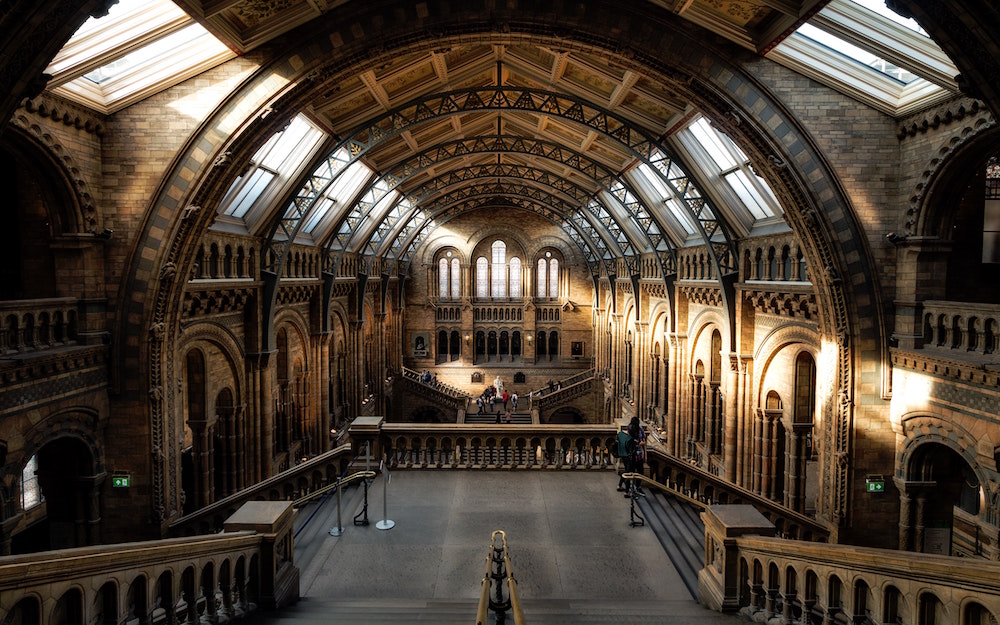
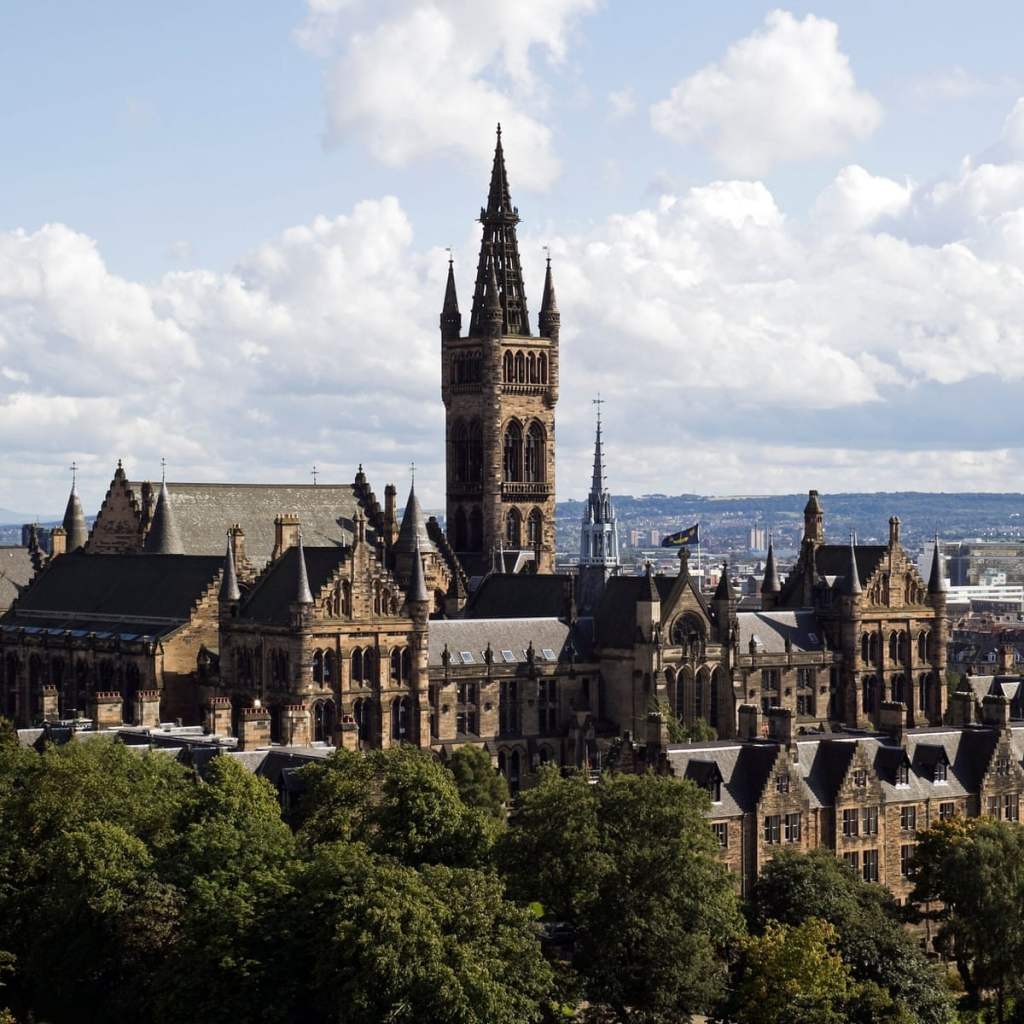
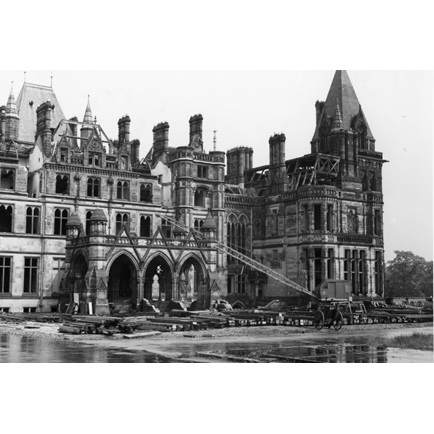
Now while most Victorian architects were happy to knock out a design in either Gothic or Greek depending on their clients’ preference, there were two giants of the profession who completely dominated the Gothic Revival, namely George Gilbert Scott (1811-78) and Alfred Waterhouse (1830-1905). Scott, as befits the period, established his reputation as the leading designer of workhouses, before going on to design the Albert Memorial, the University of Glasgow and the Midland Grand Hotel at St Pancras Station (below) as well as numerous other public buildings and a pretty large proportion of all the Gothic Revival churches throughout Britain and its Empire. Waterhouse was if possible, even more prolific during his long career, completing Manchester Town Hall, the Natural History Museum in London (above) and the vast Eaton Hall in Cheshire as well as several hundred further churches, offices, hospitals, university buildings and country houses.

Personally, I’ve never felt drawn to the work of either architect – their buildings, while often exceptionally fine, are just too redolent of Victorian values and the stark inequalities of that age to be attractive to most people these days, and here lies the problem when they constitute so much of our architectural heritage. Waterhouse’s Eaton Hall, numerous other country houses, churches and hospitals have already been lost, many are currently at risk and indeed it took a spirited campaign by John Betjeman some years ago to save the extraordinary (and now beautifully restored) Midland Hotel from demolition. Love them, quite like them or loathe them, they are a crucial part of our rich architectural heritage and national history and deserve to be treasured and treated as such.
If you don’t want to miss out on further blogs then please follow me on johngooldstewart.com
 John Stewart