‘A Pattern Language’

My last blog considered the Farnsworth House as an experimental domestic building which both celebrated 20th century technology and offered a new way of living. Mies van der Rhoe re-examined and re-engineered every aspect of domestic life to produce one of the most radical reinterpretations of the ideal home. It got me thinking about working in the opposite direction – starting with elements of the home which have a timeless appeal and a positive psychological effect and I was soon reminded of Christopher Alexander’s brilliant book – “A Pattern Language”.

This was actually the second book of a series, which started with “A Timeless Way of Building” and though published in 1977, because of its nature, is still entirely relevant today. It is less a manifesto and much more a series of observations of what helps to create civilised and successful towns, cities, neighbourhoods and homes. It describes 253 timeless ‘Patterns’ which Alexander and his colleagues identified, which when combined, can be used to create a rich ‘Pattern Language’ or tapestry in which minor patterns are inter-related and form part of larger patterns.
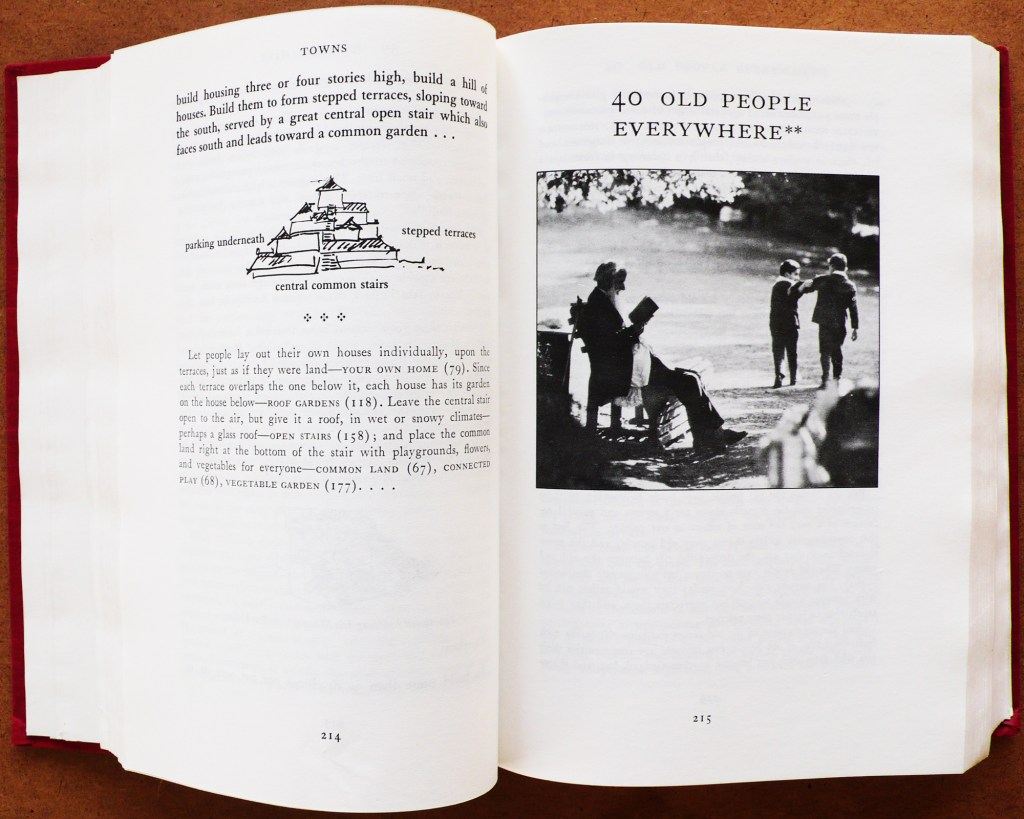
The patterns range from the scale of The Distribution of Towns, City Country Fingers and Agricultural Valleys, through Community of 7000, Identifiable Neighbourhood and Scattered Work, right down to the minutiae of domestic life such as Bed Alcove, Children’s Realm and Interior Windows with each pattern based on what seems to have worked over the centuries (and even scored as to how confident Alexander’s team are of it holding good consistently). On one level it can read a bit like the kind of hippy tract that might well have emerged from California in the 70’s but get beyond that and there are many words of wisdom, based not on trial and error but on observed consistent success.
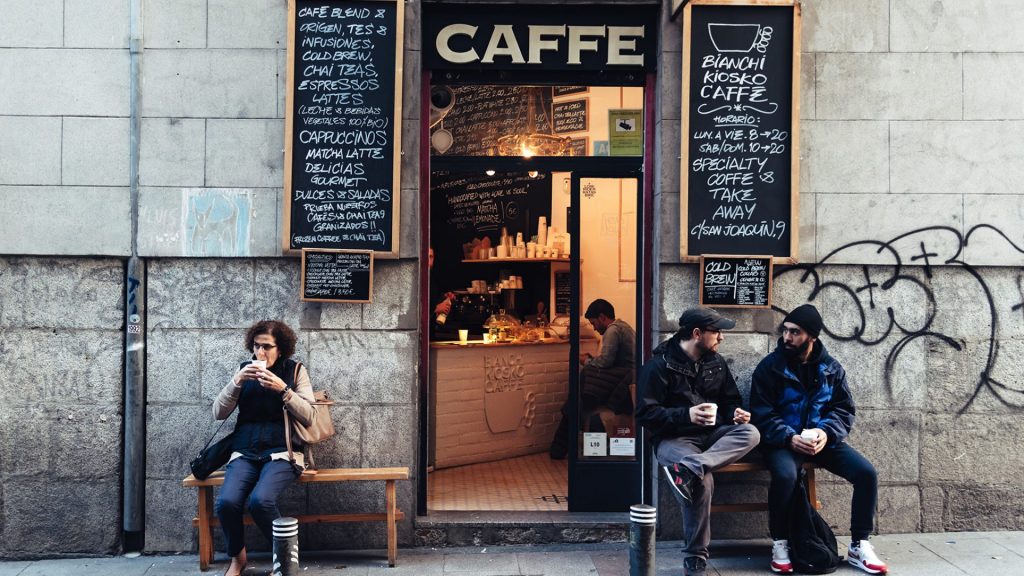
It is a celebration of the best elements and aspects of our public and private spaces from Arcades, Street Café, Sacred Sites and Promenade to Dancing in the Street, Built-In Seats and The Fire and much of it appears even more relevant now than when it was written – Green Streets, Garden Growing Wild, Different Chairs, Mosaic of Subcultures and Compost – its not that it was visionary, merely that its observations are based on timeless human activities.

In the past architects wanted to connect with and add to the sum of their existing architectural heritage rather than rejecting it – to learn from what works and what doesn’t – to produce good useful work rather than brilliant innovative unique solutions and to have a bit of modesty about their own contributions. The iconoclasts, like Mies van der Rhoe, will always look after themselves – we need to focus on improving the quality of the average and this book provides a wealth of advice.
If you don’t want to miss out on further blogs then please follow me on johngooldstewart.com
 John Stewart