The Amsterdam School

The nineteen twenties in Holland (perhaps more than any other European country) was a period of architectural ferment, in which several tribes of architects offered very different responses to the changing world around them. In Amsterdam, Michael De Klerk established what has become known as The Amsterdam School, whose extraordinary expressionist, brick, workers housing for two housing associations De Dagerad and Eugenia Hard were hugely influential. Despite De Klerk’s tragic early death in 1923 at the age of 39, the style which he and Piet Kramer had developed continued to flourish throughout Holland in workers housing and public buildings up until the second world war – albeit without De Klerk and Kramer’s unique imagination and invention.

Their work was an extraordinary marriage of modernity and tradition which evolved from the (more Calvinist) Northern European version of Art Nouveau – National Romanticism – but while it continued many of the themes of this earlier movement (such as the use of traditional materials), it was devoid of most of its typical medieval historical references in the form of massive buttressing, great boulder stones, hand-crafted metalwork and Norse imagery. It was also open to wider influences including both German Expressionism and interestingly, the early work of Frank Lloyd Wright (Blog 53). Wright’s prairie houses were published in Europe in the Wasmuth Volumes between 1910 and 11 and there is more than a hint of his horizontal dynamism, layering of space and use of materials in De Klerk and Kramer’s work.
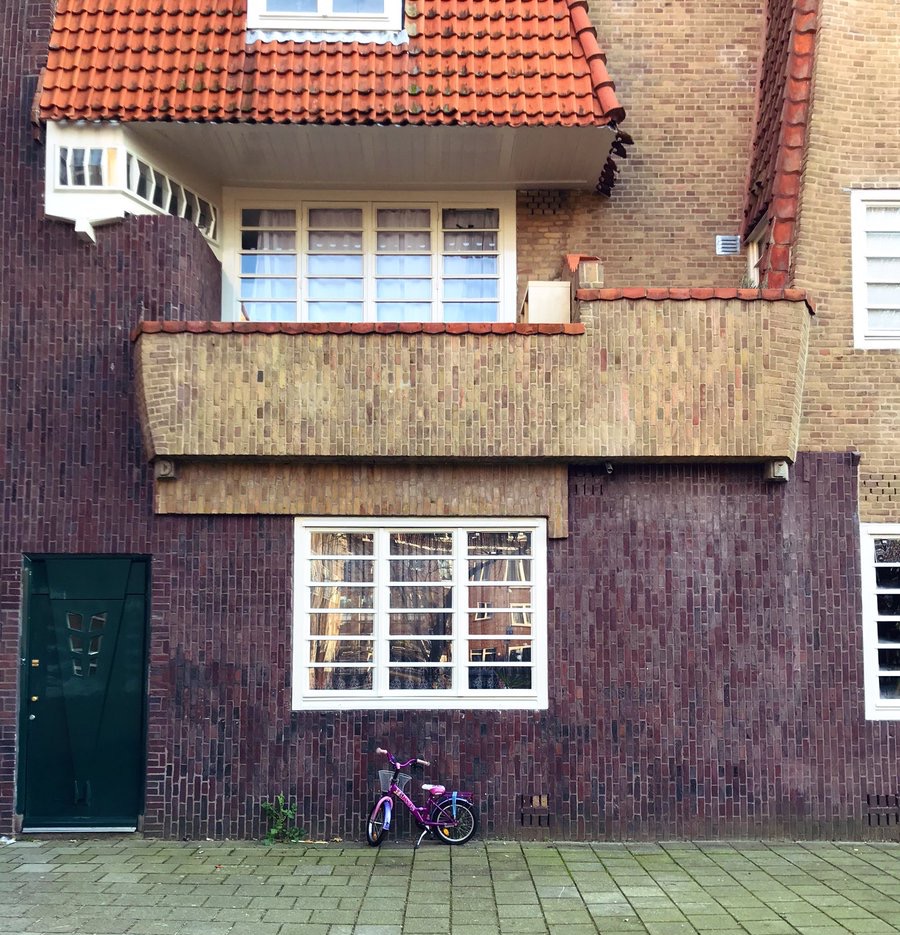
What they achieved was the creation of a fresh new architecture which provided decent homes for the rapidly growing working-class population of Amsterdam and such was its effectiveness that the style quickly spread throughout the country. It was low-rise, energy-efficient, humane public housing whose idiosyncratic forms and highly-creative detailing offered the poorer citizens of the city a degree of individuality which had previously only been enjoyed by the upper classes. As a sign of its success and the affection that its held in, it continues to fulfil this role a century later (albeit that it is now also hugely attractive to architects and other middle-class Amsterdammers). Sadly, as with so many architectural movements – successful and unsuccessful – after the second World War a new generation of young Dutch architects perceived the style to be simply old-fashioned and enthusiastically joined their colleagues around the world in the production of concrete tower blocks and system-built mass housing.
If you don’t want to miss out on further blogs then please follow me on johngooldstewart.com
 John Stewart