Albert Hodge
My latest book on British Architectural Sculpture examines the work of and relationships between British architects and the sculptors who together produced the extraordinarily rich British architecture of the 19th and early 20th centuries. In most cases, architects established long-term relationships with particular sculptors who were sympathetic to their approach and with whom they could communicate their ideas quickly and effectively. These partnerships included Sir George Gilbert Scott and William Brindley, William Burges and Thomas Nicholls and James Miller and Albert Hodge.
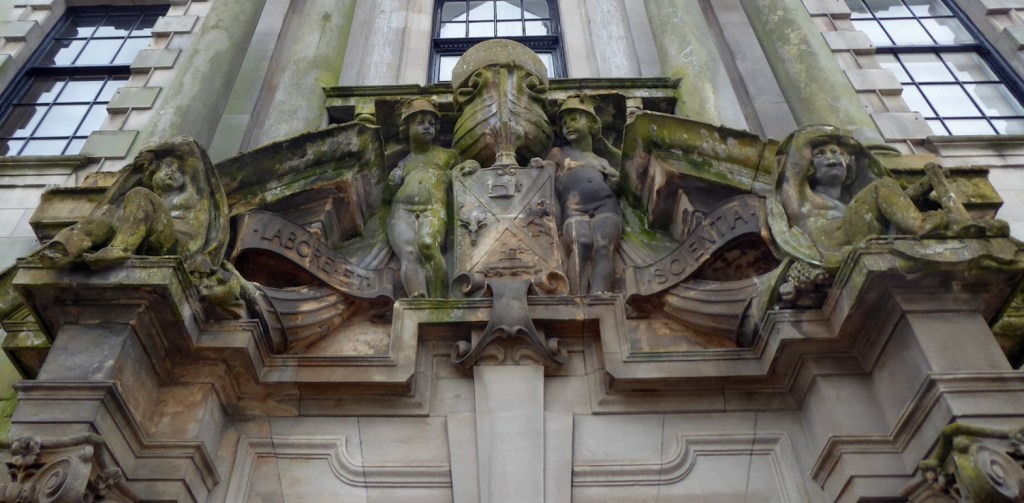
Albert (Hemstock) Hodge (1875-1918) was one of the most interesting and prolific of the late Victorian and Edwardian British architectural sculptors. Born in Port Ellen on the Hebridean island of Islay, he studied at Glasgow School of Art before starting work in William Leiper’s architectural practice in the city. His exceptional talent as a modeller soon drew him towards sculpture however, while his architectural training and experience provided him with a unique understanding of the art of architecture.
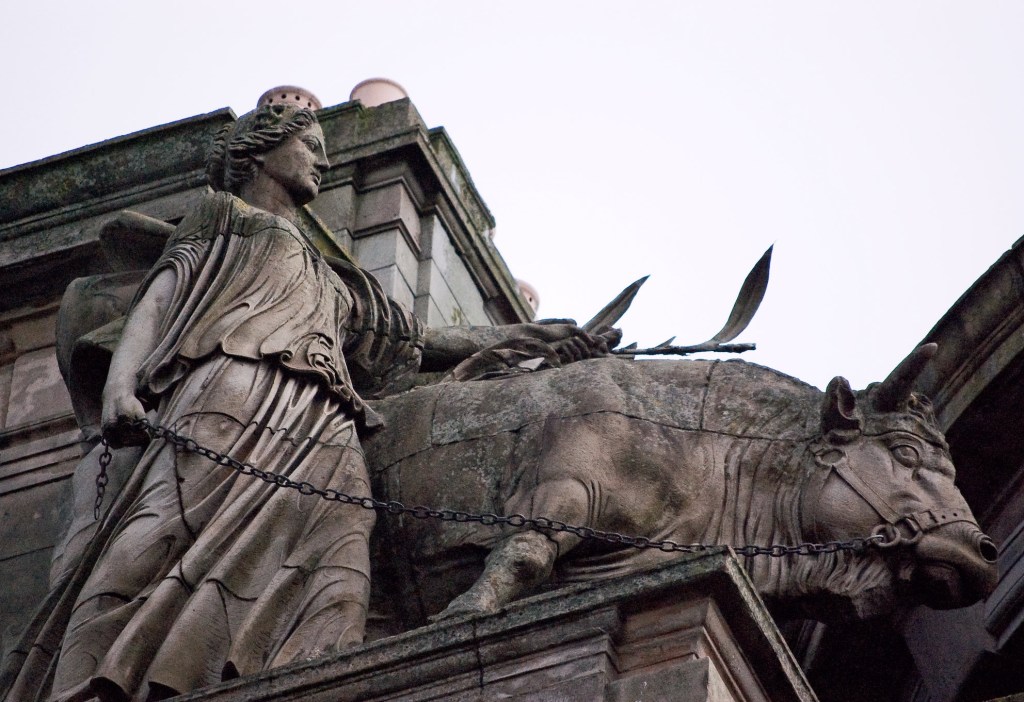
With his contacts within the local architectural profession he soon picked up work and within a few years was much in demand. One of his earliest commissions was for statues of Thomas Telford, James Watt and Henry Bell on the 1886 first phase of JJ Burnet’s Clyde Navigational Trust Building, where he worked under the guidance of the great James Mossman (whom Alexander Thomson worked with almost exclusively) but when it came to phase two in 1906, he was responsible for all the architectural sculpture including his powerful ‘Demeter’ and ‘Amphitrite’ which stand either side of Burnet’s corner dome. But it was to be James Miller with whom Hodge formed the closest working relationship, contributing to most of Miller’s major commissions from the Glasgow Exhibition buildings of 1901, onwards.
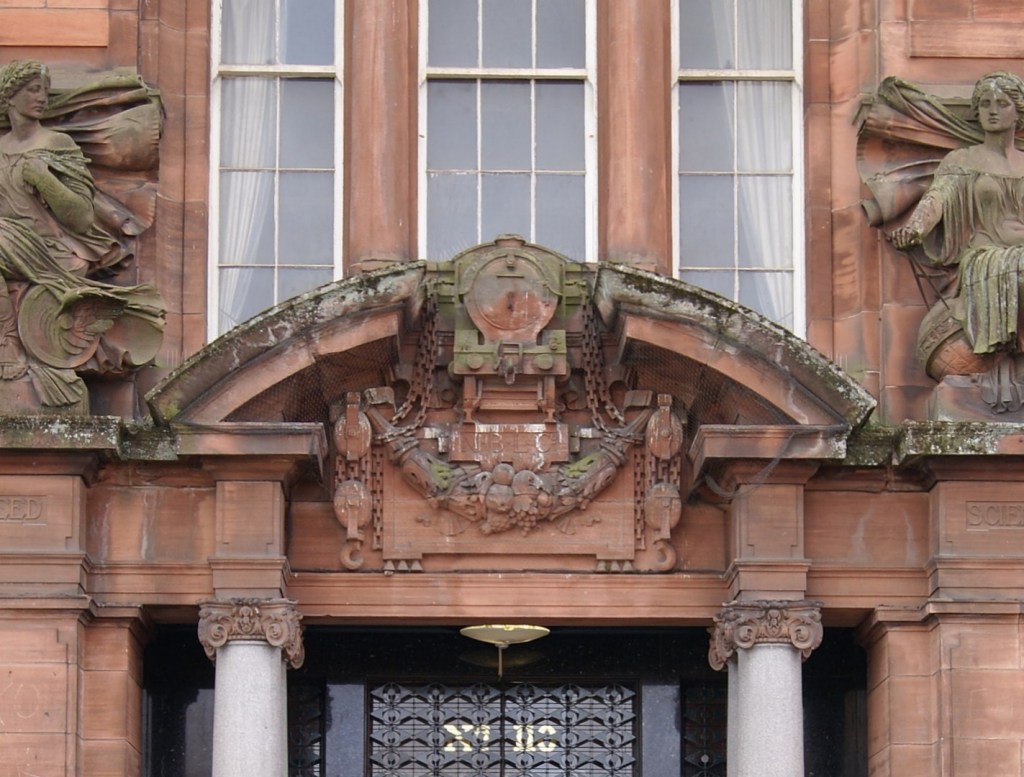
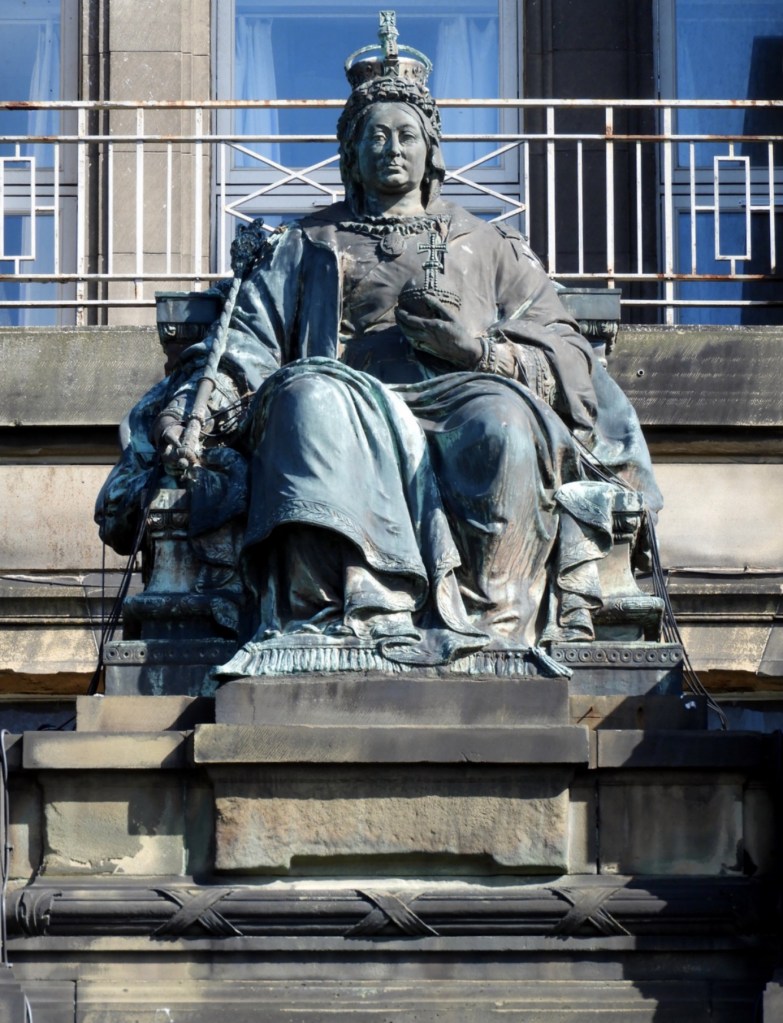
Hodge produced all the sculpture on Miller’s Clydebank Town Hall of 1902 as well as his massive Caledonian Chambers of 1903 and the following year sculpted one of the finest and most majestic sculptures of Queen Victoria (following her death in 1901). This graced the south elevation of Miller’s Glasgow Royal Infirmary where, fortunately, she still looks down from her throne above the entrance upon the square in front of Glasgow Cathedral. As Miller and Hodge’s confidence grew, they became more inventive and in 1909 produced one of their most successful tympana over the main entrance doors of the head office of the North British Locomotive Company. In lieu of classical swags draped either side of a central shield, they gave this train manufacturer the boiler of a steaming locomotive, adorned with chains, blocks and tackle.
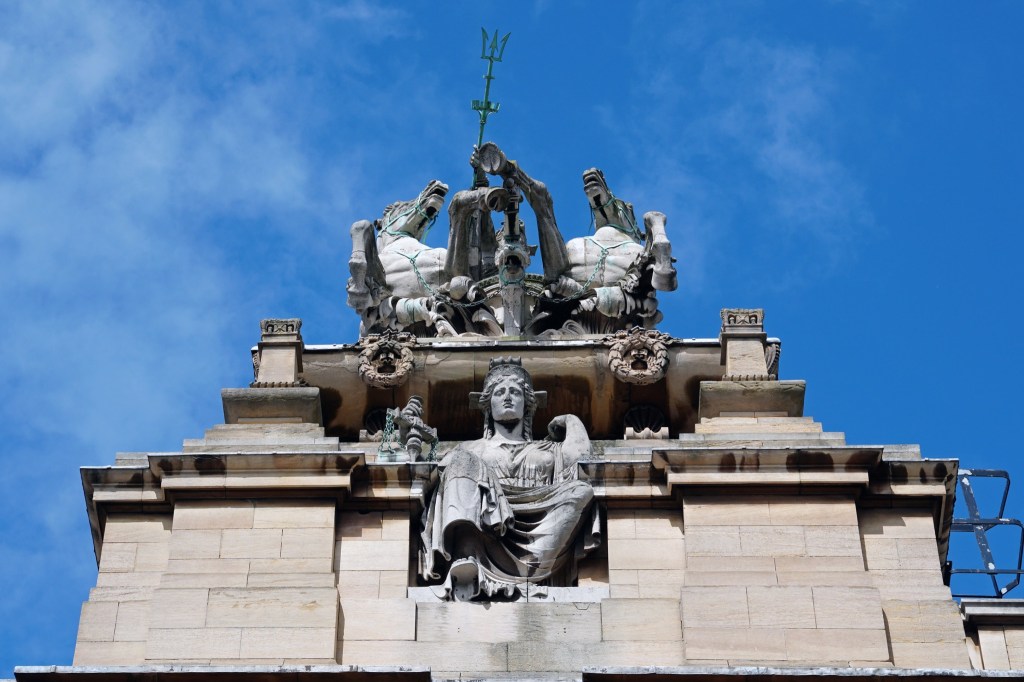
By then Hodge was based in London and working throughout Britain on increasingly grand commissions. He contributed to the vast civic centre project in Cardiff (along with numerous other architectural sculptors), led by architects Lanchester Stewart and Rickards which included the City Hall, Law Courts, University buildings, a National Museum and the County Hall for Mid-Glamorgan for which Hodge provided ‘Navigation and Mining’, but perhaps his greatest work is ‘The Daughters of Neptune’ atop the Guildhall in Hull of 1914. Hodge sadly died in 1917 in his forties, at the peak of his extraordinary powers, but was thus spared having to witness the decline of his art, as Modernism almost entirely stripped the nation’s new buildings of sculpture .
If you don’t want to miss out on further blogs then please follow me on johngooldstewart.com
 John Stewart