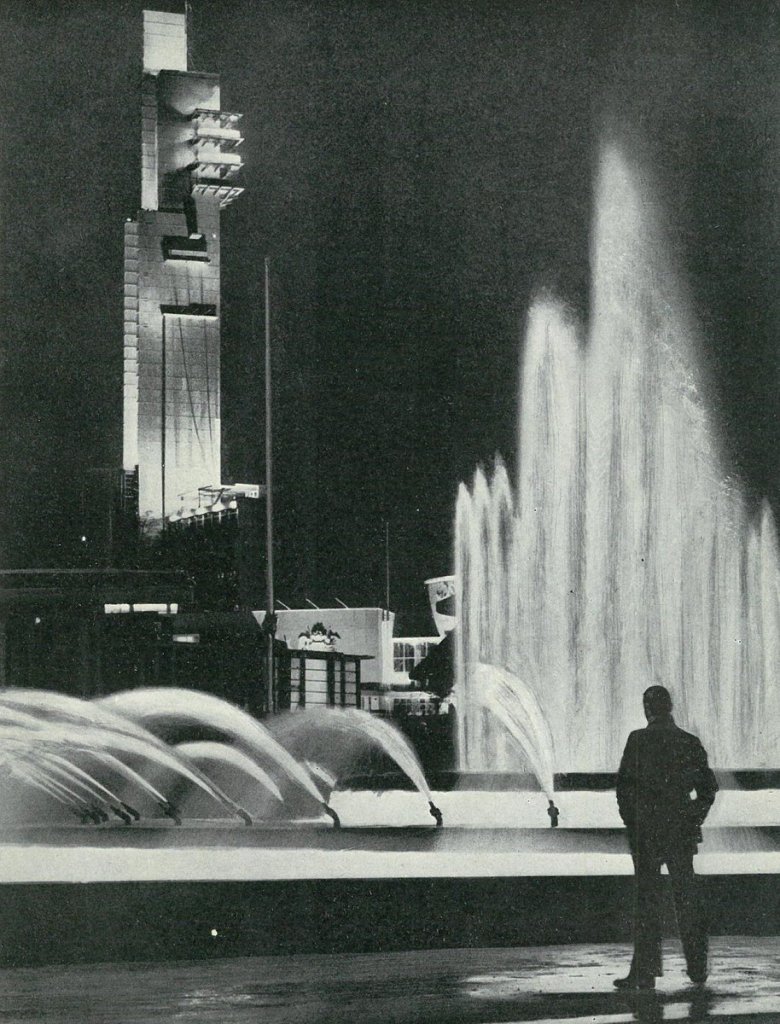
Glasgow has in the past played host to a number of major exhibitions during the 19th and 20th centuries. The first was in 1888 when James Sellars offered an oriental theme in celebration of the British Empire’s then ever-extending boundaries as a backdrop to a display of the city’s industry, innovation and commercial success. To mark the 50th anniversary of that event, a further exhibition was held in 1938, which its lead architect Thomas Tait used to promote Modern architecture in his native Scotland.
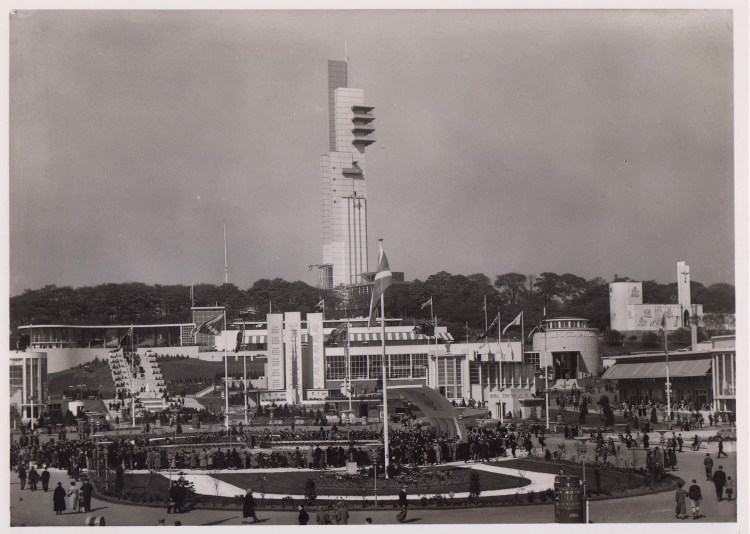
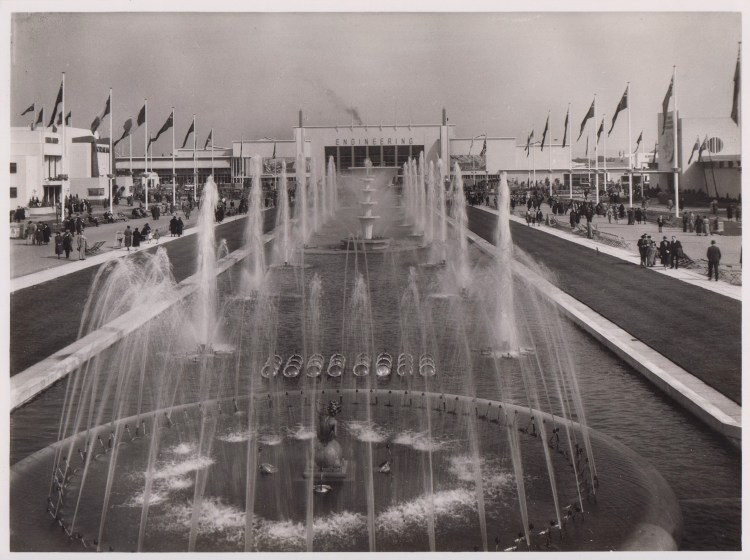
Tait’s inspiration was Asplund’s iconoclastic Stockholm Exhibition of 8 years earlier and he drew heavily on the Swede’s vocabulary of white rendered buildings, giant graphics, fountains, brightly-coloured banners, flags and search lights, with a vast tower once more dominating the site. As in Stockholm, where Asplund had been assisted by many other architects (including Sigurd Lewerentz, Sven Markelius and Uno Ahren), Tait was supported by a new generation of Scottish architects who would go on to lead their profession after the Second World War (including Jack Coia and Basil Spence). Unlike Stockholm however, (and in common with most of Tait’s contemporary buildings), the organisation of the site was essentially a symmetrical Beaux Arts plan with the main pavilions off a broad central avenue.
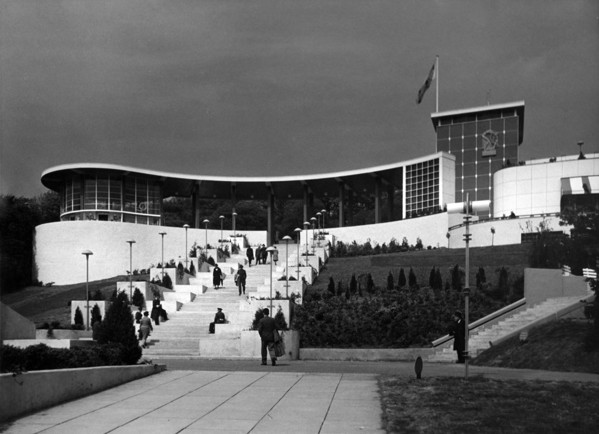
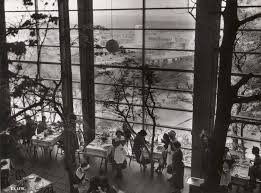
Tait used a small wooded hill on the site to provide a dramatic climax to the show, which was crowned by what became know as ‘Tait’s Tower’ and it was really only here amongst the trees that the architecture offered a hint of what the best of Modernism might provide. The tower was a stunning steel-framed asymmetrical composition of overlapping planes while the tearooms and restaurants were mostly glazed to enjoy the views of the exhibition below. Interestingly, this area was described as ‘The Garden Club’ with a three guinea entrance fee (the equivalent of £217 today) largely restricting its pleasures to a wealthy minority.
To the public, Tait consistently denied that he and his team were producing Modern Architecture, (as at the time the new Continental style was regarded with great suspicion in Britain and was largely the subject of cartoons in which avante-garde clients were shown practicing golf or dining on their flat roofs) and instead he adopted a strange Orwellian double-speak to provide a suitable rationale – “We cannot try to erect buildings in the old, Medieval style of architecture where there are certain structural features which necessitate modern treatment and modern requirements with big spacing which the old medieval architecture would not allow us to carry out.” Tait successfully sowed the seeds of Modernism however, and following the war that broke out just a year later, they eventually fell on the fertile ground of a period of radical social change, for which the conflict was the catalyst.
If you don’t want to miss out on further blogs then please follow me on johngooldstewart.com
 John Stewart