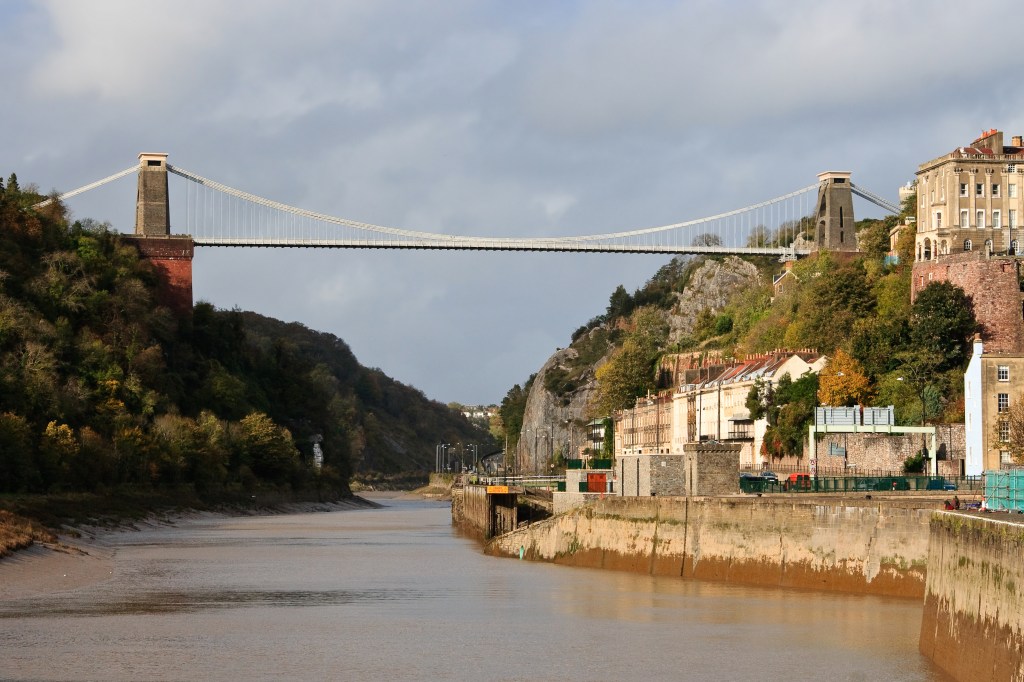
We are fortunate in Britain to have both a rich architectural and engineering heritage which includes numerous exceptional bridges throughout the country. Perhaps the most spectacular (though fans of the Forth Railway Bridge would probably dissent) is the Clifton Suspension Bridge over the Avon Gorge in Bristol which, despite being completed in 1864 and being designed for horses, carts and carriages, is still in use today and forms the most spectacular of all the routes into the city.

It is generally attributed to Isambard Kingdom Brunel who designed a suspension bridge on this site on which construction started in 1831. Unfortunately, within four months of the first rock being blasted, the Queens Square Riots broke out in the city (Bristol has a long and proud tradition of rioting) thus bringing work to a grinding halt. It was not until after Brunel’s death in 1859 that engineers William Henry Barlow and John Hawkshaw took up the challenge of spanning the gorge.
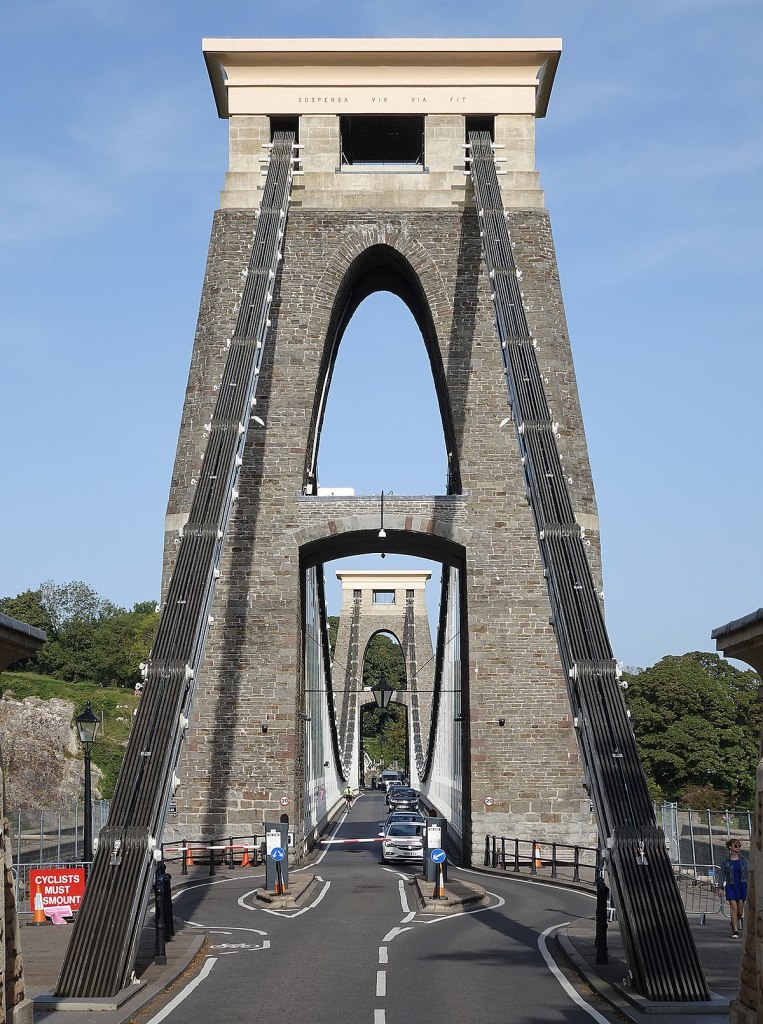
The extraordinarily elegant towers which support the wrought iron chain structure were a key element of Brunel’s earlier effort and while there are numerous suspension bridges throughout the country, none come close to the superb proportions, subtle tapering and swooping curves of these distinctly Egyptian pylons.

Interestingly, Brunel’s suspension bridge was far from the first solution to bridging the gorge and engineer William Bridges earlier design of 1793 would have been no less spectacular. What he proposed was an inhabited bridge, along the lines of the old London Bridge (1209-1831) which would have housed homes, taverns, offices, a corn exchange, a chapel, a market and even stables and perhaps most interestingly of all, two windmills, located in the spandrels. Bridges’ design was abandoned when Britain became embroiled in the French Revolutionary wars and the citizens of Bristol had to wait another 70 years until their shortcut was provided.

If you don’t want to miss out on further blogs then please follow me on johngooldstewart.com
 John Stewart