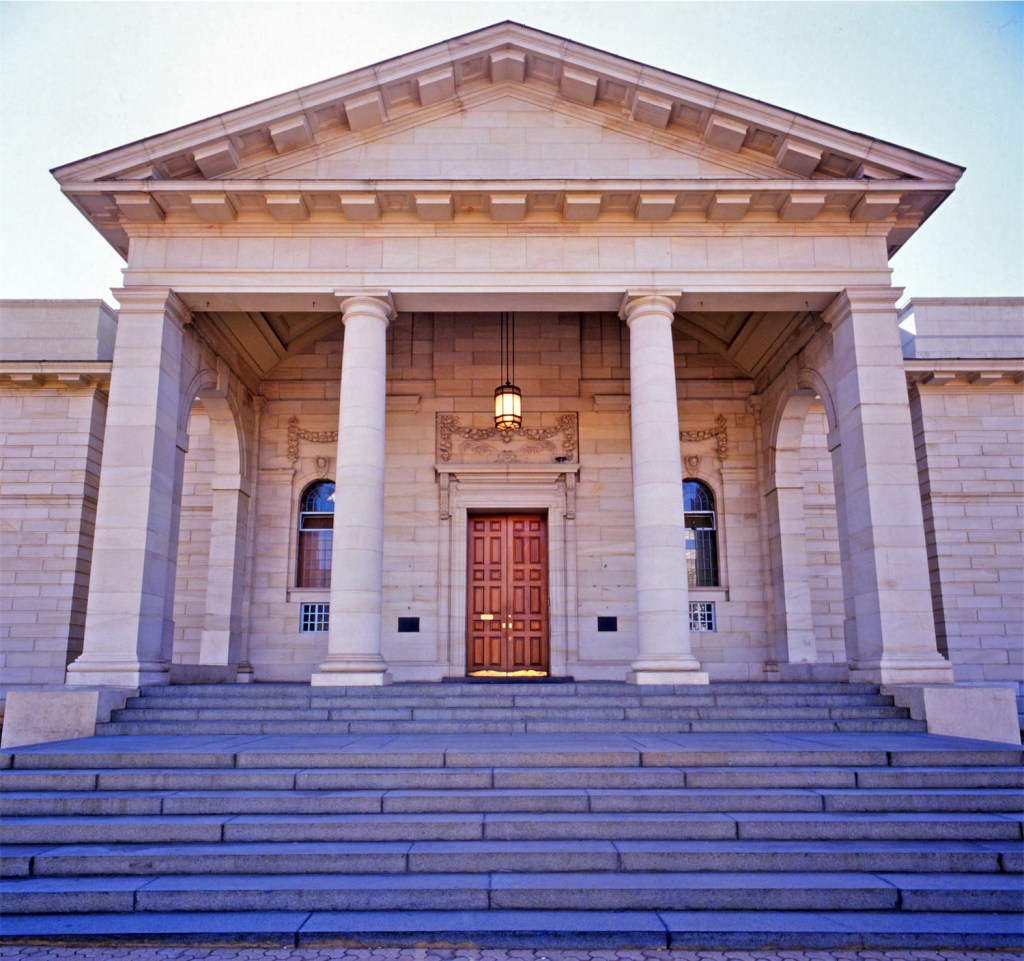
By 1910, Lionel and Florence Phillips ruled Johannesburg society (such as it was). Lionel was a gold mining magnate, financier and Chairman of the Chamber of Mines, while Florence led most of the young city’s cultural activities. Herbert Baker had provided them with an elegant base in his Villa Arcadia, high on the ridge of Parktown, from which they looked down on their city below. Florence’s latest project was a new art gallery for Johannesburg and with Baker up to his eyes in designing both the main railway station and the Government buildings in Pretoria, she held an architectural competition to select an architect for the design of her gallery.
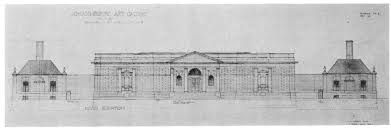
The entries were judged by Hugh Lane, a London art critic and dealer who was advising her, and he concluded that as none of the entries by the local architects had reached an appropriate standard, and with her favoured architect so busy, she might enquire if the great Edwin Lutyens might undertake the work. With the lure of a £1000 retainer, Sir Edwin was soon steaming towards South Africa. He stayed with the Phillips in the Villa Arcadia and completed the outline design of the gallery while he was there, which Baker offered to oversee after his departure.
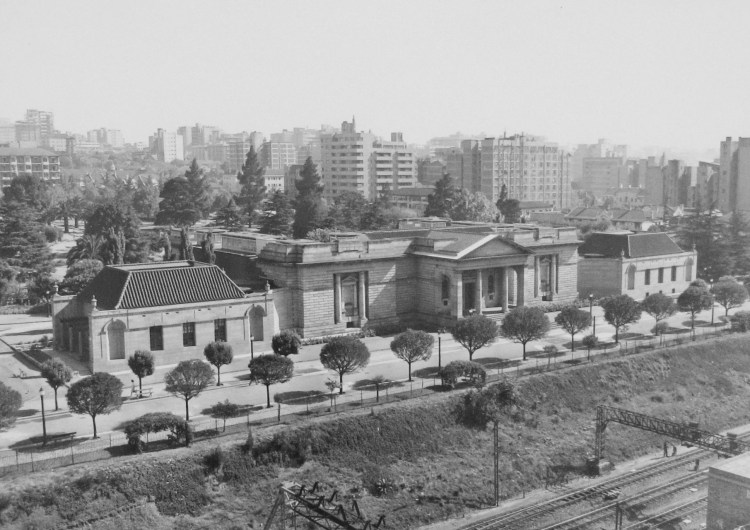
As one would expect from the mature Lutyens, the building is exquisitely proportioned and the detailing razor sharp, but sadly only the main central section was completed at this time, with further wings and a massive rear extension added later. As Lutyens proposed for New Delhi, his architecture made no concessions to either local culture or climate and it was very much Baker’s influence which eventually led to the style of their architecture in India.
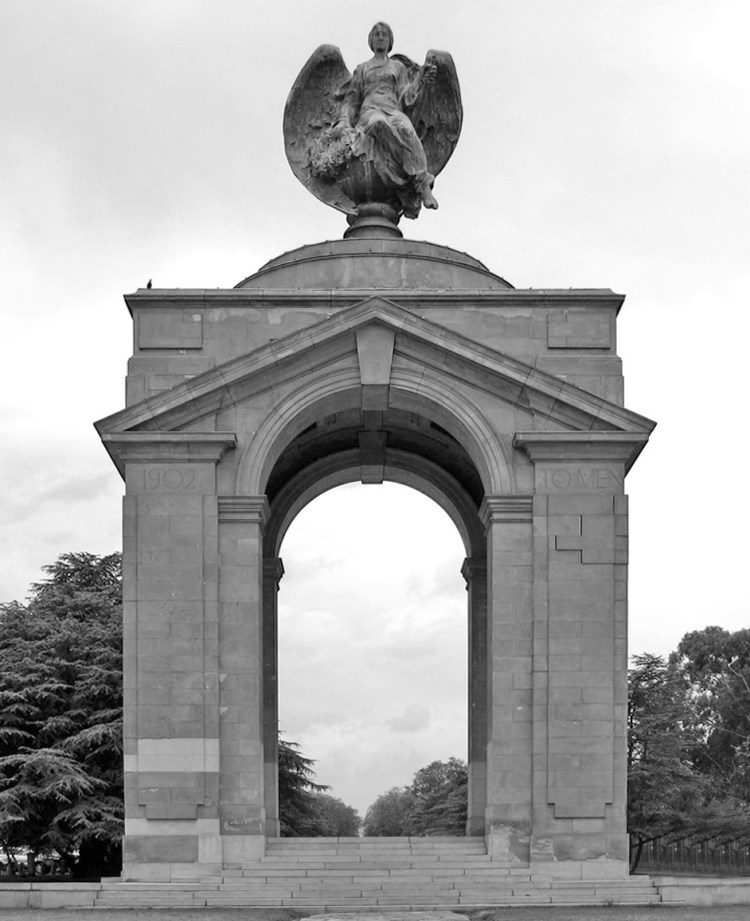
Lionel Phillips had gifted a site to the city on which he wished to be erected a memorial to the British who had lost their lives in the Second Boer War (the Rand Regiments Memorial) and on Lutyens’ arrival, he enquired if he’d be good enough to also undertake the design of the monument, for which public funds had already been raised. Lutyens again obliged and produced what turned out to be one of his first and finest triumphal arch memorials. Hugh Lane advised on the appointment of a sculptor for the bronze Angel of Peace (which Phillips paid for himself) and the Russian sculptor Naoum Aronson provided the appalling bronze blob which almost crushes Lutyens’ elegant arch. Lutyens and Baker parted as friends, but their long and so far happy relationship would not last even the first few months of finally working together as partners in India just two years later.

You can read more about Lutyens visit and Lutyens and Baker’s subsequent work together in my biography of Herbert Baker – Architect to the British Empire. If you don’t want to miss out on further blogs then please follow me on johngooldstewart.com
 John Stewart