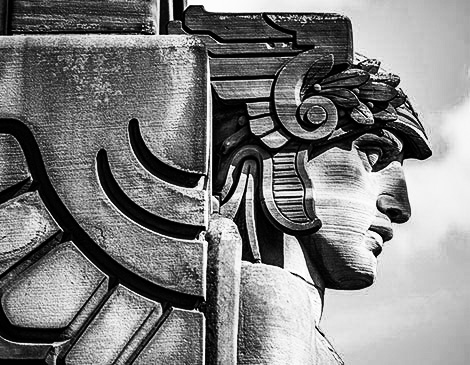
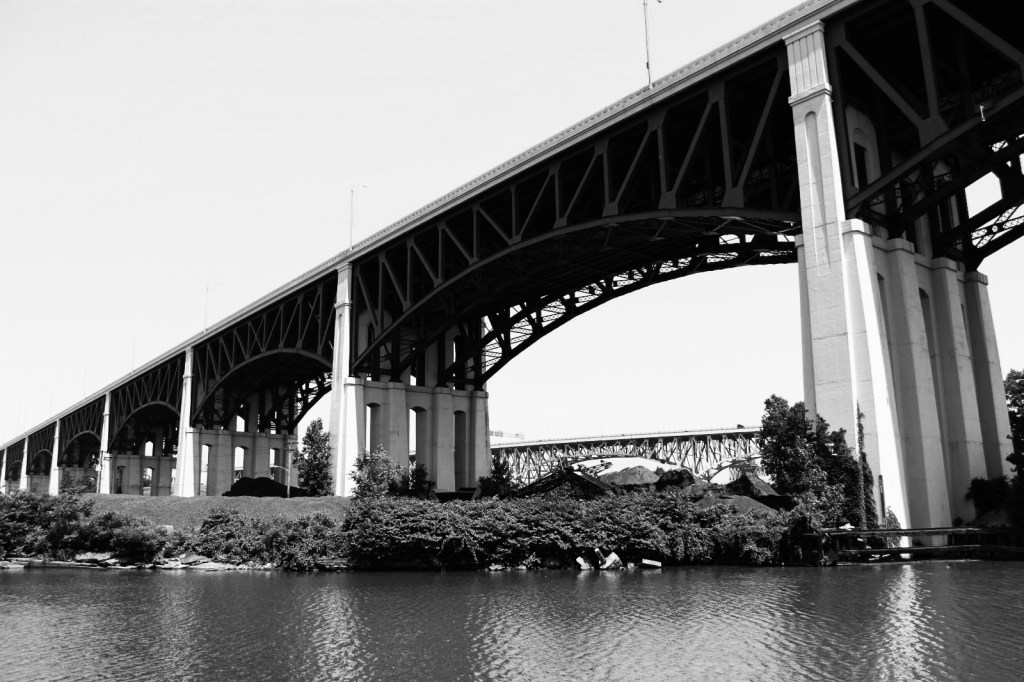
Continuing my ramblings on architecture, sculpture and engineering, I give you the Hope Memorial Bridge (previously the Lorain-Carnegie Bridge) in Cleveland, Ohio, or to be more specific, its magnificent sculpted pylons. The bridge itself, which was completed in 1932, is a massive 1,368m span steel truss road bridge on stone piers, which crosses the Cuyahoga River just before it flows into Lake Erie. What lifts it above the everyday are 4 massive sculpted stone pylons, which mark either end.
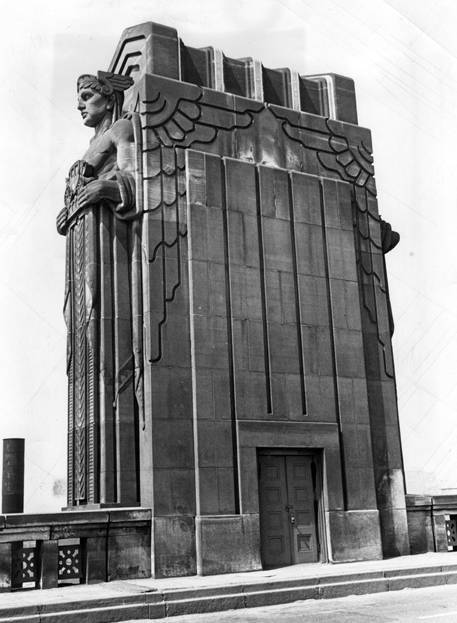
Like the sculptures of the Boulder Dam, the style is art deco and the pylons represented a collaboration between architect Frank Walker, engineers Wilbur J. Watson and Associates and sculptor Henry Hering. Each pylon has a sculpted figure on each side, known as the Guardians of Traffic who symbolise the progress of transportation and each hold a different vehicle including a hay wagon, covered wagon, stagecoach, car and various trucks.
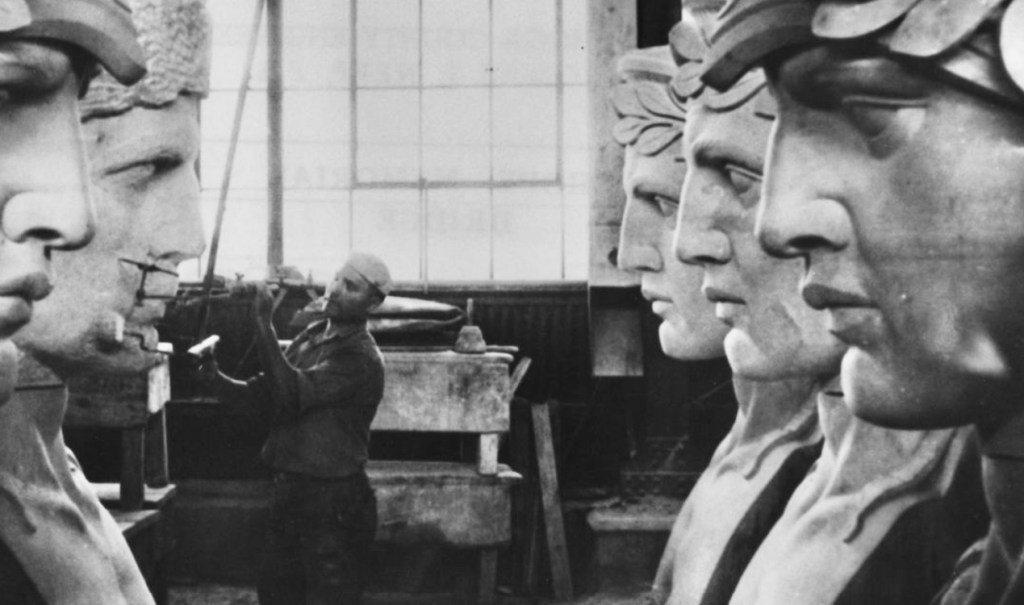
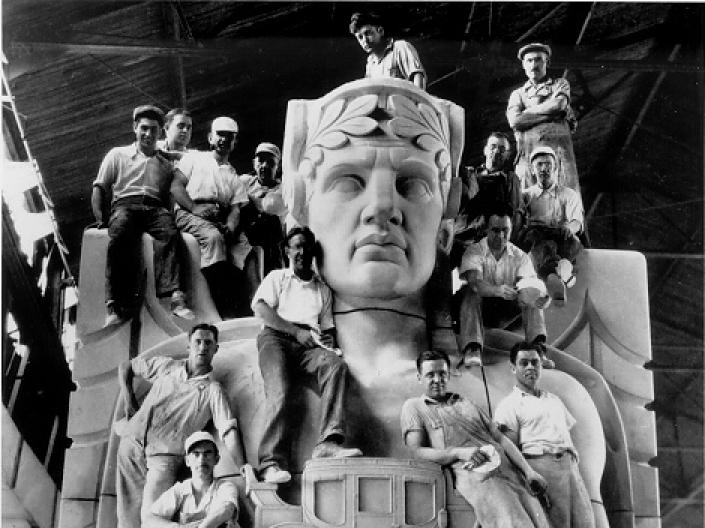
They were carved under Hering’s direction by a vast team of stonemasons who carried out their work in a covered studio, completing the sculptures in sections which could then be transported to the site and finally erected in situ. The sculptures are outstanding – crisp, strong and muscular and looking more than able to both help to support the bridge and carry their symbolic load. They represent not only human progress but sadly also one of the latter examples of outstanding public sculpture on an engineering structure. Unlike abstract art, they communicate their messages clearly and directly and need no descriptive text or pretentious explanation and have thus provided a delightful interlude in millions of people’s daily commute for almost 100 years.
Fortunately, the bridge was added to the National Register of Historic Places in 1976, saving the pylons from destruction after Cuyahoga County Engineer Albert S. Porter threatened to remove them to widen the bridge, stating that they were, “monstrosities and should be torn down and forgotten. There is nothing particularly historic about any one of them. We’re not running a May Show here.” He also proposed a Freeway through Shaker Lakes and its Nature Center, which he described as “a two-bit duck pond” and the demolition of the Bagley Road bridge, describing opponents of his plan as a bunch of “moochers, scroungers, chiselers and parasites.” Thankfully, he was removed from office in 1977, after pleading guilty to 19 counts of theft from his employees, who had been required to give him a 2% ‘kick-back’ from their pay to retain their jobs. He died in 1979 – while the bridge – is still going strong.
If you don’t want to miss out on further blogs then please follow me on johngooldstewart.com
#architecture#engineering#bridge#sculpture#cleveland#1930’s
 John Stewart