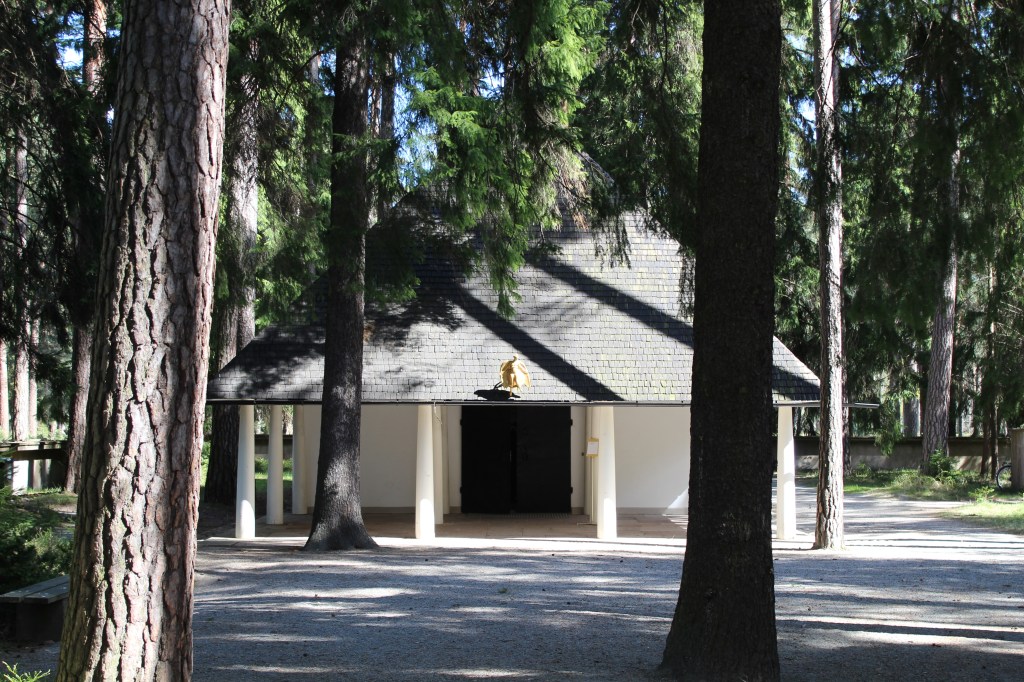
Sooner or later, I had to write about Gunnar Asplund’s Woodland Chapel in Stockholm. If I think of my top ten favourite buildings, it’s on the list straight away and the other nine are measured against it. It sits in the trees of Asplund and Sigurd Lewerentz’s Woodland Cemetery which they created in the 1920’s and 30’s to serve the vastly increased population of newly-industrialised Stockholm. With the principal external spaces of the cemetery carved out of the existing wood, the promoters of the cemetery were keen to get a small, relatively cheap chapel built, consecrated and open for business as quickly as possible and it fell to Asplund to respond to the challenge. What he created, in these least auspicious of circumstances, is one of the greatest pieces of architecture of the twentieth century.
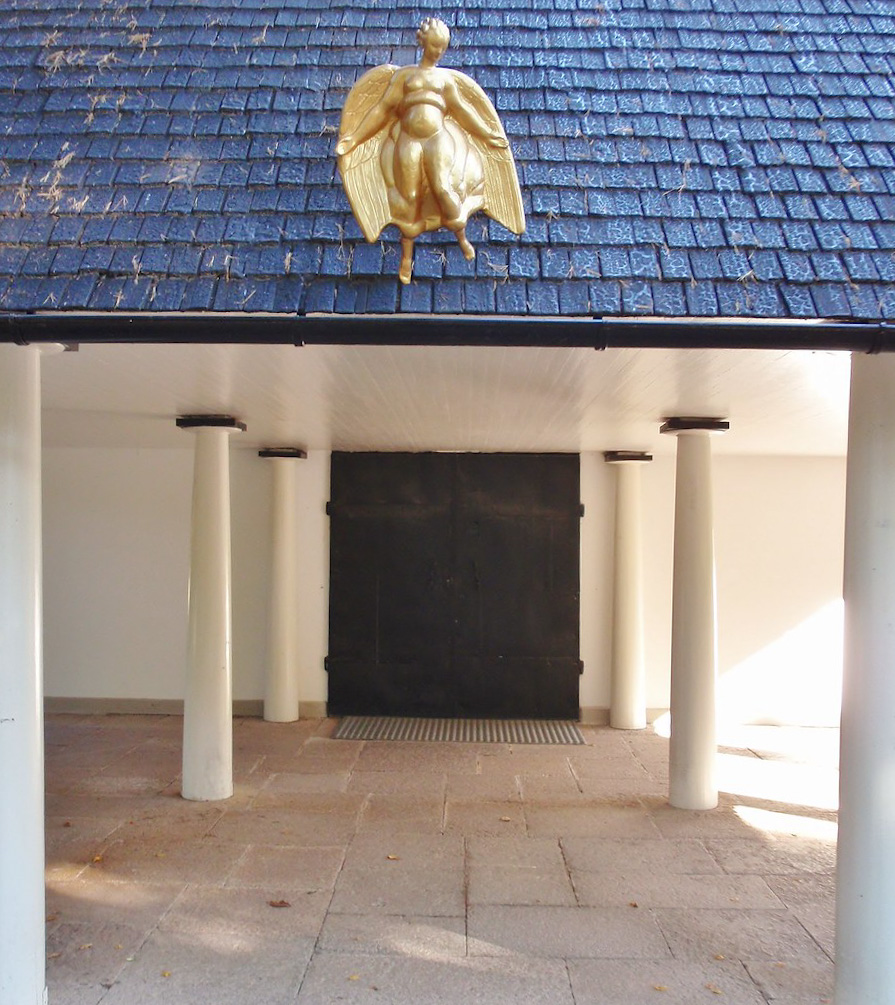
At first sight it appears to be just the simple building that Asplund’s clients had demanded with its vast black wooden shingle roof supported on the simplest of columns but as its approached through the towering trees, it emerges as a powerful piece of architecture. The pyramidal roof is itself a symbol of both death and a life after and on axis, just above the eaves below which we enter, is a golden ‘Angel of Death’ by sculptor Carl Milles. But we pass beyond death to a space within to await the start of the ceremony below the great sheltering roof, from where we glimpse, not a dark, but a light-filled interior.
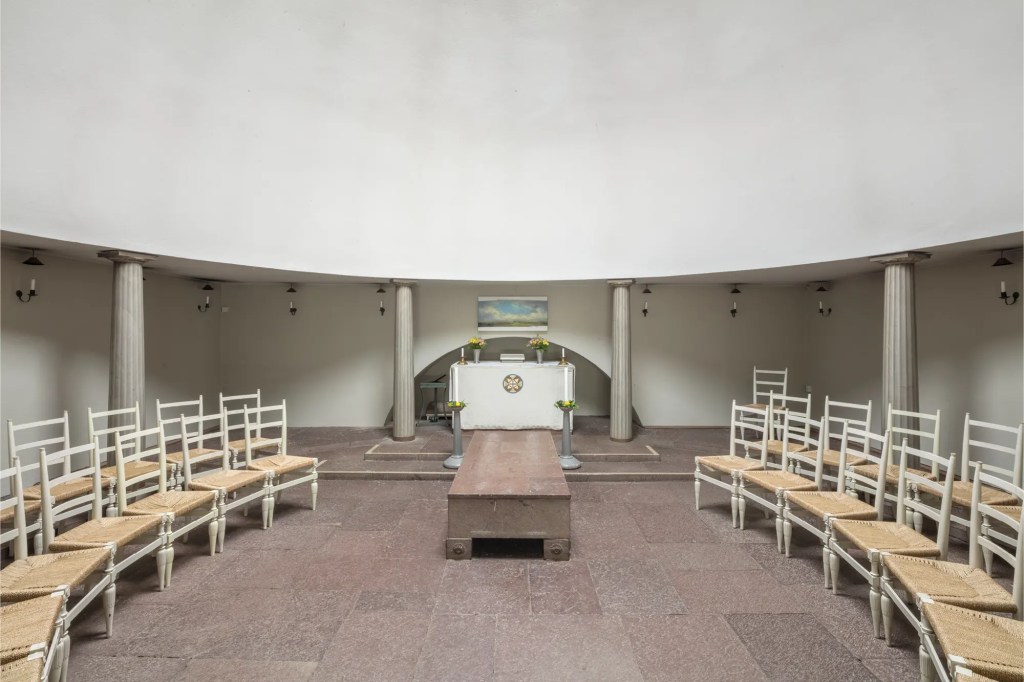
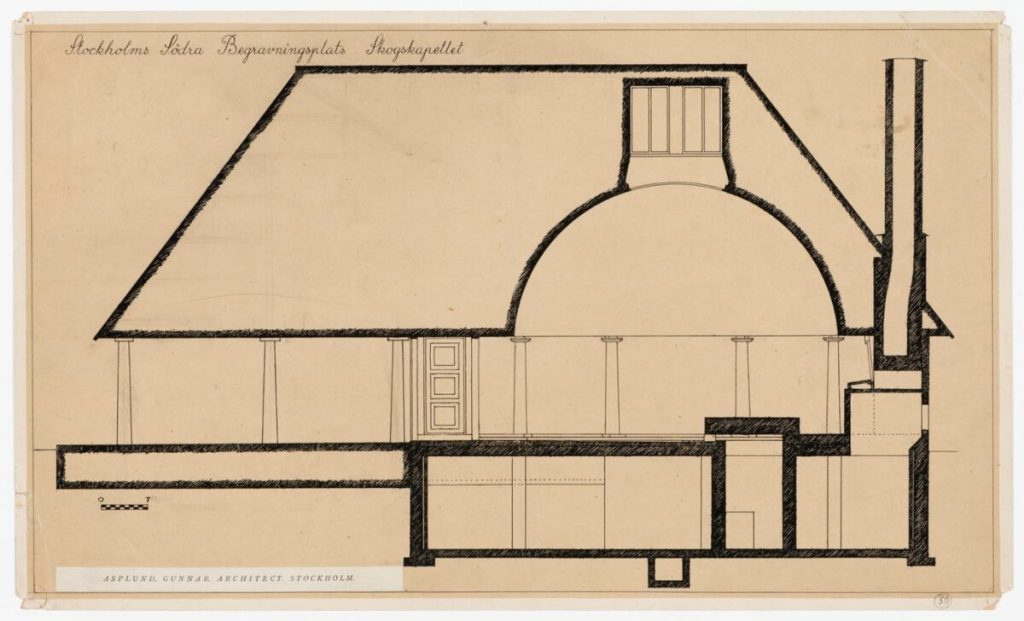
A perfect half sphere has been carved out of the roof and this is toplit from above. After the darkness and savagery of the forest, here is a space of utter tranquility. The semi-sphere symbolises the earth, which is about to be departed and the light – the heavens above. The paved floor reminds us of an ancient pathway that has been trod for centuries by those who have gone before us and as there is no fixed seating, the mourners simply gather around the coffin on plain wooden chairs as would have been done in village cemeteries throughout Sweden for centuries.
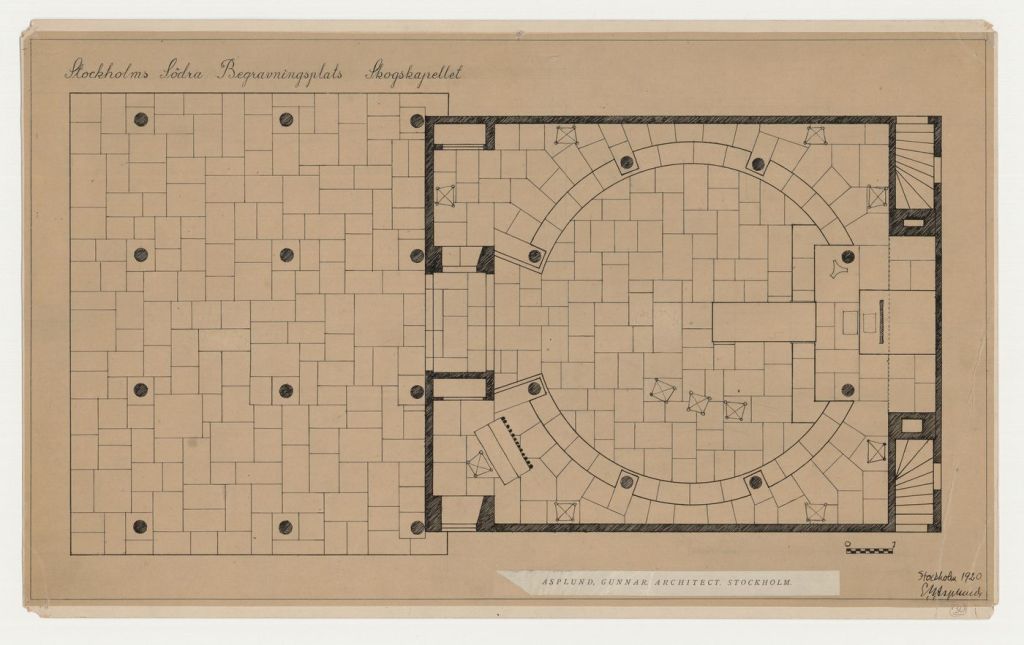
The plan and section are exquisite – a perfect circle within the square of the chapel and a semi-circle in section to provide the domed space within, but Asplund is not merely playing with shapes and patterns – every element here plays its part in the ritual and all his efforts have been focused on providing the perfect setting for what he described as “the difficult moment of parting”. On leaving, mourners sense the compression of the low columned portico once more, before being released back out into the forest and the world beyond – and all this was provided for a rather-undeserving client who wanted something cheap and fast.
If you don’t want to miss out on further blogs then please follow me at johngooldstewart.com
 John Stewart