
I have finally completed my book on British Architectural Sculpture and it will be published later this year by Lund Humphries. Its been another fascinating piece of research into what has become almost a lost art form which has taken me across the UK in search of the best examples.
The book spans the period from the Great Exhibition in 1851 to the Festival of Britain in 1951 and charts the contributions of the many master masons, stone carvers and sculptors who contributed sculpture to the architecture of this period. It includes the work of men like John Thomas (1813-62) who was orphaned as a child, apprenticed as a stone mason and eventually progressed to a position of overseeing the creation of all the architectural sculpture on the new Palace of Westminster for the architect Charles Barry; Albert Hodge (1875-1917), born on the Hebridean island of Islay who became one of the most sought-after architectural sculptors of the late 19th and early 20th centuries, working for architects John James Burnet, James Miller, Edwin Cooper and Aston Webb and Catherine Mawer (1803-77) one of the few 19th century female architectural sculptors who carved much of the detail on Leeds City Hall and successfully continued her husband’s monumental sculpture, stone masonry and wood-carving business after his death, eventually passing it on to their sons.

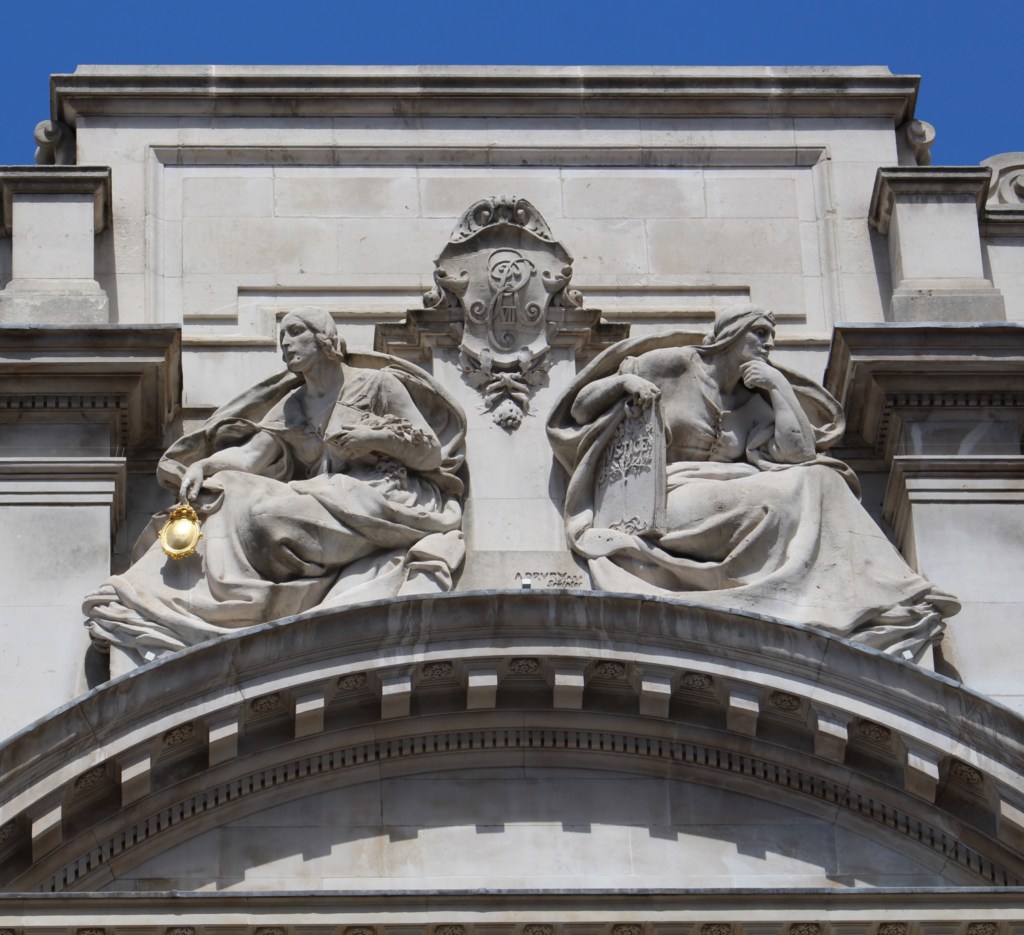
By the end of the 19th century (largely as a result of the formation of The Art Workers Guild), many of the finest sculptors were contributing architectural sculpture too, and the contributions of George Frampton (1860-1928), in sculpting the great bronze ‘St Mungo’ and overseeing the entire programme of sculpture on the Glasgow Art Gallery and Museum, Alfred Drury (1856-1944), in providing the haunting images representing ‘War’ on the Old War Office in Whitehall and Gilbert Bayes , whose ‘Queen of Time’ still looks down on Selfridges main entrance on Oxford Street, represent some of the best British sculpture of the period.
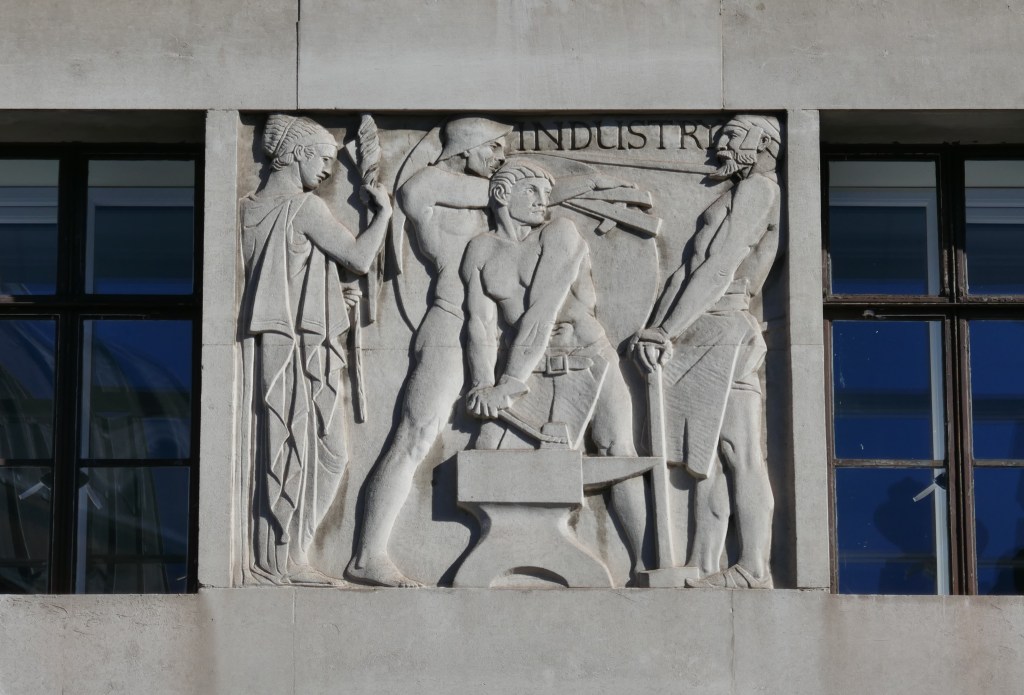
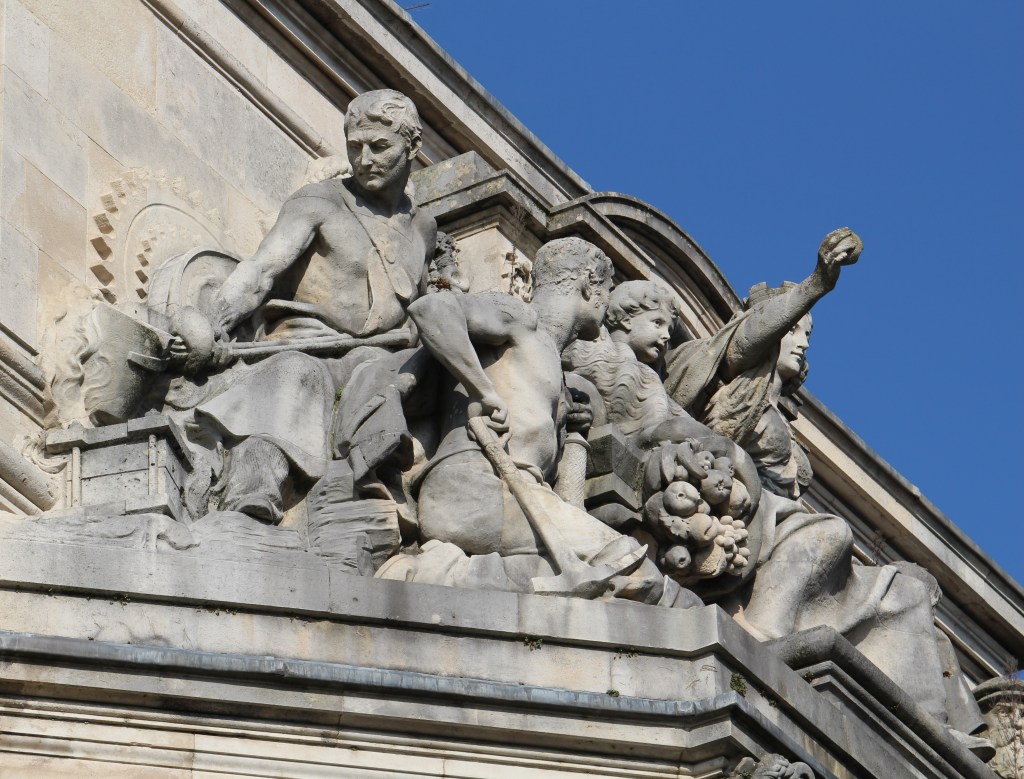
Firms like Farmer and Brindley in London, Robert Boulton in Birmingham and J+G Mossman in Glasgow produced everything from architectural sculpture to funerary monuments and public statues as well as forming long-term relationships with the architects whom they regularly worked with on buildings, with both George Gilbert Scott and Alfred Waterhouse favouring Farmer & Brindley, Edward Godwin – Richard Boulton and Alexander (Greek) Thomson – John Mossman. The quality of the best work of all these contributors is simply outstanding and fortunately, not only has the majority of it survived, but these extraordinary works of art are available free to anyone who just takes time to look up at them.
If you don’t want to miss out on further blogs then please follow me on johngooldstewart.com.
 John Stewart