
The Union Bank of Scotland 1924-27

100 years ago, in 1924, Norman Hird, the dynamic new 39 year-old General Manager of the Union Bank of Scotland announced an architectural competition for the design of their new headquarters building in Glasgow. The winning entry was that of James Miller who, by the 1920’s, had succeeded JJ Burnet as Scotland’s leading and most successful architect.
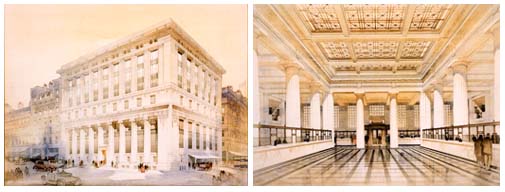
Like much of Miller’s work in the 20’s and 30’s it drew on US precedents, in this case McKim, Mead and White’s National City Bank in New York, and his beautifully-presented proposal responded superbly to Hird’s brief with a grand double-height banking hall below six floors of offices which both served the bank’s needs and offered rental office accommodation to help repay their investment. The first floor of offices is actually set within the giant Ionic colonnade and the final floor provides a storey-high frieze below the great overhanging cornice which tops the composition.

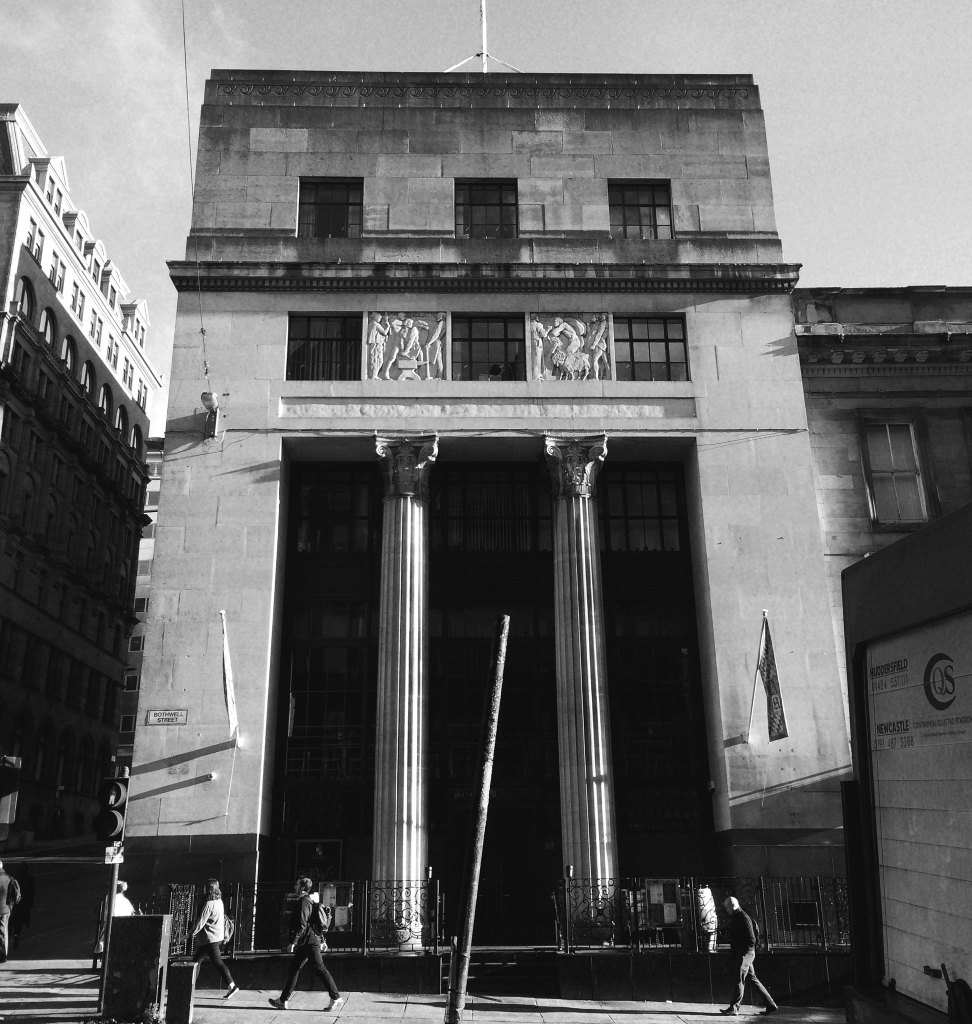
The details reinforce the classical illusions of eternity with a rather Greek bronze grid behind the colonnade and the banking hall itself is graced with full-height marble Doric columns with foret de brousse marble lining the walls. It was exactly the Temple of Finance which Hird had sought and provided a model for Miller’s future banks in the city, including his exquisite Commercial Bank of Scotland on Bothwell Street.
You can read more about James Miller and his architecture in ‘The Life and Works of Glasgow Architects James Miller and John James Burnet’ and if you don’t want to miss out on further blogs, please follow me on johngooldstewart.com.

 John Stewart