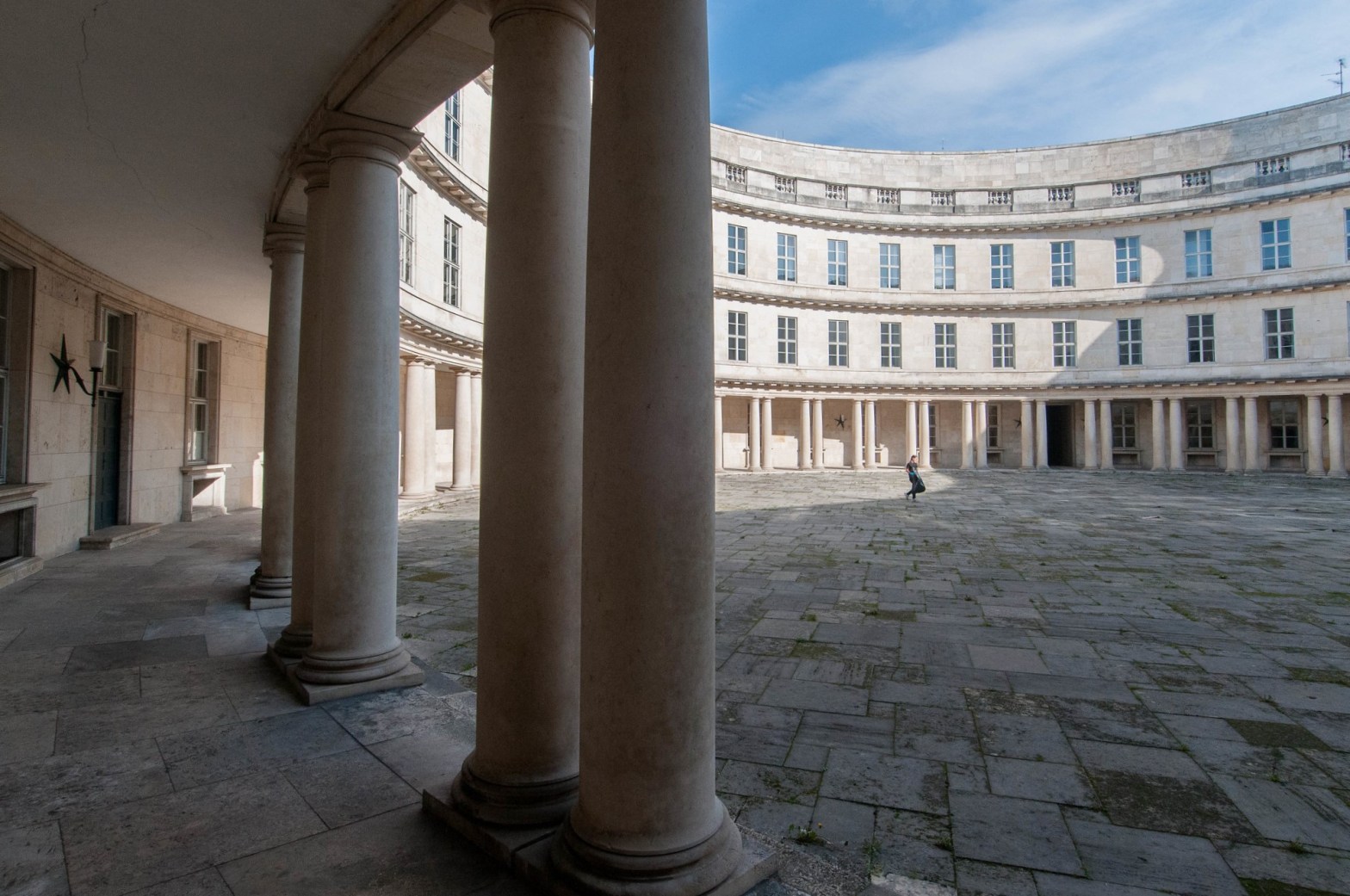
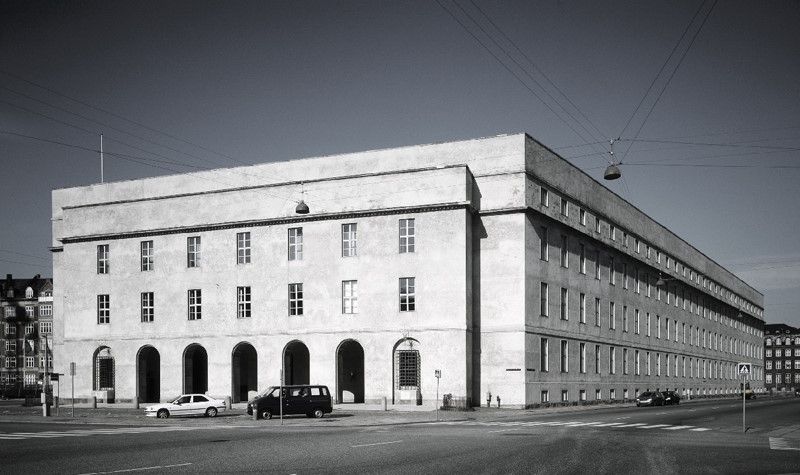
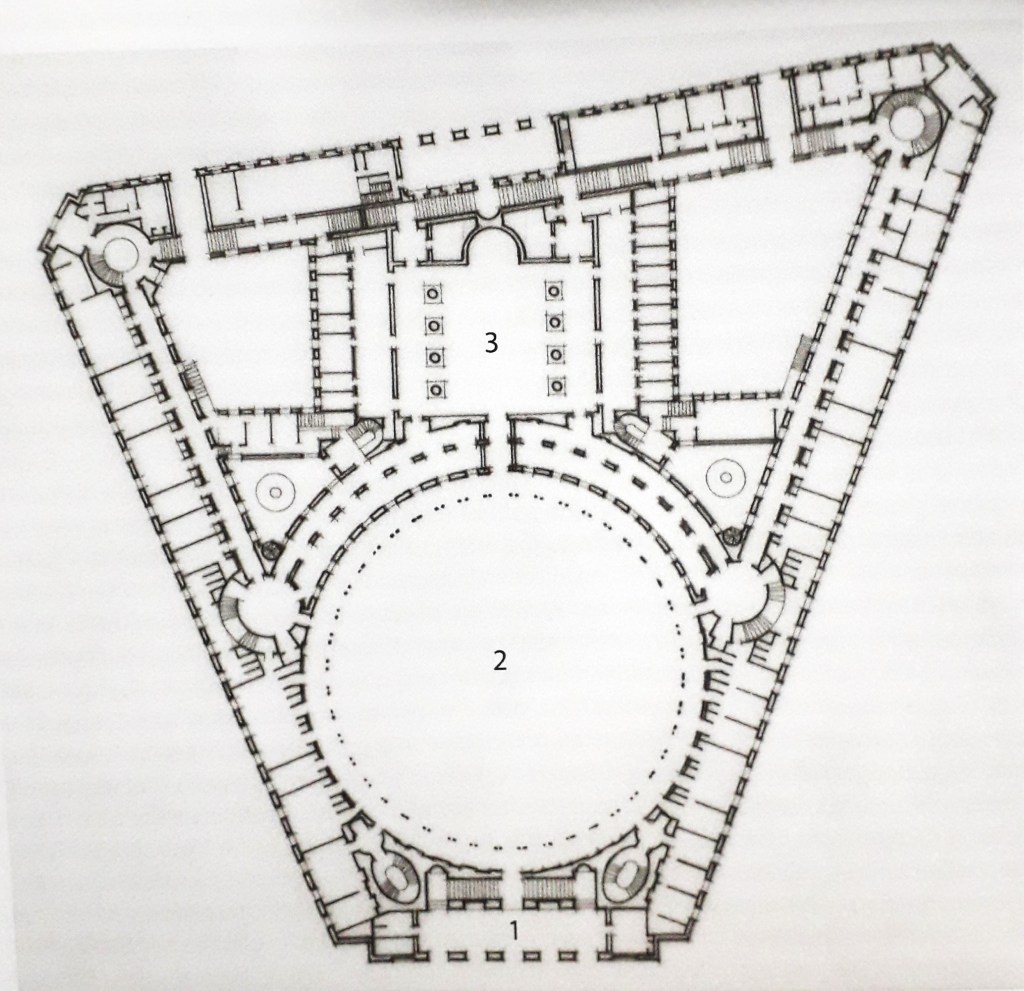
100 years ago, 1924 saw the completion of the Copenhagen Police Headquarters building. This proved to be Hack Kampmann’s (1856-1920) swansong and a fitting end to the career of the most prolific Danish architect of the late 19th and early 20th centuries. Like the best Nordic Classical work, Kampmann’s Politigården is designed to evoke a strong emotional response from its visitors and users. It’s grey-rendered exterior suggests the dull administration of the law, (thus lowering our expectations) and while a recessed arched portico responds to the modest square in front of it, there is not even an obvious entrance. From within the portico, two modest flights of stairs on either side lead visitors up to the first floor, where they are suddenly confronted by one of the most stunning architectural spaces of the twentieth century.
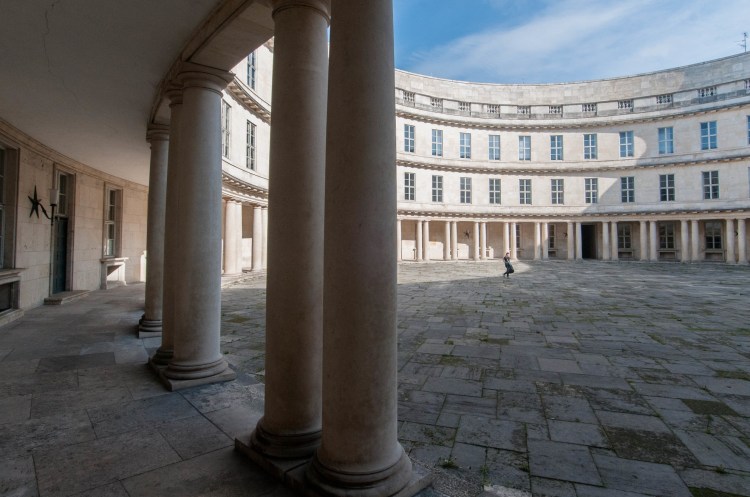
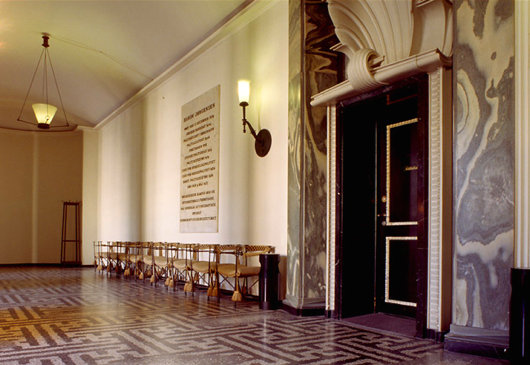
The courtyard represents ‘Law and Order’ in all its majesty, raised above the everyday level of life on the streets outside and bringing dignity to its pursuit. A further courtyard (reached by a low unadorned shaft through the ring of offices) is an equally dramatic memorial to police officers killed in the line of duty, enclosed by two rows of three-storey high Corinthian columns and with Einar Utzon-Frank’s sculpture The Snake Killer as its focus. The interiors, completed after Kampmann’s death by his assistants, are exquisite, complete with the original fittings and much of the furniture, and are beautifully maintained.
The plan of the building is one of the most elegant that you are ever likely to come across (despite the irregular shape of the site), and it offers the great central drum of the main courtyard as a mighty wheel which drives the cogs of the staircases which in turn distribute the radial energy created, throughout the corridors and offices. It is a work of art in itself.
Perhaps the most interesting aspect of all about this building, however, is that it has been in continuous use since 1924 and (as recently seen on ‘The Bridge’ and ‘The Killing’) and still functions effectively as the city’s police headquarters. It makes you wonder just how many other beautiful Victorian and Edwardian schools, town halls, police stations and offices could have been saved from destruction, if their users, advisers and architects, had been a little more flexible and a little bit less dogmatic.

If you want to read more about Hack Kampmann and the Copenhagen Police Headquarters then see my book Nordic Classicism – Scandinavian Architecture 1910-1930 and if you don’t want to miss out on any further blogs, please follow me on johngooldstewart.com

 John Stewart