Blog 77

Richard Norman Shaw

Leyes Wood 1866-69

I’ve written before about the brilliant Scottish architect Richard Norman Shaw (1831-1912). He dominated his profession in Britain in the final decades of the nineteenth century, developing what became known as the ‘Queen Anne’ style with his early partner William Nesfield before going on to lead the classical revival that would dominate the Edwardian age. His works are well known but his quite extraordinary draughtsmanship, much less so.
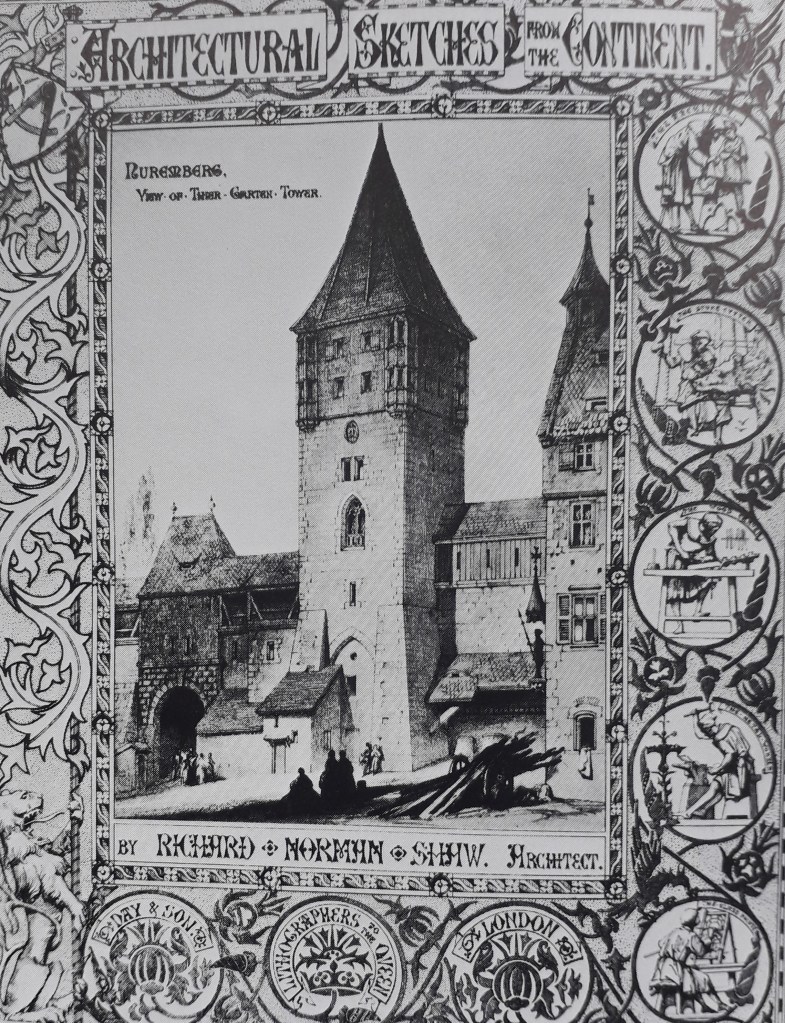
Like most of his contemporaries, his architectural education included several sketching tours of Europe and it was the drawings from his travels, which were published as ‘Architectural Sketches from the Continent’ in 1858, which first attracted attention to his exceptional abilities. While described as sketches, these were actually beautifully rendered views such as the tinted lithograph of the Tiergarten Tower in Nuremberg, which he included in the cover to his book.
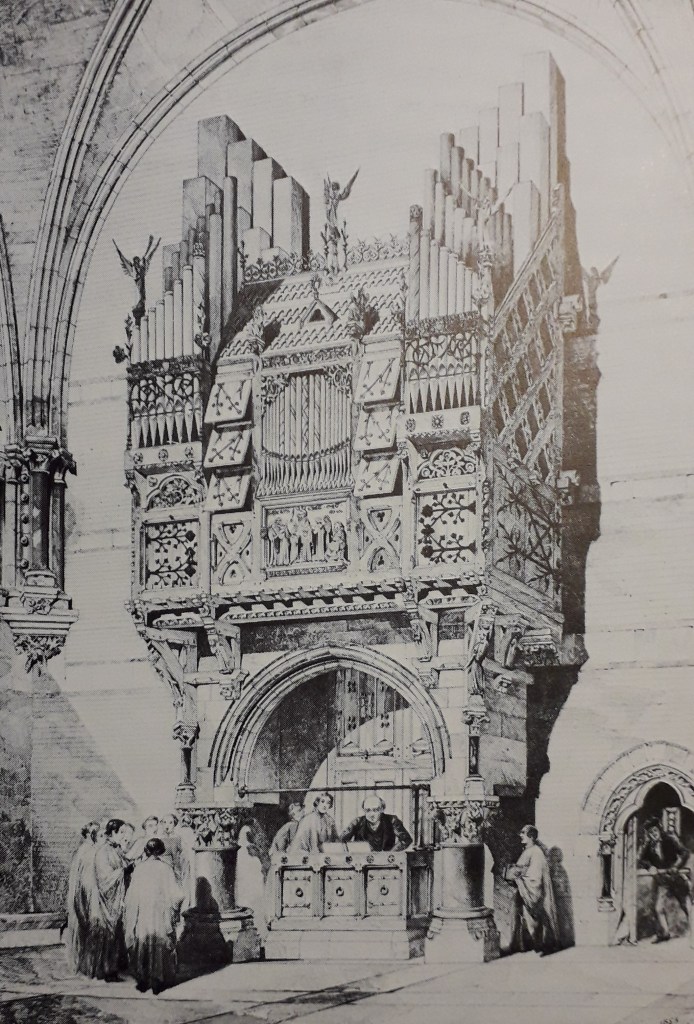
Organ Design 1858

While working in the office of George Edmund Street (1824-88), one of the leaders of the Gothic Revival, he continued to travel and sketch and also produced his own modest designs which again generated further interest when exhibited at the annual ‘Architectural Exhibition’ and later at the Royal Academy. After 16 years of study, training and practical experience, Shaw established his practice with Nesfield in 1863 and soon began to attract substantial domestic commissions, all of which were presented in beautifully rendered perspectives.
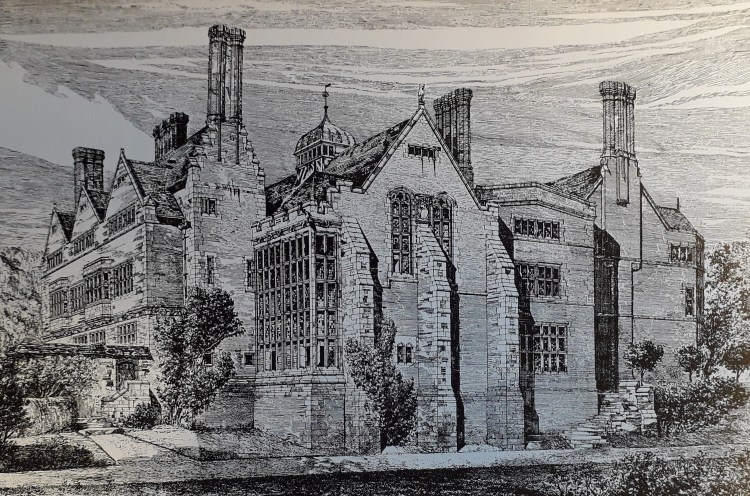
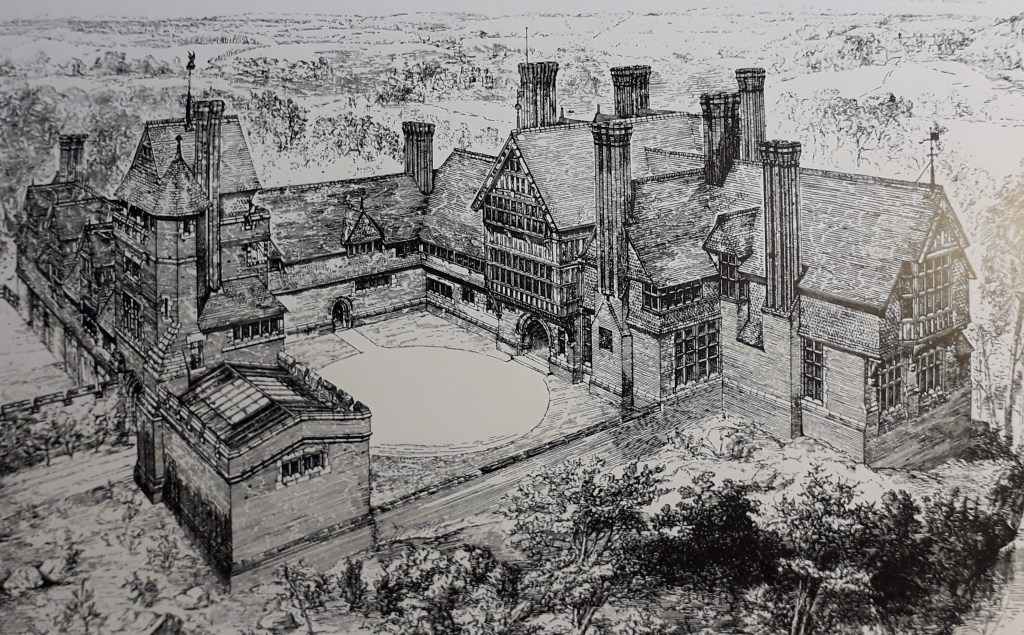
Adcote 1876-81

His perspective of Adcote of 1876-81, which he himself regarded as his finest house, is typical of these drawings, which convey not only the three-dimensional form of his proposals in extraordinary detail, but equally a sense of the place which he was in the process of creating. This drawing continues to be displayed in the Diploma Gallery of the Royal Academy to this day.

Holy Trinity, Bingley 1864

His extraordinary range and skills were also often applied to interiors such as in the early design for his church in Bingley in Yorkshire of 1864. There can be few finer architectural perspectives ever produced. As his practice became more and more successful, sadly, the production of perspective drawings was passed to his pupils with both Mervyn Macartney and Archibald Christie working within Shaw’s established style and producing similar work of a very high standard. To produce drawings as fine as these would be remarkable (not least as they were drawn with a pen dipped in ink) but when they also portray highly innovative architecture of an exceptional standard, we get to something approaching genius.

If you don’t want to miss out on further blogs then please follow me at johngooldstewart.com
Blog 76

Birmingham Town Hall

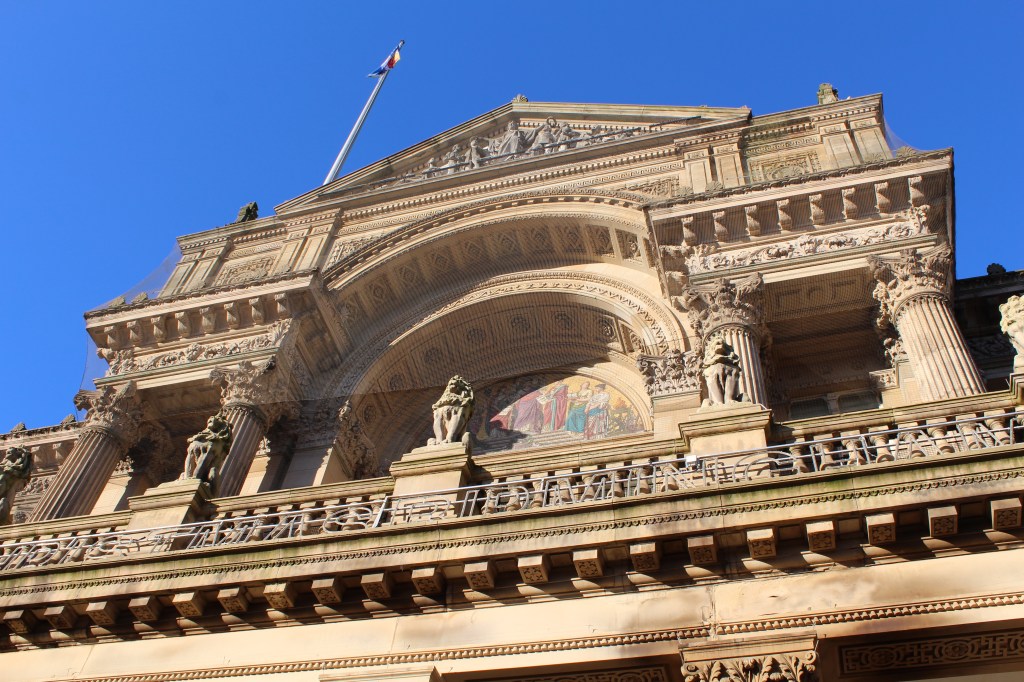
The late nineteenth century was a great period of town hall building around the western world. In Britain, society was undergoing immense change and it was the increasingly wealthy middle class who were now in the ascendancy. As a result of the Great Reform Act of 1832 and further extensions of the franchise in 1867, it was they who were now also regularly becoming the clients of architects and sculptors engaged on the design of town halls, schools, universities, professional institutions, museums and art galleries and for the first time, they also began to commemorate themselves in public statuary. In 1871, the aldermen of what was then Birmingham Town Council held an architectural competition for the design of their new town hall (the Council House), eventually selecting local architects Yeoville Thomason’s Classical proposal with the firm of Richard Lockwood Boulton and Sons, who had a yard in Birmingham, also selected to undertake the architectural sculpture.

The Union of the Arts and Sciences

It was decided that the arch over the main entrance should have a mosaic in lieu of sculpture (which was executed by Salviati Burke and Company of Venice), but the five pediments which top the wings and central advanced section of the building were all graced with allegorical sculpture by Boulton and Sons. The four outlying pediments are curved and within their deeply coffered arches are groups representing Manufacture, the Union of the Arts and Sciences, Literature and Commerce – thus echoing the themes of the Salviati mosaic (along with almost every other Victorian bank and town hall).

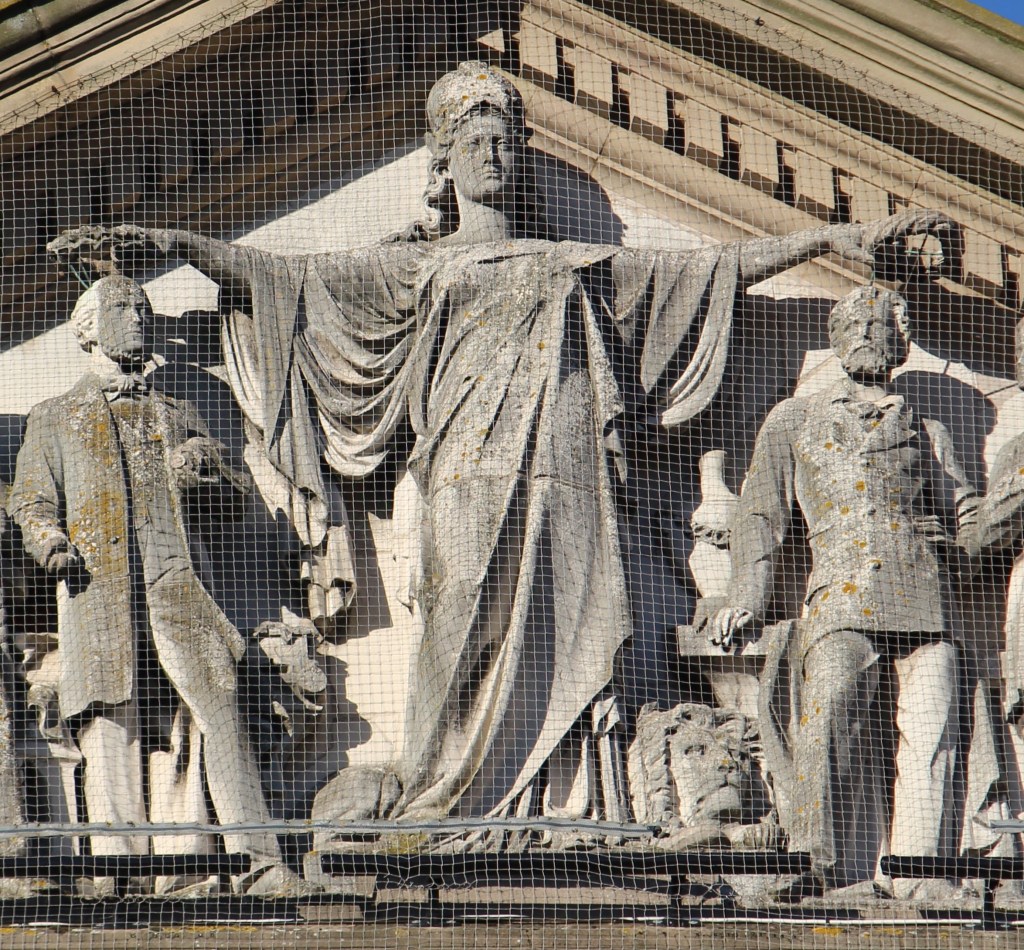
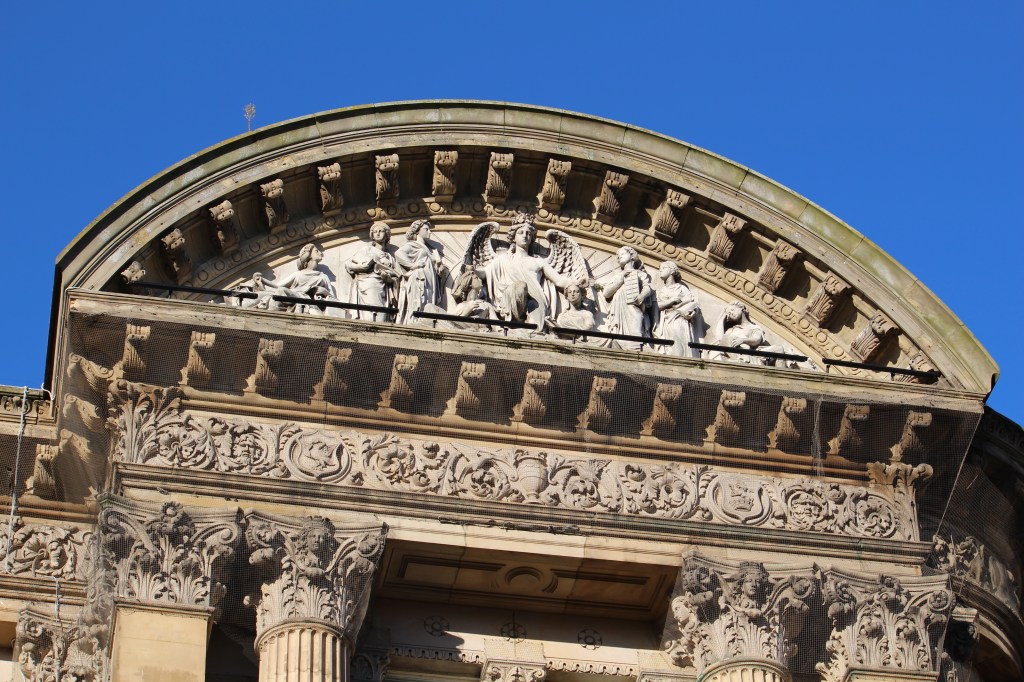
The Pediment Frieze

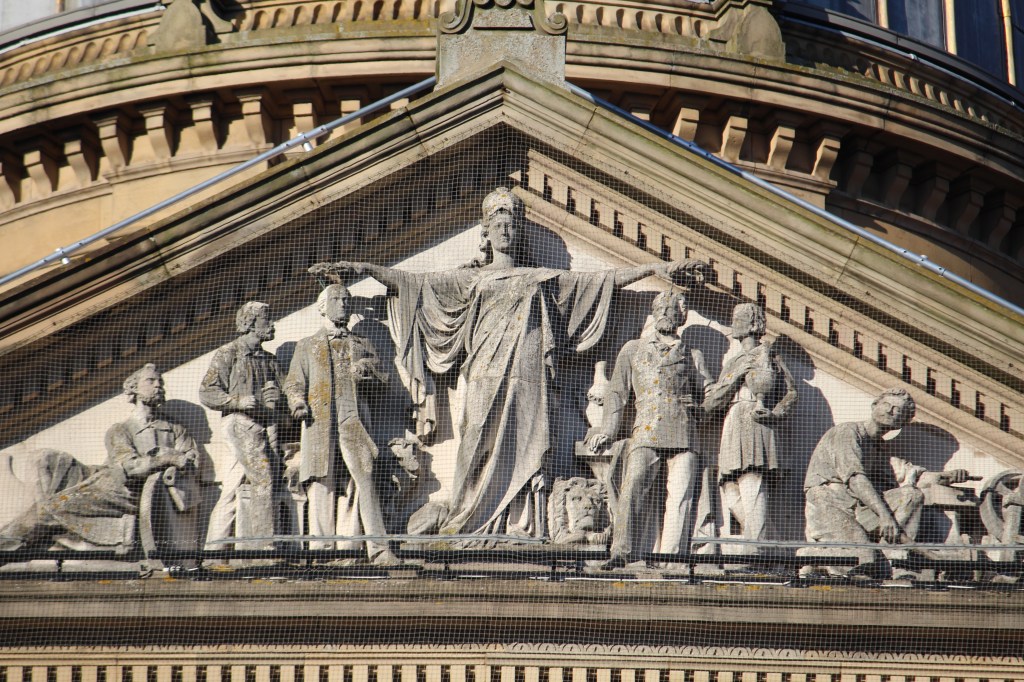
The central triangular pediment however offers a much more radical vision of late Victorian society, with Britannia in classical garb with her arms outstretched, here representing the nation (a very clear rejection of Queen Victoria, who by then was almost always centre-stage), flanked, not by further allegorical sculptures of Truth, Wisdom or Learning as one might expect, but instead by two suited industrialists with outside them, standing back and crouching within the angled corners, four bare-armed and aproned members of the working class, surrounded by the flotsam and jetsam of the town’s manufacturing trades, and just in case anyone missed the central meaning of all this, Britannia is holding two laurel leaf crowns above the industrialists’ heads. Times were changing and even then, a less deferential society was emerging, with the successful industrialists of Birmingham seeing themselves as the ones responsible for the creation of Britannia’s wealth and new position as global top-dog as opposed to the upper classes, who had inherited their wealth and social position.

The Wealth Creators

My latest book on ‘British Architectural Sculpture from the Great Exhibition to the Festival of Britain’ will be published by Lund Humphries in 2023.

If you don’t want to miss out on future blogs please follow me on johngooldstewart.com.

Blog 75

Glasgow

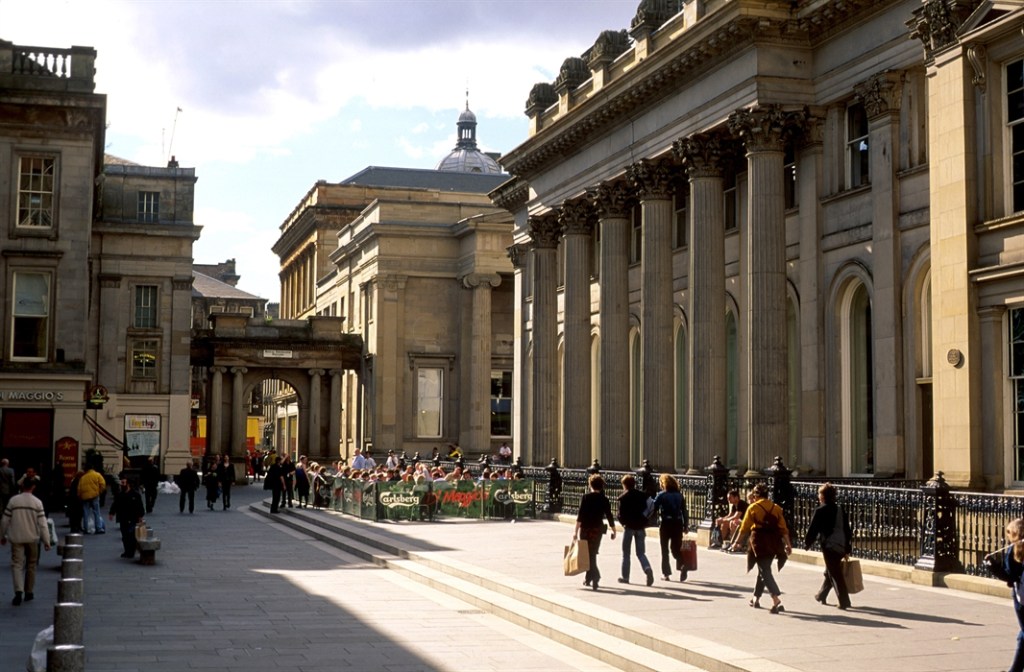
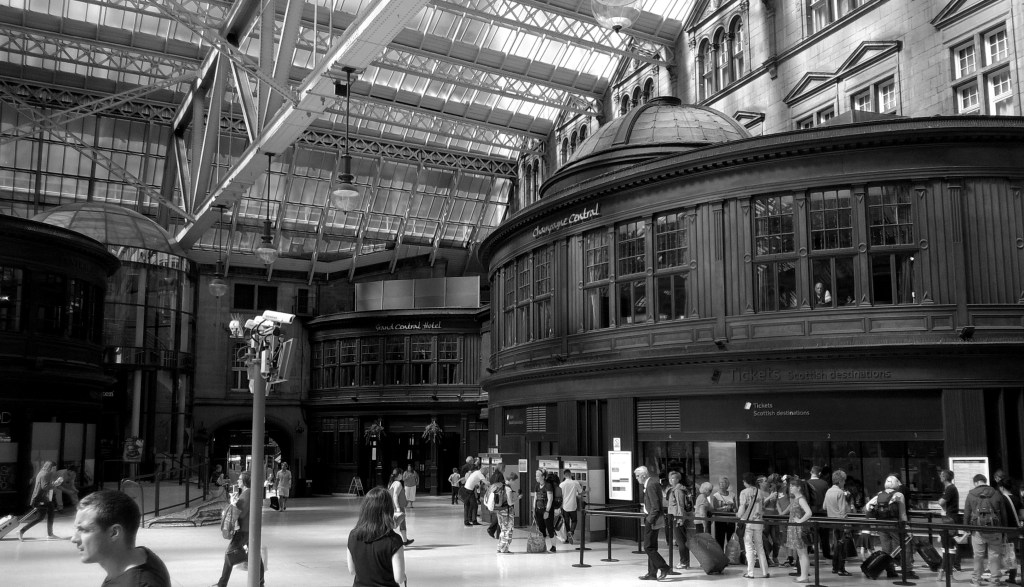
I recently had the pleasure of spending several days back in Glasgow for the first time Post-Covid and it remains a fascinating city. The city centre, which is still largely Victorian, has changed hugely in the last 50 years with almost every one of the city’s many beautiful bank and other commercial buildings now converted into bars and restaurants – which allows even more people to enjoy these buildings’ stunning interiors – and, just as importantly, ensures their proper maintenance and hopefully, also secures their future. One of the latest of these is James Miller’s Anchor Line building which has been extremely sensitively restored and converted to a very stylish bar and restaurant.

The Anchor Line

The situation with the shops is a much more mixed picture with many of the ground floor units in Glasgow’s historic buildings now empty. Clearly the pandemic has taken its toll both in terms of its impact on the local economy and in driving millions of shoppers online, but the other major problem for Glasgow and most other British cities is the impact of its Shopping Centres. There are several in the centre of Glasgow including the Buchanan Galleries, the Sauchiehall Centre, the Savoy Centre and the St Enoch Centre and they all draw shops out of the historic city centre commercial buildings and into their air-conditioned interiors. Of course, they have many practical benefits – you can shop under cover (no mean advantage in Glasgow), they usually have their own linked car parking and of course for their developers and owners, they attract the chain stores who love the ease of their standard shop units. But this all comes at a cost.

Shop to Let

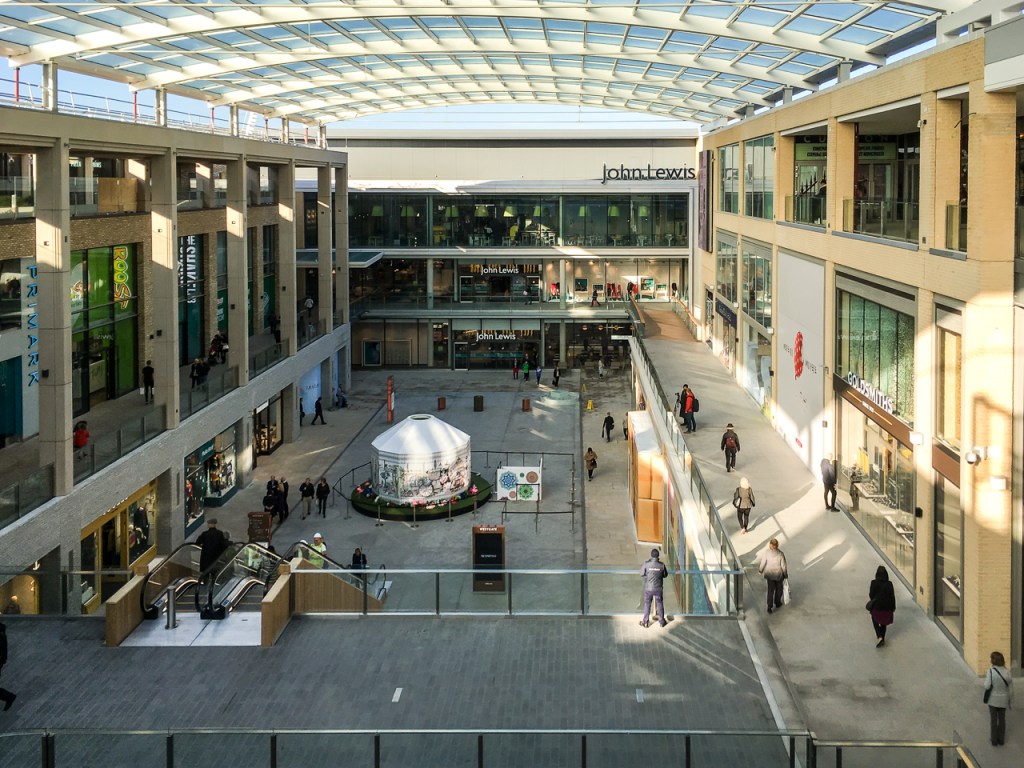
Sauchiehall Street, once Glasgow’s principal shopping street, is on its knees, and many important city buildings are ‘To Let’ at ground level. Independents are now almost non-existent in the city centre as the economies of scale available to the chains helps them to sustain ever higher rents and rates – and it’s not just Glasgow. The vastly extended Westgate Shopping Centre in Oxford is having a similar effect on its historic principal street ‘The High,’ which now sports empty shop units for the first time in living memory. I know towns, cities and retail patterns change over time but having the lifeblood sucked out of our historic urban centres seems a high price to pay for yet another John Lewis anchor store.

Oxford Westgate

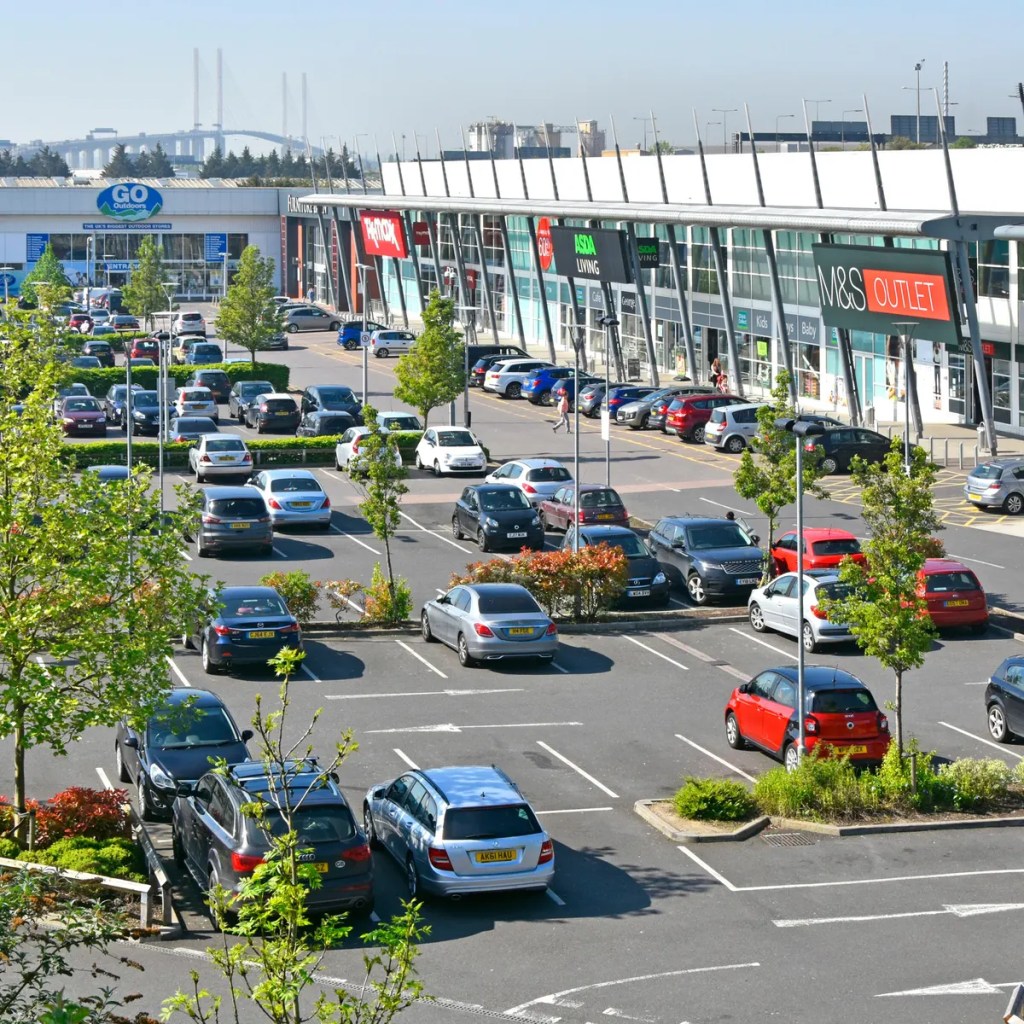
We have mountains of planning legislation in the UK specifically to deal with issues like this, but unfortunately, when these huge retail proposals get to councillors for a decision, it’s invariably a choice between a developer with an army of articulate suits and the offer of new jobs and the needs of a few local private shopkeepers with the impact on the historic core of the town or city rarely mentioned and sadly, the offer of (what are apparently) new jobs, seems to win hands down almost every time. There’s a lot of talk about sustaining or revitalising our High Streets (and Main Streets) but the real challenge actually lies in controlling new development elsewhere.

Anywhere

If you don’t want to miss out on further blocks then please follow me on johngooldstewart.com

Blog 74

Sudbury Hall

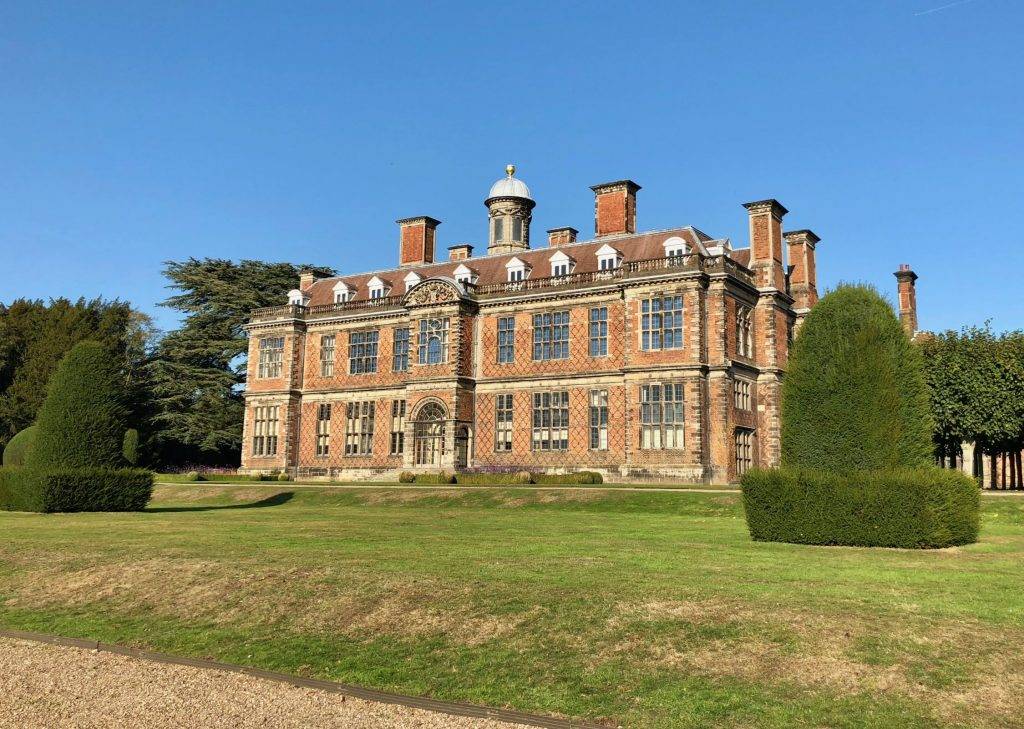
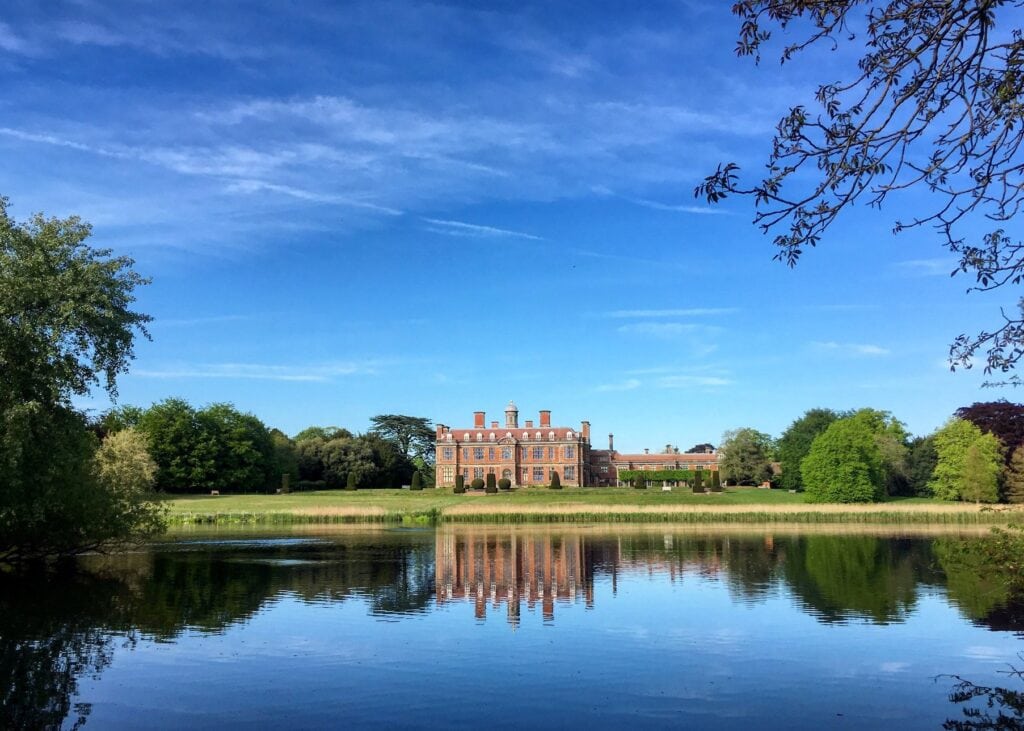
Sudbury Hall in Derbyshire (1660-80) is not one of Britain’s greatest country houses such as Blenheim or Chatsworth, but it is representative of the vast number of outstanding ‘second-division’ country houses with which this country is almost uniquely blessed. Nevertheless, it is an important house both architecturally and historically as it represents one of our finest Restoration mansions. Its interiors in particular are outstanding (having been used for the internal Pemberley scenes in the BBC’s classic dramatisation (1995) of Jane Austen’s Pride and Prejudice). It was gifted to the National Trust by the Vernon family in 1967 in whose safe-keeping they placed it. Sadly, as is happening more and more around their national estate, the National Trust (despite their title), have betrayed the family’s trust and now turned the house into a theme park. It is apparently no longer ‘Sudbury Hall’ but the ‘Children’s Country House at Sudbury.’

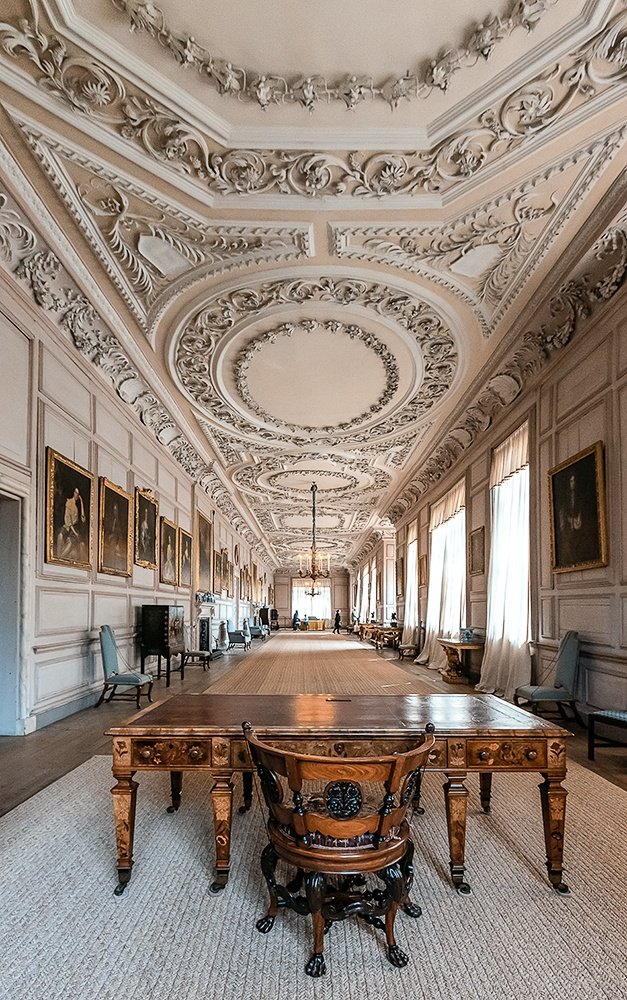
The Long Gallery (before)

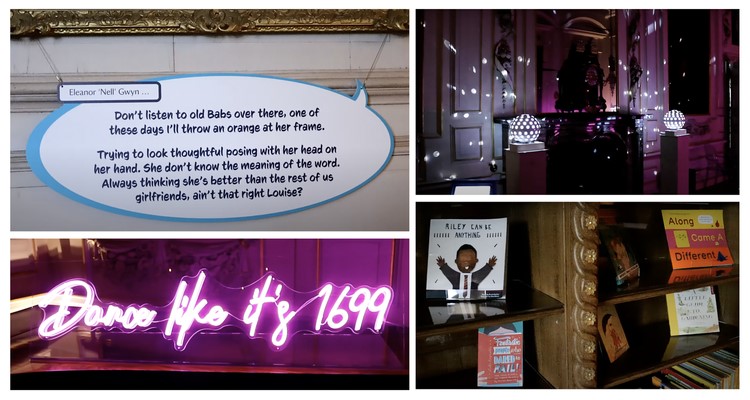
The house has been stripped of much of its historic furniture ‘to make way for children’s activities’ with books and other historic memorabilia, which are a key element of the Sudbury collection, placed in storage. Its famous Long Gallery is now little more than a playground while its magnificent Saloon has been turned into a disco room, with a neon slogan reading “Dance like it’s 1699”. The daughter of the 10th Lord Vernon who gifted the house described the Trust’s treatment of it as a ‘major exercise of dumbing down’ and confirmed that ‘the changes at Sudbury Hall have taken place without consultation in the locality or with the donor family. The donor, my father, understood the house would be cared for as a historic property, and it deserves to be, given the extraordinary quality of its interiors, but it has now been turned into a child-centred theme park. This is inappropriate and sad.’ The National Trust now describe historic Sudbury Hall as ‘a fun educational experience’ for children.

The Main Staircase (before)

Sadly, Sudbury Hall is not alone, as property after property within the National Trust’s estate are undergoing similar exercises in ‘popularisation’ in a desperate attempt to ‘attract young people.’ The National Trust used to have landscape and building conservation at its very heart, its often-painstaking restorations set an international standard and many of their curators (a considerable number of whom have now left, voluntarily or otherwise) were similarly well regarded. Their extraordinary achievements over more than a hundred years in saving numerous historically and architecturally important buildings are now being completely undermined with the diversity and average age of their visitors now their key performance indicators rather than the quality of the care of the properties which were left in their trust.

The Children’s Country House at Sudbury (after)

I have nothing against theme parks (I loved Disneyland) nor play facilities for children and I can equally see why visiting a historic building may be boring for many people, but its not compulsory and there are plenty of other attractions available throughout the country for families with young children who want a day out. All is not lost however and a new group ‘Restore Trust’ has been formed with the aim of returning the Trust to its original principles and protecting its properties from further vandalism. You can find out more about them on their website www.restoretrust.org.uk and if you are a National Trust member, please stay and join the fight to save our national heritage rather than resigning in disgust, as so many have already done.

Sudbury Hall

If you don’t want to miss out on further blogs then please follow me at johngooldstewart.com
Blog 73

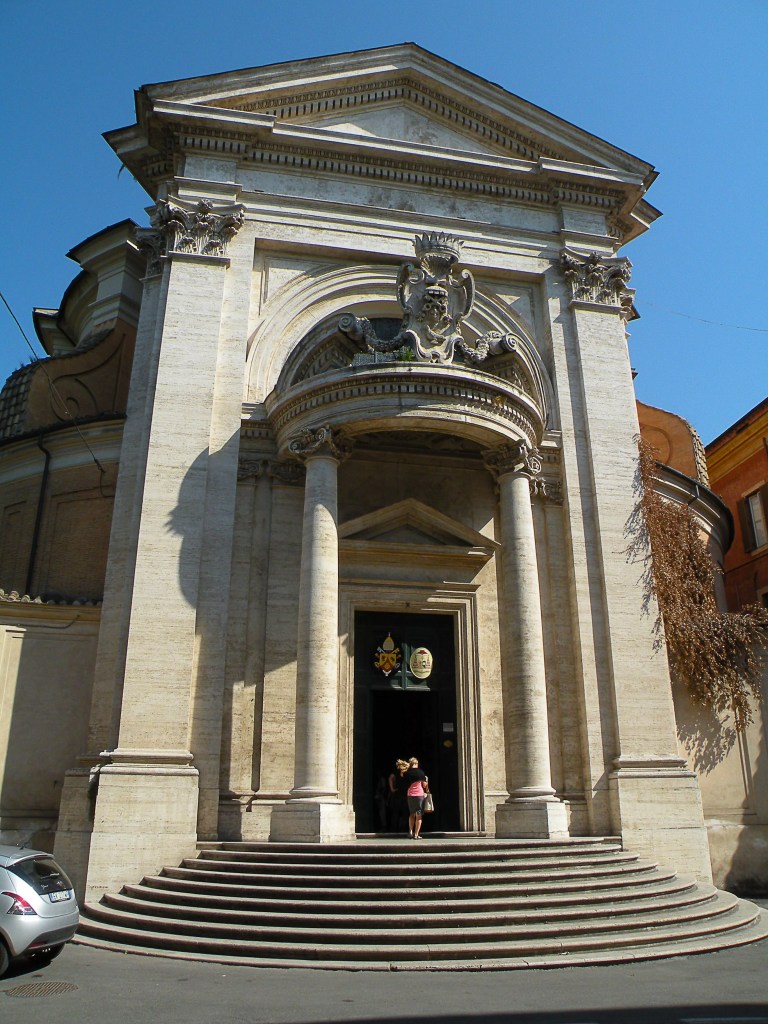
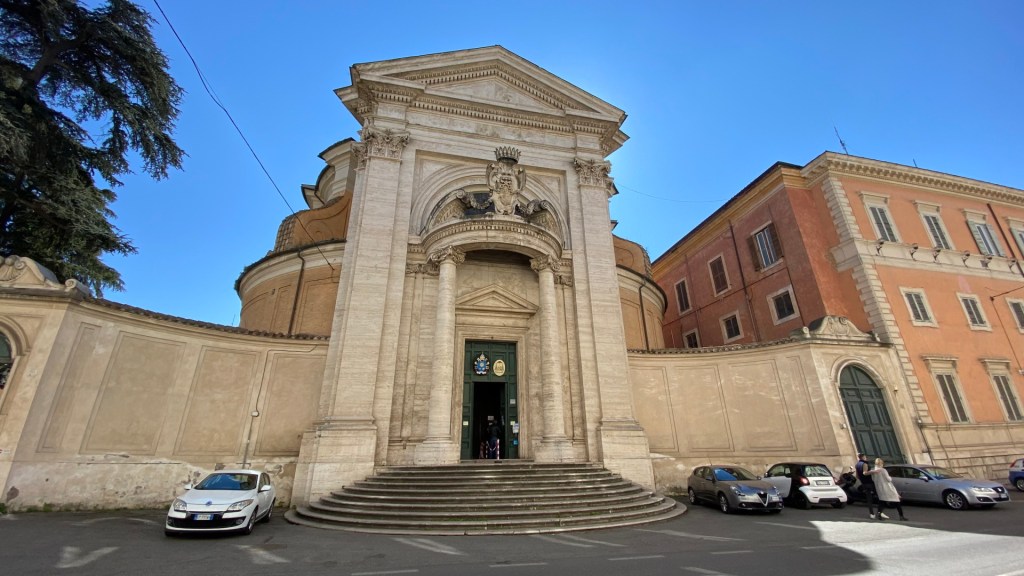
San Andrea al Quirinale

There can be few artistic achievements in the entire history of mankind which top the architecture, sculpture and painting of Baroque Rome. At its height in Rome from around 1630–1680, Baroque is particularly associated with the Catholic Counter-Reformation. Its dynamic movement, bold realism (giving viewers the impression they were witnessing an actual event), and direct emotional appeal were ideally suited to proclaiming the reinvigorated spirit of the Catholic Church. The movement was dominated by one artist – Gian Lorenzo Bernini (1598-1680) – the greatest sculptor and architect of his age.

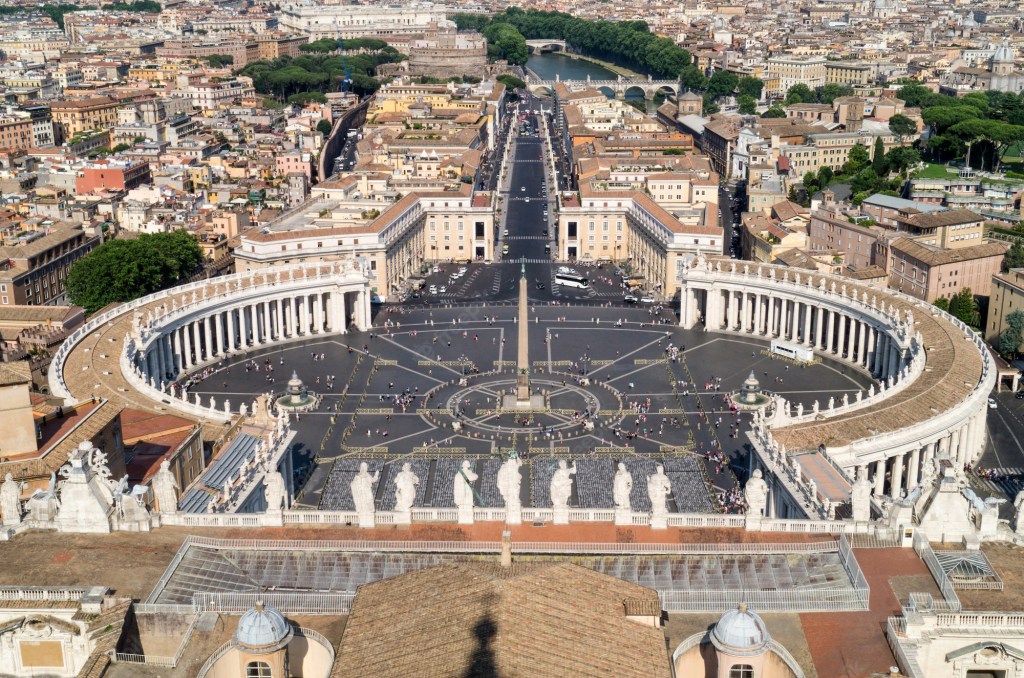
His achievements were extraordinary, from the creation of St Peter’s Square to sculptures such as The Ecstasy of Saint Teresa, his work set a new artistic standard and transformed numerous public spaces throughout the city. But for me, what made him utterly exceptional, was his ability to integrate sculpture with architecture to create a complete and seamless work of art in three dimensions. Though in many ways modest, his greatest architectural achievement is his small church of San Andrea al Quirinale, (1658-70) built for the Jesuit seminary on Quirinal Hill.

Like so many Roman churches, the exterior of the building is in a remarkably plain red brick and it is only the main entrance elevation which is in stone. This is set back slightly from the road to create a small space in front of the church which is enclosed by low quadrant walls and down into which the entrance steps cascade, setting up a certain dynamism between the concave and convex geometries. Below the pediment, a semi-circular porch steps forward and bears the coat of arms of Cardinal Camillo Francesco Maria Pamphili, Bernini’s patron on this occasion. In terms of Baroque Rome, this is an extremely restrained façade and is designed to lower expectations before entering the church.

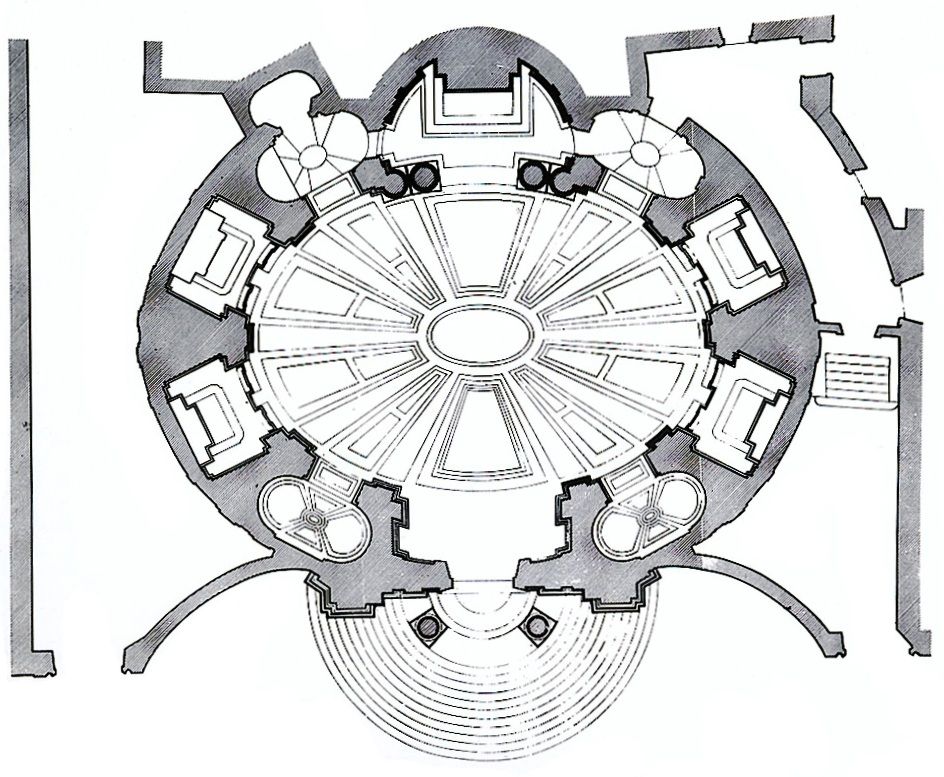
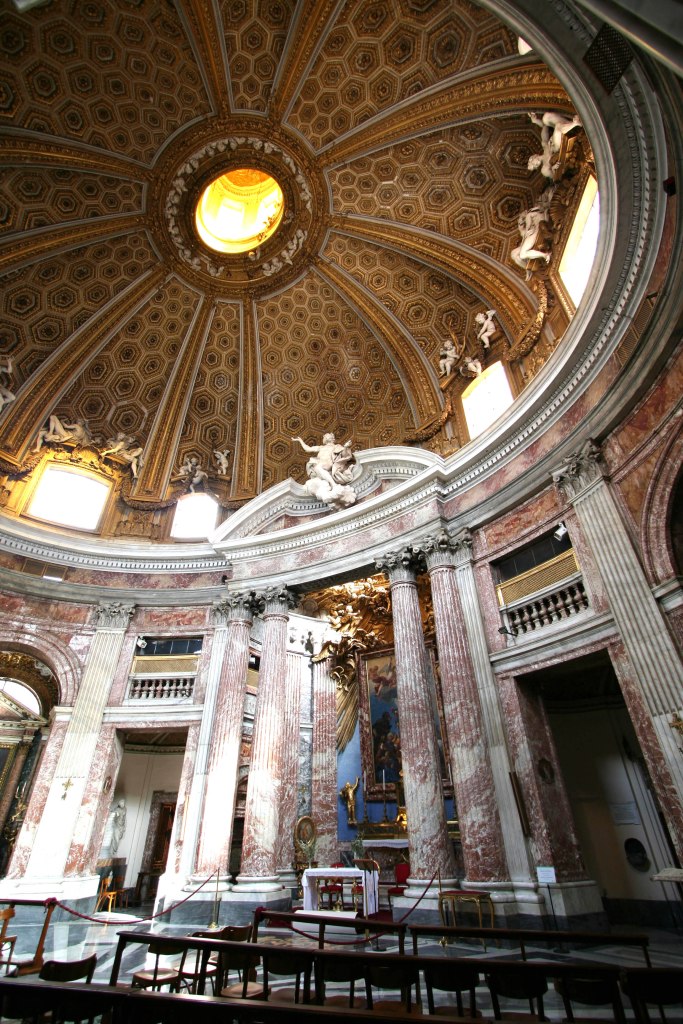
The plan of the church is oval, with the altar directly ahead almost overwhelming the visitor as soon as they enter. Borromini’s church, San Carlo alle Quattro Fontane, which is just a little further down the same road, is also oval in plan but with the altar on the long axis, giving it a greater sense of tranquility but by, most unconventionally, turning the oval through 90o, Bernini has created a powerful feeling that the entire space is being squeezed, making the high altar almost overpowering and making the niche at its rear, which is lit from above, the inescapable focus of the entire composition.

Above the altar is a painting of The Martyrdom of Saint Andrew, which is surrounded by a host of sculpted angels within a golden sunburst, who draw the eye upwards towards the hidden light above, symbolising Saint Andrew’s ascension into heaven. This theme is then repeated by the sculpture within the broken pediment of the altar’s aedicule frame, who looks heavenwards to the light above the dome of the main space. The impact that this building still has on visitors after almost 400 years is almost overwhelming but just consider how it must have communicated the power and glory of God to a largely illiterate population back in the 17th century. Bernini considered it his greatest work and towards the end of his life often visited to enjoy what he must have realised was one of the greatest achievements of Western Art.

If you don’t want to miss out on further blogs then please follow me on johngooldstewart.com

Blog 72

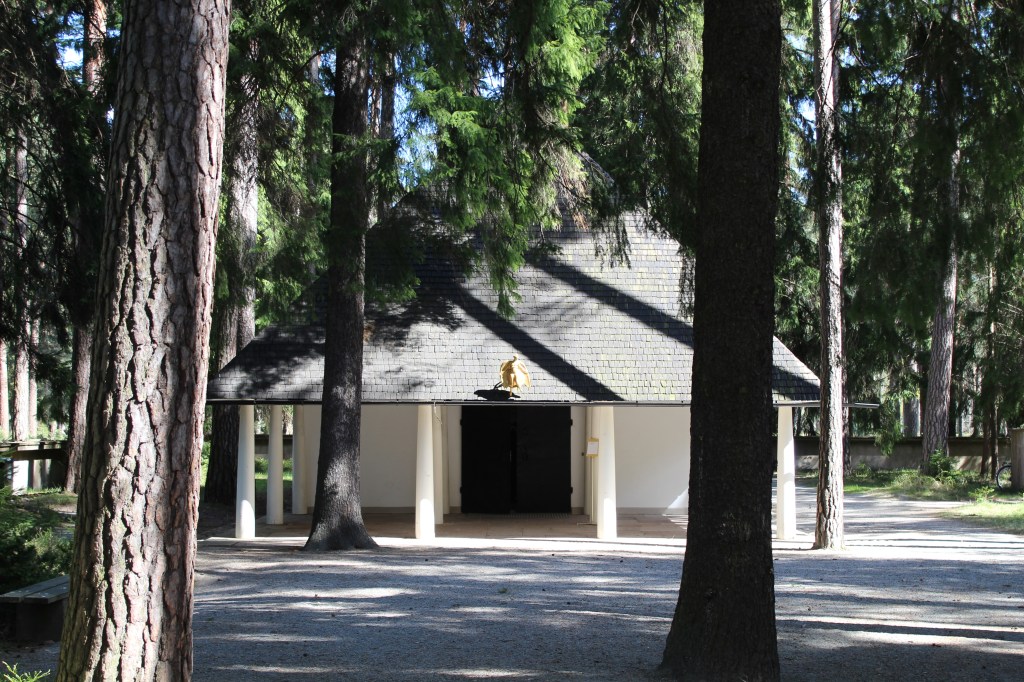
Asplund’s Woodland Chapel

Sooner or later, I had to write about Gunnar Asplund’s Woodland Chapel in Stockholm. If I think of my top ten favourite buildings, it’s on the list straight away and the other nine are measured against it. It sits in the trees of Asplund and Sigurd Lewerentz’s Woodland Cemetery which they created in the 1920’s and 30’s to serve the vastly increased population of newly-industrialised Stockholm. With the principal external spaces of the cemetery carved out of the existing wood, the promoters of the cemetery were keen to get a small, relatively cheap chapel built, consecrated and open for business as quickly as possible and it fell to Asplund to respond to the challenge. What he created, in these least auspicious of circumstances, is one of the greatest pieces of architecture of the twentieth century.

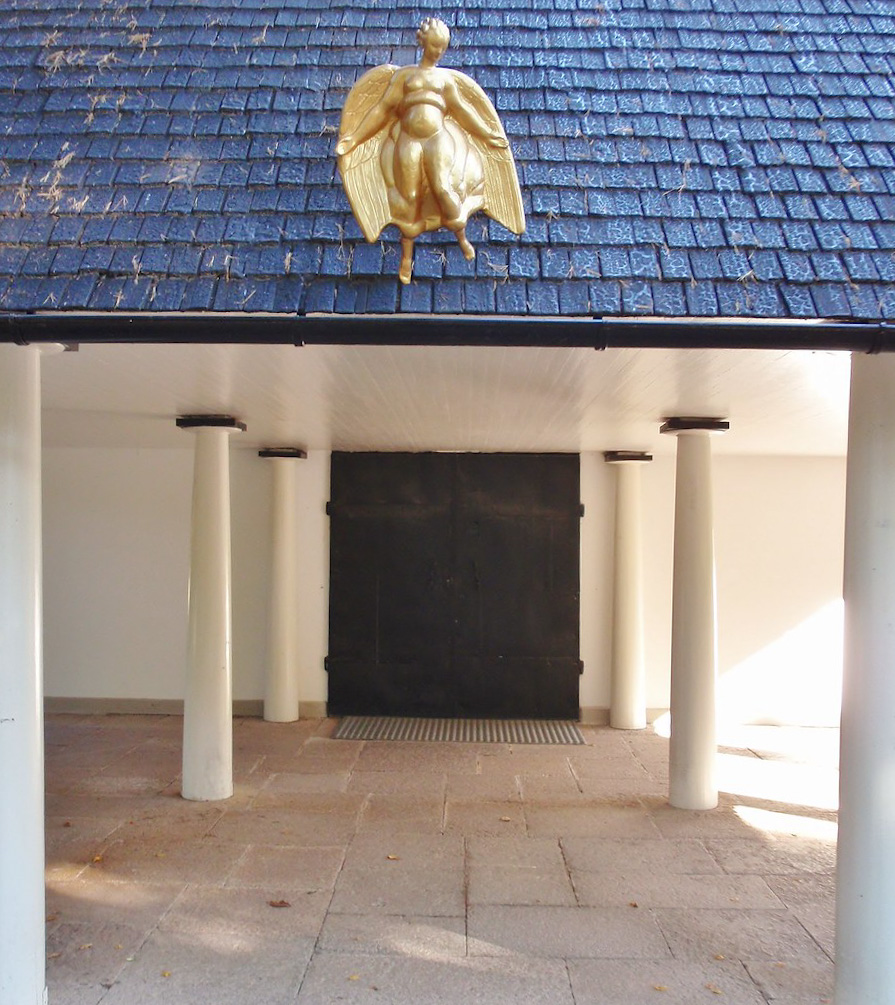
At first sight it appears to be just the simple building that Asplund’s clients had demanded with its vast black wooden shingle roof supported on the simplest of columns but as its approached through the towering trees, it emerges as a powerful piece of architecture. The pyramidal roof is itself a symbol of both death and a life after and on axis, just above the eaves below which we enter, is a golden ‘Angel of Death’ by sculptor Carl Milles. But we pass beyond death to a space within to await the start of the ceremony below the great sheltering roof, from where we glimpse, not a dark, but a light-filled interior.

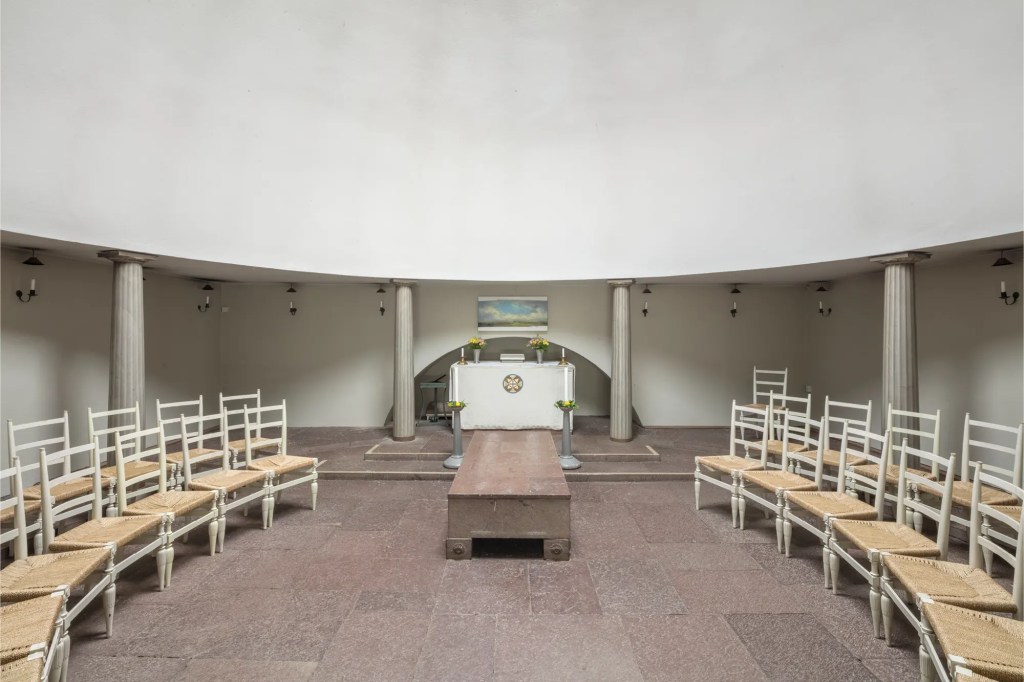
A perfect half sphere has been carved out of the roof and this is toplit from above. After the darkness and savagery of the forest, here is a space of utter tranquility. The semi-sphere symbolises the earth, which is about to be departed and the light – the heavens above. The paved floor reminds us of an ancient pathway that has been trod for centuries by those who have gone before us and as there is no fixed seating, the mourners simply gather around the coffin on plain wooden chairs as would have been done in village cemeteries throughout Sweden for centuries.

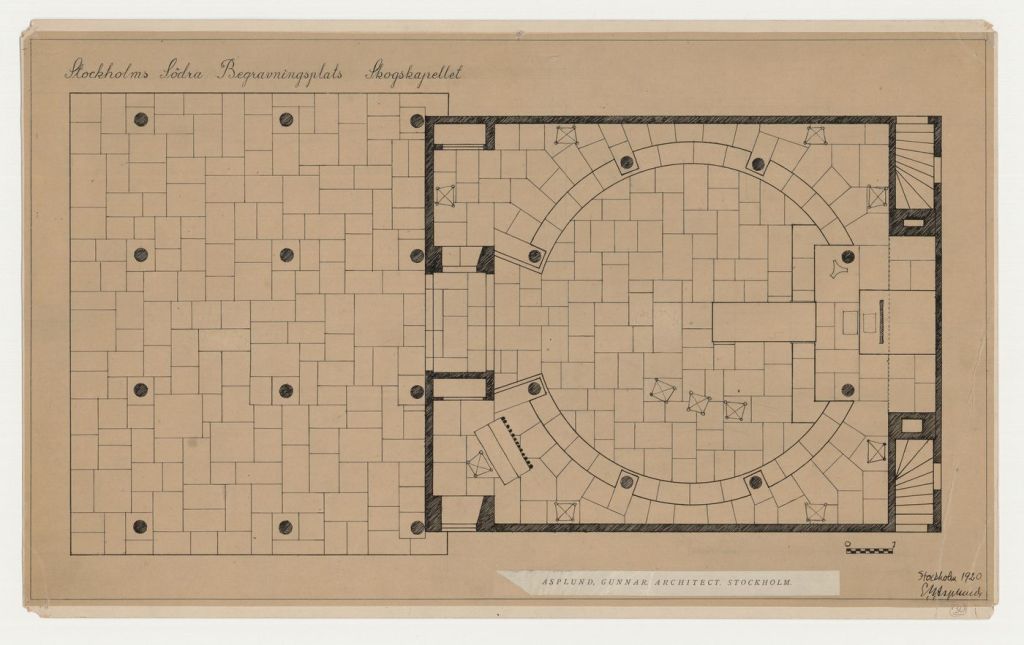
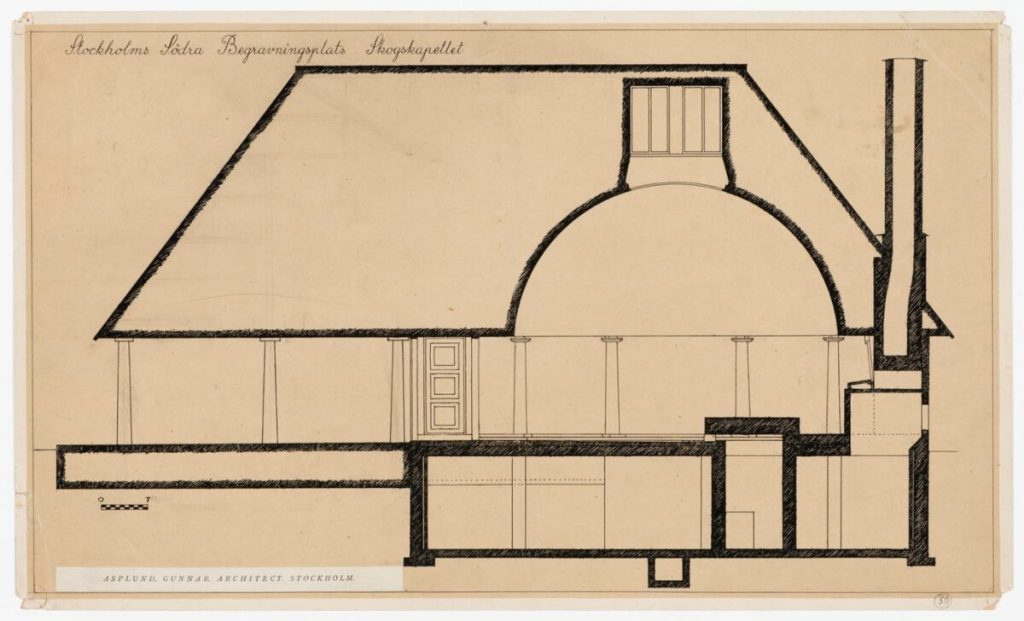
The plan and section are exquisite – a perfect circle within the square of the chapel and a semi-circle in section to provide the domed space within, but Asplund is not merely playing with shapes and patterns – every element here plays its part in the ritual and all his efforts have been focused on providing the perfect setting for what he described as “the difficult moment of parting”. On leaving, mourners sense the compression of the low columned portico once more, before being released back out into the forest and the world beyond – and all this was provided for a rather-undeserving client who wanted something cheap and fast.

If you don’t want to miss out on further blogs then please follow me at johngooldstewart.com
Blog 71

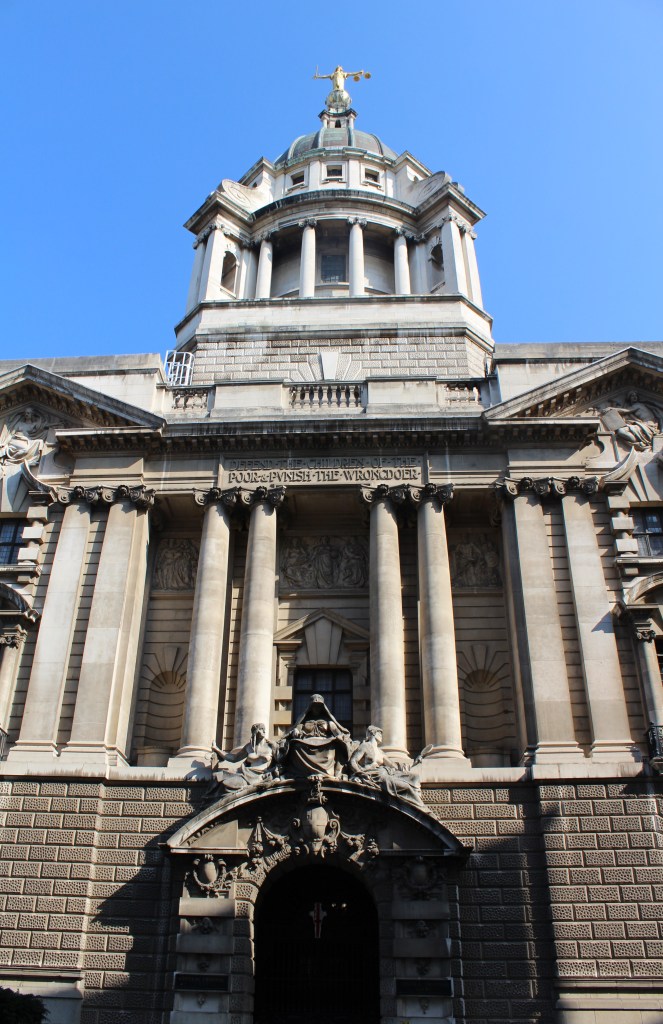
The Old Bailey

The ‘Old Bailey’ as it’s known (after the street in London in which it stands), is England’s principal criminal court. Completed in 1902, it was designed by Edward William Mountford (1855-1908) – yet another outstanding British architect who is now almost forgotten. Despite dying at only 52, he had already completed not just the Old Bailey but also Sheffield Town Hall, Lancaster Town Hall, Battersea Town Hall and Battersea Central Library in a variety of styles ranging from High French Renaissance in Sheffield to a restrained Beaux Arts in Lancaster.

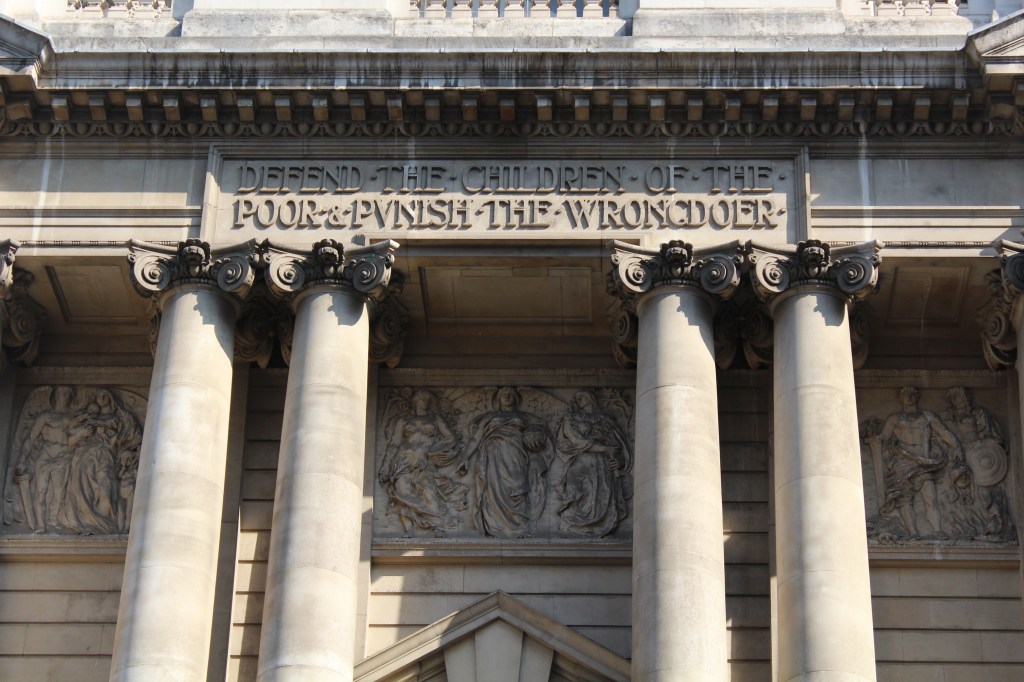
The Old Bailey is in the English Baroque style which John Belcher popularised and which came to typify the Edwardian age. It was characterised by its particularly bold detailing, sharp rustication and extensive use of architectural sculpture which Belcher had established as a key element of the style in his ground-breaking Institute of Chartered Accountants Hall of 1893. It coincided with establishment of the ‘New Sculpture’ movement with its focus on naturalistic poses and fascination with symbolic and spiritual subjects and there were many contemporary partnerships formed between architects and sculptors who often worked together consistently throughout their careers.

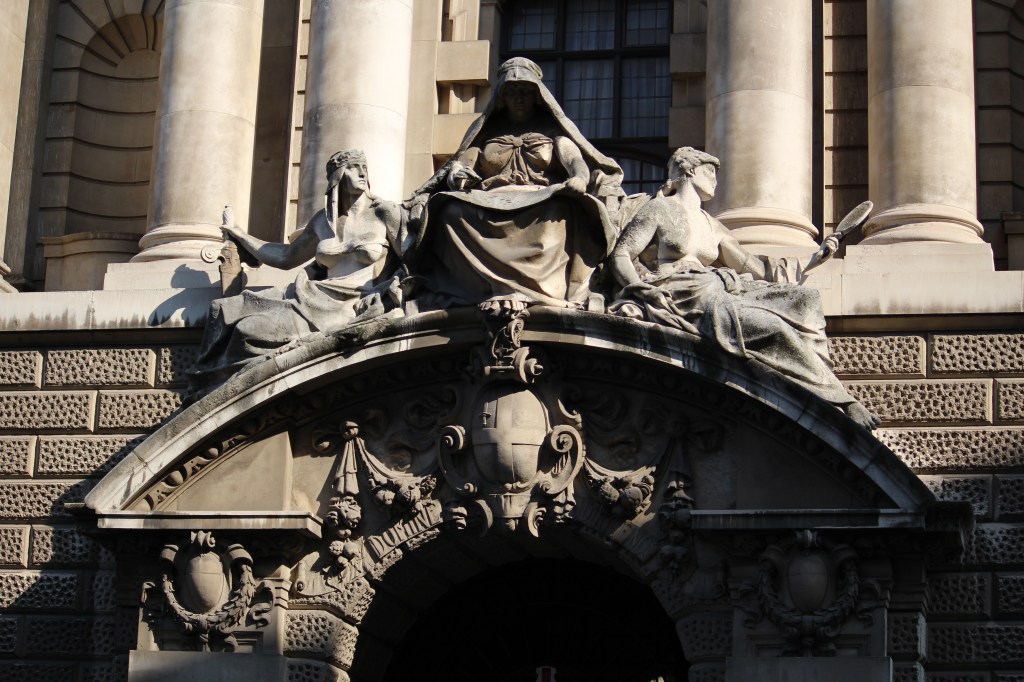
In Mountford’s case he had gained the appointment of sculptor Frederick William Pomeroy (1856-1924) to execute the sculpture on Sheffield Town Hall and the two worked together after that on all of Mountford’s projects until his death. At the Old Bailey Pomeroy provided both the external sculpture and a considerable amount of sculpture within Mountford’s magnificent interiors as well as perhaps his most famous sculpture of Justice which crowns Mountford’s mighty dome.

Their greatest shared achievement however was the decoration of the main entrance (sadly, now rarely used as the more modest entrance to McMorran and Whitby’s late 60’s extension is what usually appears on the news) with its haunting allegorical group by Pomeroy. This is centred on the hooded Recording Angel who consults her scroll on which are listed the names of the guilty, supported on either side by Fortitude and Truth, the attributes required to prove one’s innocence. While verging on the macabre to our twenty first century tastes, it remains a powerful, moving and exquisitely carved gift to the public realm.

My latest book, which covers the work of Mountford and Pomeroy in detail, British Architectural Sculpture 1851-1951, is due to be published in 2023. If you don’t want to miss out on further blogs then please follow me on johngooldstewart.com
#architecture#mountford#oldbailey#london#law#sculpture#pomeroy

Blog 77

The Architecture of Kyiv

During the summer, the threat to Kiev’s rich architectural heritage seemed to have receded, but with Putin’s shift to missile attacks during the last few months, the risk of damage or indeed its destruction has reared its head once more. With his obvious contempt for human life, one can hardly hope that he will make any effort to spare Ukraine’s cultural or artistic assets.

Let’s hope that 2023 brings the removal of the invading army, peace and reconstruction and perhaps we can all spare a thought for those in Ukraine without heating or lighting as we celebrate the New Year ourselves.

Blog 69

Owletts

Sir Herbert Baker lived at Owletts his home in Kent for most of his life. His family had lived there since the 17th century and it was only his success as one of the leading British architects of the early 20th century which allowed him to sustain it. Shortly before his death he bequeathed the house and most of its contents to the National Trust and it has remained open to the public ever since, that is, until this year.

Staff Party at Owletts 1925

For the first time, it failed to appear in the National Trust Handbook last month and (long after the handbook had already gone to publication) the current tenants, his great Grandson and his family, were informed that the house would only open for two ‘Heritage Days’ later in the year. They were also informed that the Trust would like to renegotiate their lease and, with the building now effectively closed to the public, they fear that the rent which will now be demanded will be far beyond their means.

Owletts is one of only two National Trust properties in Britain which are the former homes of prominent architects (the other being Erno Goldfinger’s 2 Willow Road) and it has now been closed to the public without either notice or consultation. As Sir Herbert’s home it still contains many of the artefacts of his day to day life including books, drawings and several pieces of furniture which he designed specifically for the house including a dining room suite which was carved by the prominent sculptor Joseph Armitage. If it is now let as a private house then all this will simply be placed in long-term storage and the unique environment which Sir Herbert created at Owletts destroyed.

Herbert’s daughter Ann’s chair

It would be a tragedy if this were allowed to happen just as interest in Sir Herbert’s work is finally growing. The Trust have described the closure as an ‘experiment’ though quite what they are measuring is unclear – effect on visitor numbers? A petition to reverse the closure has now been started and if you are as concerned as I am as to this loss of our architectural heritage, I hope that you will join me in signing it. The link is below and please forward this blog to friends to help spread the word and have this decision reversed before the house is cleared:

https://chng.it/RyvKrLRhR7

You can read more about Sir Herbert and his life at Owletts in my biography Sir Herbert Baker : Architect to the British Empire which was published last year. If you don’t want to miss out on further blogs then please follow me on johngooldstewart.com
#architecture#baker#owletts#empire#kent

Blog 68

Gleneagles Hotel

Gleneagles Hotel is just one of the many outstanding buildings designed by Scotland’s most prolific architect, James Miller (1860-1947). It was the third of his great Scottish resort hotels, all of which were built by railway companies to encourage recreational travel, following his completion of Turnberry Hotel in 1905 and Peebles Hydro Hotel in 1907. His client for Gleneagles was Donald Mathieson, the general manager of the Caledonian Railway Company – the two men had been school friends at Perth Academy and had already worked together on the design and construction of numerous new railway stations throughout Scotland as well as the rebuilding of Glasgow’s massive Central Station.

Both Mathieson and Miller now lived and worked in Glasgow but Mathieson often returned to his native Perthshire for family holidays and had found a particular spot near Crieff Junction Railway Station that he thought would be perfect for another destination hotel and he took the name of a nearby pass through the Ochill Hills – ‘Glen Eagles’ – as the name for a new station and the nearby resort that he planned. Miller’s appointment was assured and his team were soon hard at work on their largest hotel commission to date, with Open Champion and leading golf course designer James Braid appointed to lay out two new eighteen-hole courses around the hotel.

Miller’s site for Gleneagles Hotel was unlike both Turnberry and Peebles Hydro – both of these occupying elevated positions on a ridge. At Gleneagles, the hotel was to be below the hills and the golf courses and surrounded on all sides by breath-taking scenery and his response was thus a more compact building – a U-shaped block which was centred on a generous semi-circular south-facing dining room bay from which the buildings stepped back and out towards the back, thus maximising the number of rooms with a view. As at Turnberry and Peebles previously, it was to be in white-washed roughcast with sandstone dressings below a slate roof. The main public spaces including the dining rooms, bars and ballroom were all designed in a relatively restrained Edwardian Baroque, with construction commencing in 1913.
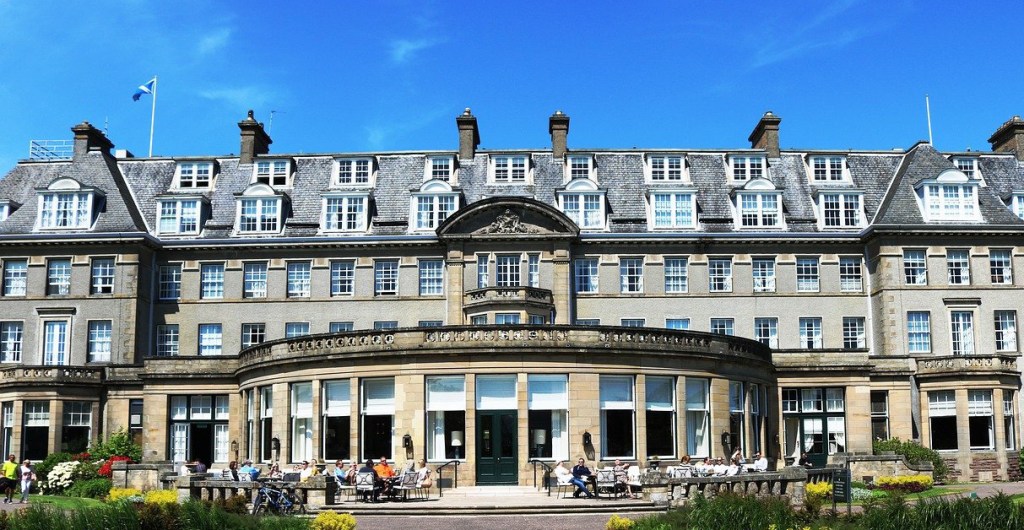
Just a year later, the outbreak of the First World War stopped work completely with little more than the foundations and the walls built, and so it remained for many years, with no guarantee of eventual completion. It was not until 1922 that Donald Mathieson finally decided to continue with the construction of the building and sadly for his good friend Miller, Mathieson had so little work then for his own engineering team, that he instructed them to oversee completion without Miller’s further involvement. While the interiors were faithfully completed to Miller’s designs, the exterior was left unpainted in the grey harling in which it stands today. Unlike many of these vast remote resort hotels (such as Cruden Bay in the north of Scotland, where only the golf course remains), Gleneagles was an immediate success when it finally opened in 1924, and it still remains one of the world’s great luxury hotels.

You can read more about James Miller in my joint biography of him and J.J. Burnet ‘The Life and Works of Glasgow Architects James Miller and John James Burnet’ which was published in November 2021 and if you don’t want to miss out on further blogs then please follow me on johngooldstewart.com