Blog 67

Herbert Baker Drawings

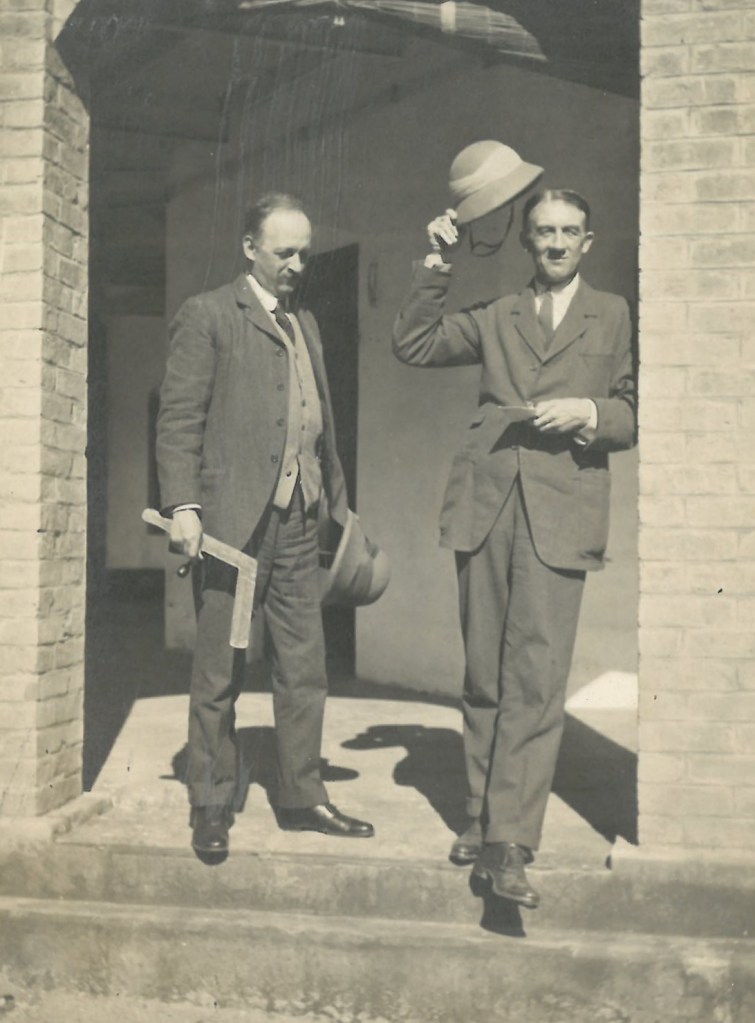
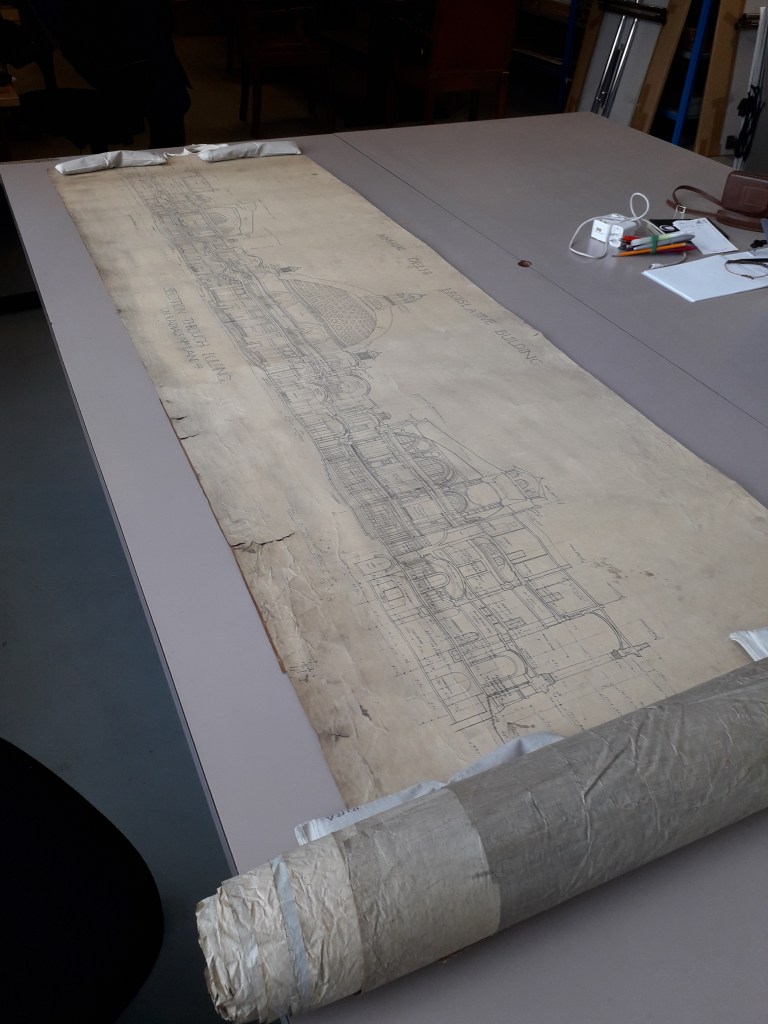
While researching my biography of Sir Herbert Baker I had the great pleasure of gaining access to his drawings in the RIBA’s collection. Unlike Lutyens (most of whose drawings were burnt in the 1940’s), there are a huge number of Baker’s drawings which survive. These include roll upon roll of his drawings for both the Secretariat Buildings and the Indian Parliament Buildings in New Delhi.

They convey the scale of the task which he and his team undertook in designing a building which was being constructed on the other side of the world during the 1920’s. Every detail of the buildings was worked out in London and drawn at various scales from around 1:50 up to full size. The drawings were then sent, by steamer, to India where the detailed design would be compared to the project cost plan before issuing to site. Baker had a single site architect representing him in Delhi throughout the process who was responsible for communication and clarification as well as (quite incredibly) quality control across the vast building site.

Baker himself would visit site every winter for several months, usually accompanied by one or two assistant architects, during which period he would continue to design outstanding elements, obtain agreement to his proposals from the Viceroy and his committee directly, set standards on site and assist the resident engineer with the procurement of skilled workmen, often persuading craftsmen whom he had worked with previously in South Africa to move to India to help, as well as encouraging the contribution of native artists.

The drawings give a flavour of this task which no description could achieve – often ten or twelve feet long, showing section after section, detail after detail with every stone course marked and cross-referenced. The quality of the draftsmanship is quite outstanding as circular staircases are cut in section, complex curving coffering drawn in two dimensions and columns and arches perfectly proportioned. The satisfaction which his team obviously derived from the process of drawing all this by hand simply sings from one astonishing drawing after another.
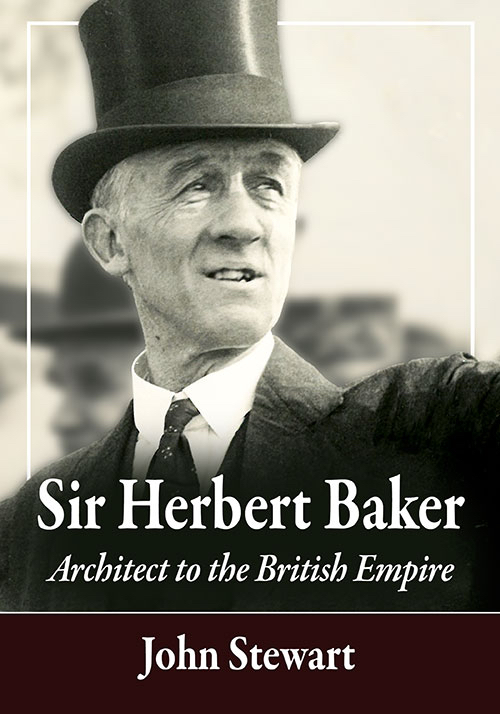
My biography of Sir Herbert Baker “Architect to the British Empire” was published in November 2021. If you don’t want to miss out on further blogs then please follow me on johngooldstewart.com

#architecture#drawing#india#delhi#riba#baker
Blog 66

Hope Bridge, Cleveland, Ohio

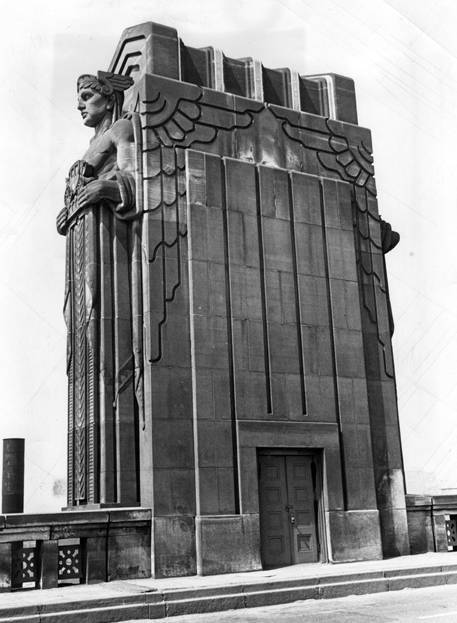
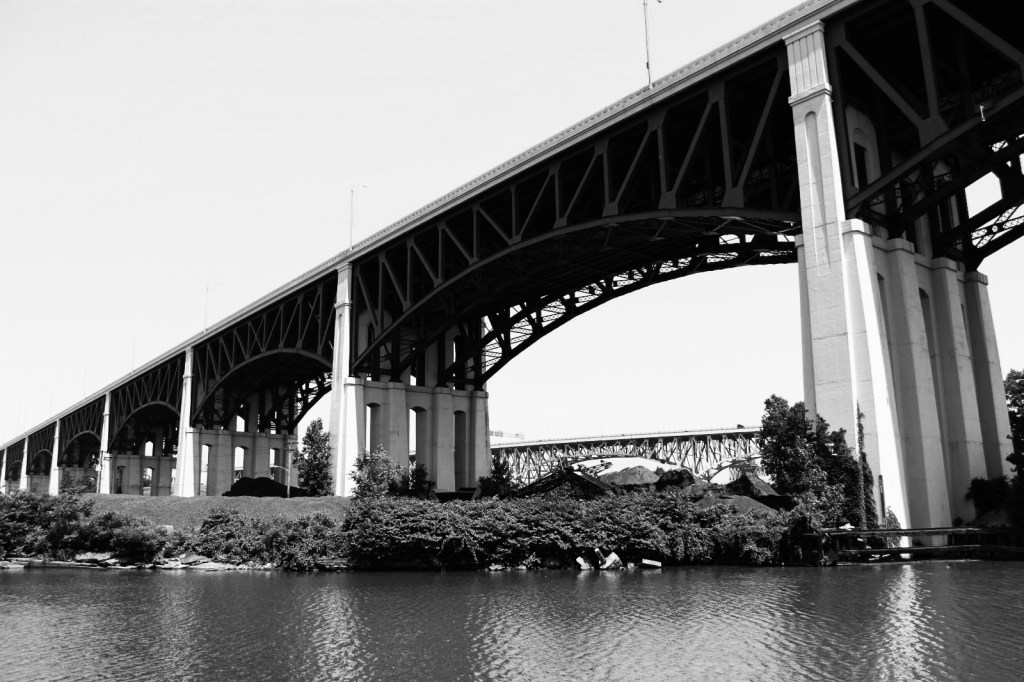
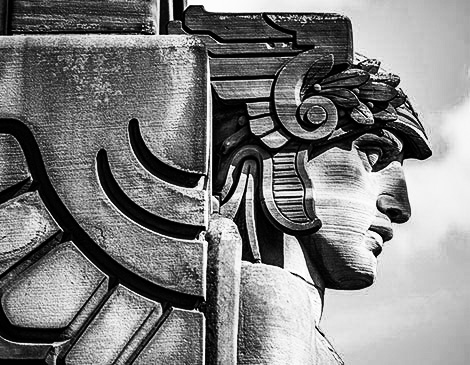
Continuing my ramblings on architecture, sculpture and engineering, I give you the Hope Memorial Bridge (previously the Lorain-Carnegie Bridge) in Cleveland, Ohio, or to be more specific, its magnificent sculpted pylons. The bridge itself, which was completed in 1932, is a massive 1,368m span steel truss road bridge on stone piers, which crosses the Cuyahoga River just before it flows into Lake Erie. What lifts it above the everyday are 4 massive sculpted stone pylons, which mark either end.

Like the sculptures of the Boulder Dam, the style is art deco and the pylons represented a collaboration between architect Frank Walker, engineers Wilbur J. Watson and Associates and sculptor Henry Hering. Each pylon has a sculpted figure on each side, known as the Guardians of Traffic who symbolise the progress of transportation and each hold a different vehicle including a hay wagon, covered wagon, stagecoach, car and various trucks.

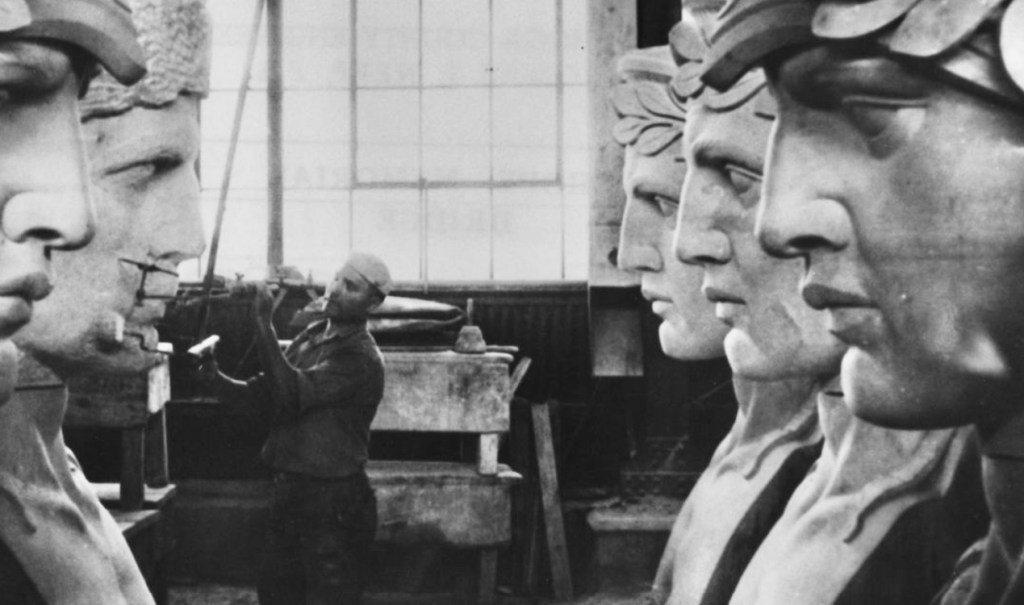
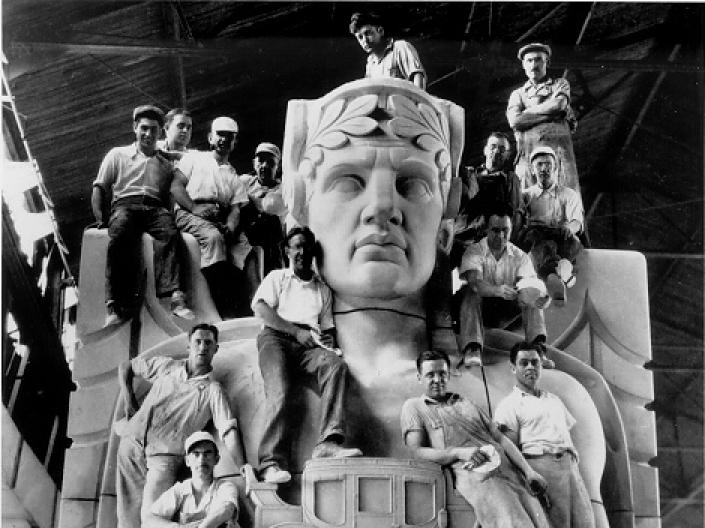
They were carved under Hering’s direction by a vast team of stonemasons who carried out their work in a covered studio, completing the sculptures in sections which could then be transported to the site and finally erected in situ. The sculptures are outstanding – crisp, strong and muscular and looking more than able to both help to support the bridge and carry their symbolic load. They represent not only human progress but sadly also one of the latter examples of outstanding public sculpture on an engineering structure. Unlike abstract art, they communicate their messages clearly and directly and need no descriptive text or pretentious explanation and have thus provided a delightful interlude in millions of people’s daily commute for almost 100 years.

Fortunately, the bridge was added to the National Register of Historic Places in 1976, saving the pylons from destruction after Cuyahoga County Engineer Albert S. Porter threatened to remove them to widen the bridge, stating that they were, “monstrosities and should be torn down and forgotten. There is nothing particularly historic about any one of them. We’re not running a May Show here.” He also proposed a Freeway through Shaker Lakes and its Nature Center, which he described as “a two-bit duck pond” and the demolition of the Bagley Road bridge, describing opponents of his plan as a bunch of “moochers, scroungers, chiselers and parasites.” Thankfully, he was removed from office in 1977, after pleading guilty to 19 counts of theft from his employees, who had been required to give him a 2% ‘kick-back’ from their pay to retain their jobs. He died in 1979 – while the bridge – is still going strong.
If you don’t want to miss out on further blogs then please follow me on johngooldstewart.com

#architecture#engineering#bridge#sculpture#cleveland#1930’s

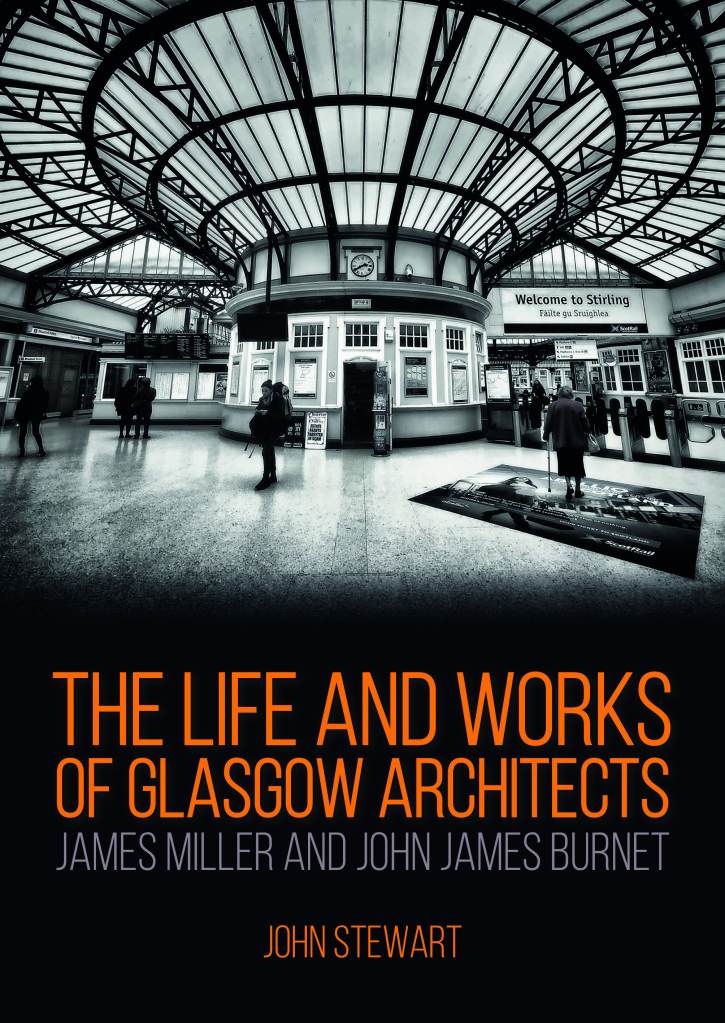
The Life and Works of James Miller and John James Burnet

Very gratifying to have my new book on JJ Burnet and James Miller being reprinted already – thanks to everyone for your support – and some great reviews too:

“There’s something particularly appealing about a book covering a significant subject that is so well researched and written that you know that it will become the definitive reference on that subject for the foreseeable future.”

#burnet#miller#scottisharchitecture#glasgow

Blog 65

Lutyens in South Africa

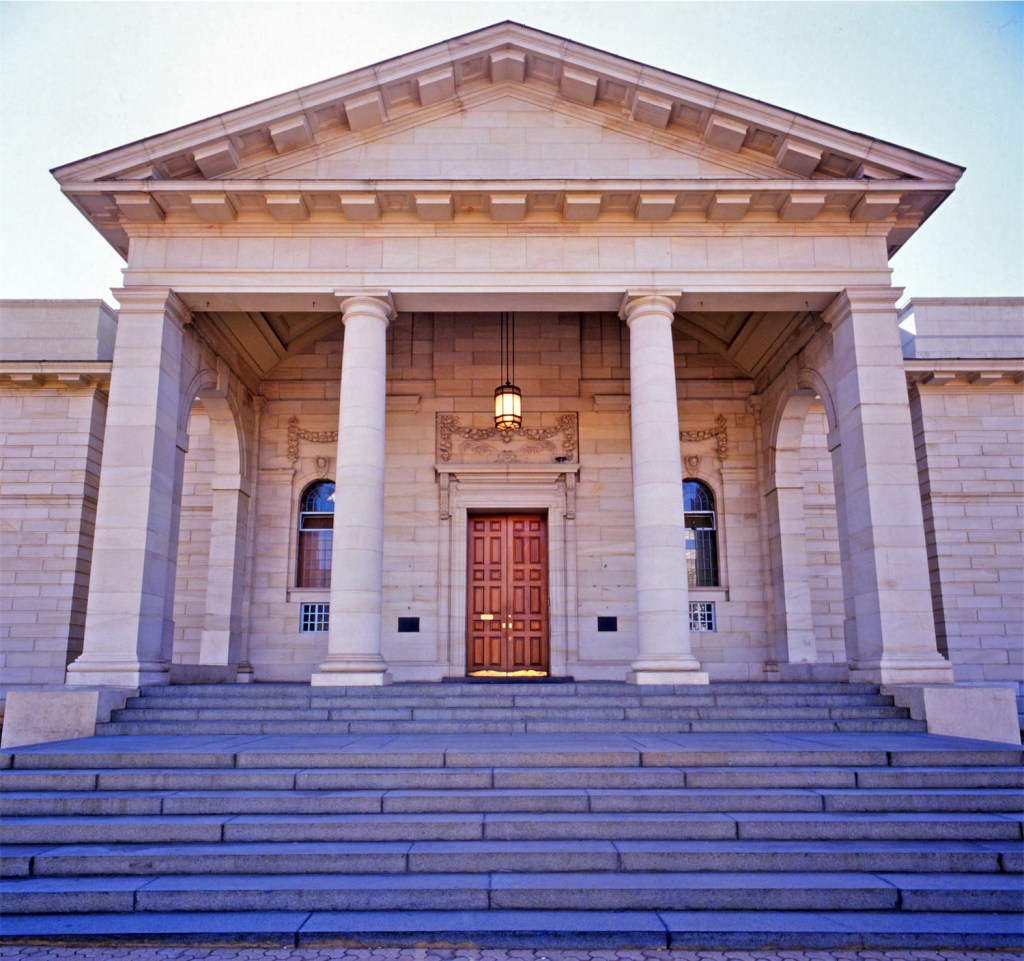
By 1910, Lionel and Florence Phillips ruled Johannesburg society (such as it was). Lionel was a gold mining magnate, financier and Chairman of the Chamber of Mines, while Florence led most of the young city’s cultural activities. Herbert Baker had provided them with an elegant base in his Villa Arcadia, high on the ridge of Parktown, from which they looked down on their city below. Florence’s latest project was a new art gallery for Johannesburg and with Baker up to his eyes in designing both the main railway station and the Government buildings in Pretoria, she held an architectural competition to select an architect for the design of her gallery. 
Lutyens’ Johannesburg Art Gallery

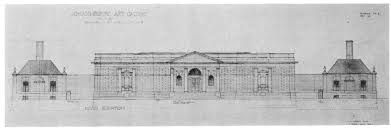
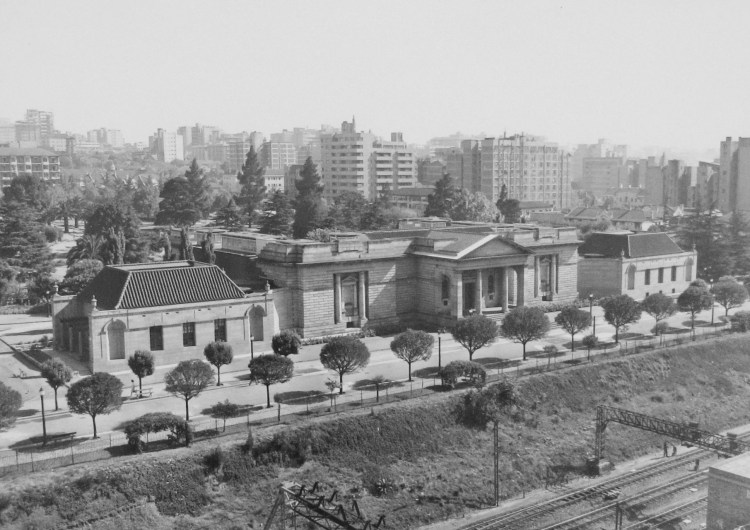
The entries were judged by Hugh Lane, a London art critic and dealer who was advising her, and he concluded that as none of the entries by the local architects had reached an appropriate standard, and with her favoured architect so busy, she might enquire if the great Edwin Lutyens might undertake the work. With the lure of a £1000 retainer, Sir Edwin was soon steaming towards South Africa. He stayed with the Phillips in the Villa Arcadia and completed the outline design of the gallery while he was there, which Baker offered to oversee after his departure.

Lutyens’ Johannesburg Art Gallery

As one would expect from the mature Lutyens, the building is exquisitely proportioned and the detailing razor sharp, but sadly only the main central section was completed at this time, with further wings and a massive rear extension added later. As Lutyens proposed for New Delhi, his architecture made no concessions to either local culture or climate and it was very much Baker’s influence which eventually led to the style of their architecture in India. 

Lutyens’ Rand Regiment Memorial

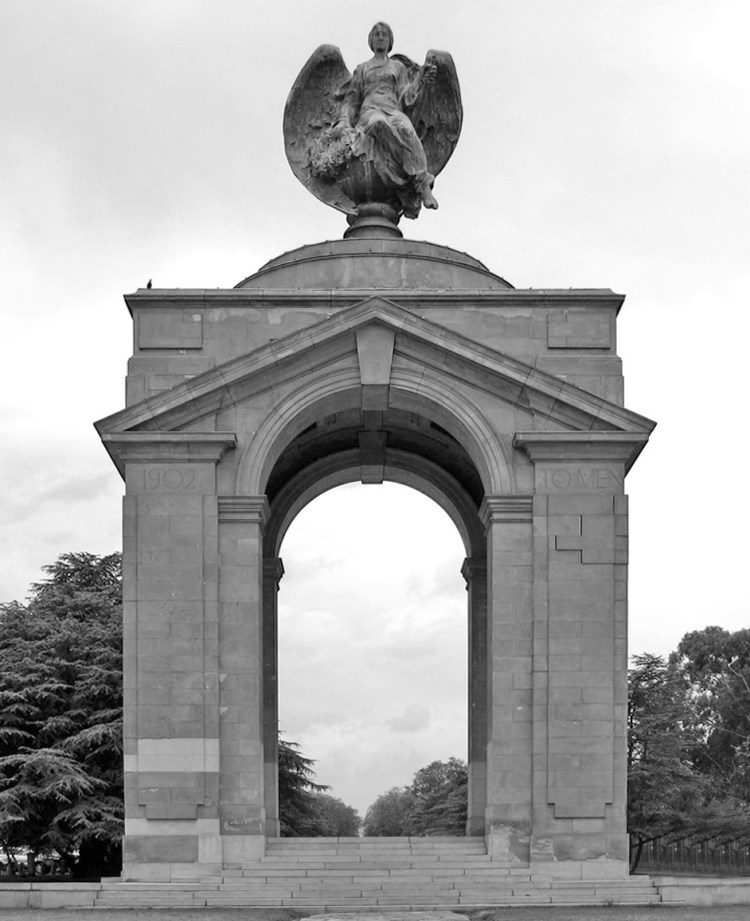
Lionel Phillips had gifted a site to the city on which he wished to be erected a memorial to the British who had lost their lives in the Second Boer War (the Rand Regiments Memorial) and on Lutyens’ arrival, he enquired if he’d be good enough to also undertake the design of the monument, for which public funds had already been raised. Lutyens again obliged and produced what turned out to be one of his first and finest triumphal arch memorials. Hugh Lane advised on the appointment of a sculptor for the bronze Angel of Peace (which Phillips paid for himself) and the Russian sculptor Naoum Aronson provided the appalling bronze blob which almost crushes Lutyens’ elegant arch. Lutyens and Baker parted as friends, but their long and so far happy relationship would not last even the first few months of finally working together as partners in India just two years later.

You can read more about Lutyens visit and Lutyens and Baker’s subsequent work together in my biography of Herbert Baker – Architect to the British Empire. If you don’t want to miss out on further blogs then please follow me on johngooldstewart.com

Blog 64

The Life and Works of Glasgow Architects James Miller and John James Burnet 

Published earlier this week, my book on Scottish architects James Miller and JJ Burnet provides an introduction to their remarkable lives and extraordinary architectural output. I hope that it will renew interest in their work and contribute to the protection of their surviving buildings.  

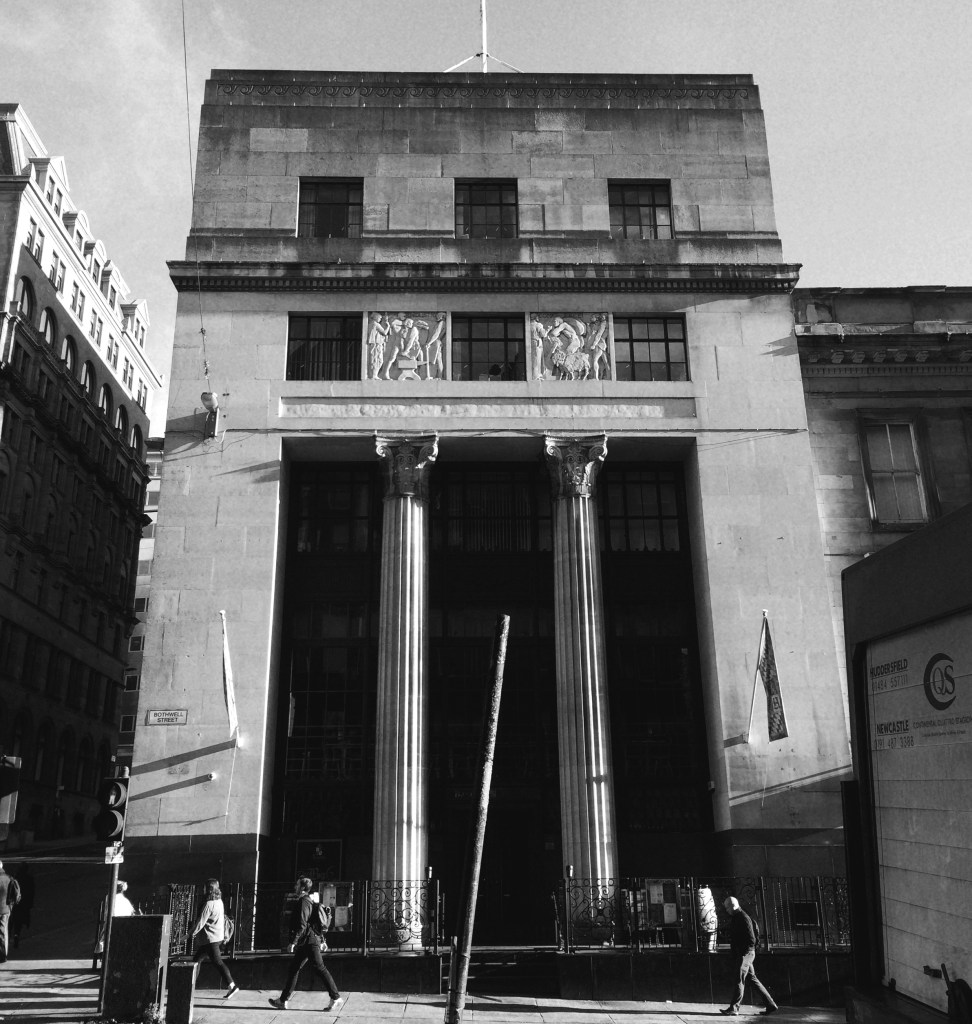
Burnet’s Clyde Navigational Trust Building

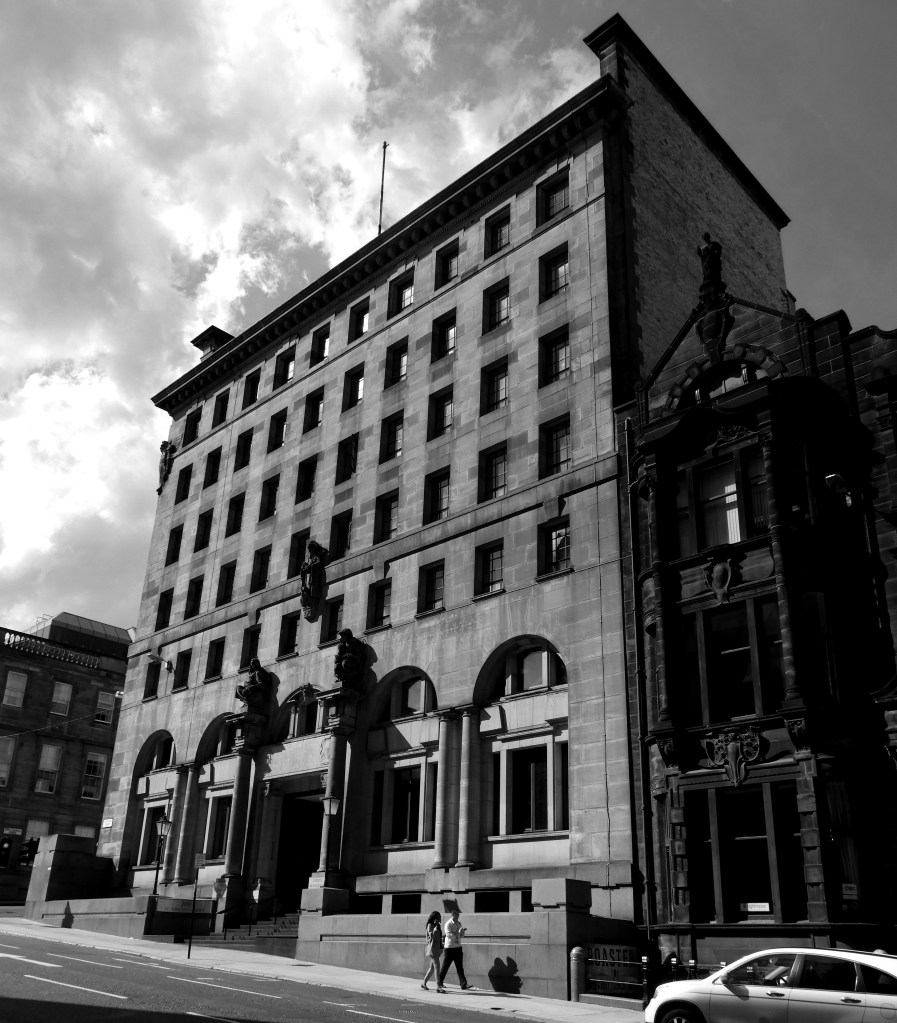
John James Burnet, the son of a wealthy Scottish architect  led his profession in Glasgow in the latter years of the 19th and early years of the 20th centuries, producing many of the city’s finest buildings including The Athenaeum on Buchanan Street, Charing Cross Mansions, numerous city-centre commercial buildings including Waterloo Chambers and Atlantic Chambers, the Townhouses on University Avenue and after moving to London, the extension of the British Museum, The Daily Telegraph Building on Fleet Street and Adelaide House by London Bridge. He was knighted and awarded the RIBA’s Gold Medal in 1923 and is one of Scotland’s finest architects.

Miller’s Institution of Civil Engineers

James Miller, a farmer’s son from Perthshire, is simply Scotland’s most prolific architect. During his long career he designed The Empire Exhibition of 1901, Glasgow Royal Infirmary, Glasgow Central Station, Wemyss Bay Station, St Enoch’s Underground Station, Turnberry Hotel, Peebles Hydro Hotel, Gleneagles Hotel, the interiors of the SS Lusitania and SS Aquitania, Hampden Park, Forteviot Model Village, the Institution of Civil Engineers in Westminster, numerous Banks, Commercial Buildings and Churches in Glasgow and beyond as well as schools, country houses, factories and town halls. Despite this extraordinary output, he has been dismissed as ‘a commercial architect’ and his enormous contribution to Scotland’s architectural heritage, largely ignored.

Burnet’s North British and Mercantile Insurance Headquarters Building

This is the story of both men, their parallel lives and work, against the background of the British Empire’s booming Second City.

Miller’s Commercial Bank

If you don’t want to miss out on further blogs then please follow me on johngooldstewart.com


Blog 63

William Burges

Continuing my deep dive into Victorian architecture for my latest book on architectural sculpture, I have been savouring the work of the extraordinary William Burges (1827-88). A committed Goth, he had neither the religious fervour of Scott, Butterfield or Street nor their success in winning architectural competitions. His career was languishing in the slow lane while he dabbled in jewellery, metalwork and stained glass until he was recommended as architect to John Patrick Crichton-Stuart, the 3rd Marquess of Bute in 1868.

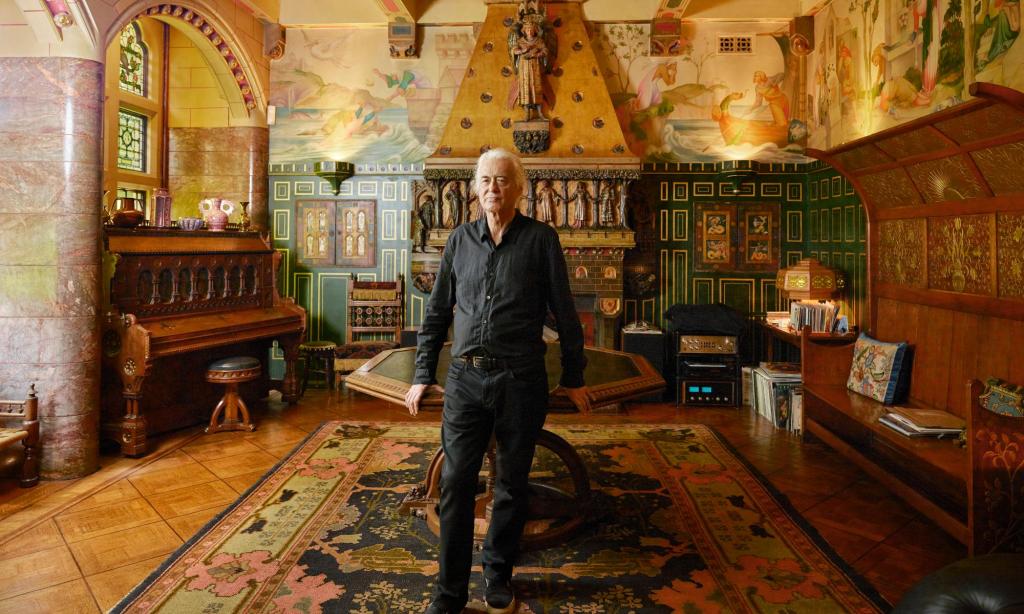
The Winter Smoking Room

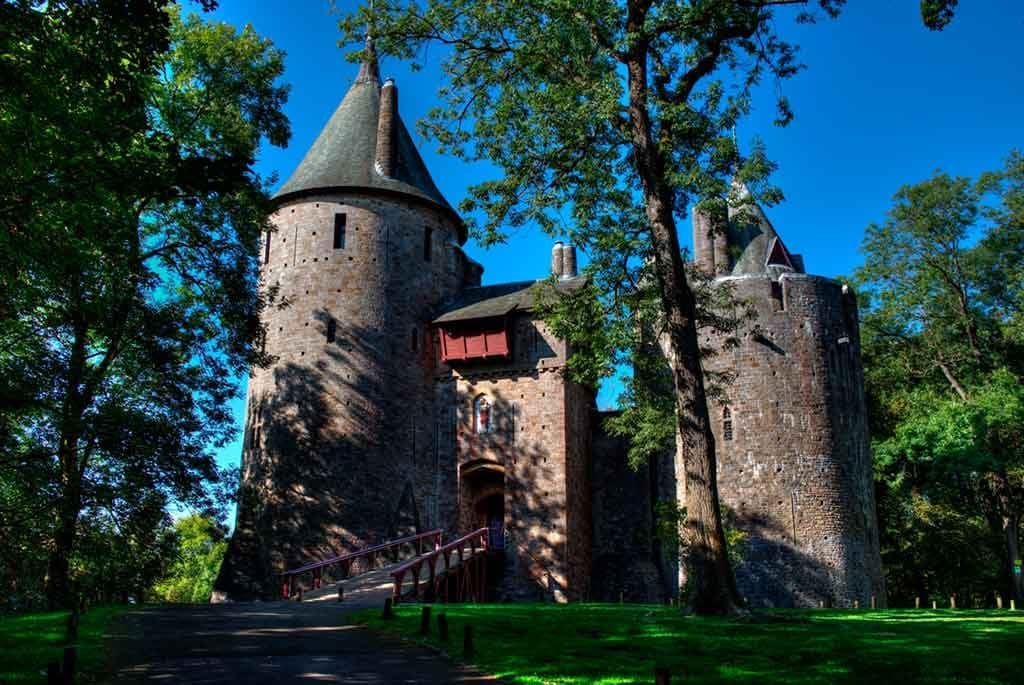
Lord Bute was himself a fascinating character – a convert to Roman Catholicism and an admirer of all things Medieval – he preferred, like Burges, the architecture of the Age of Faith to that of the Age of Reason. Fortunately for Burges, he was also the richest man in the world at the time and the combination of his extraordinary wealth and Burges’ extraordinary imagination produced two buildings – Cardiff Castle and nearby Castell Coch (top) – in which they indulged their shared passion for the past in the creation of two fairy-tale retreats from industrial Britain.

The Summer Smoking Room

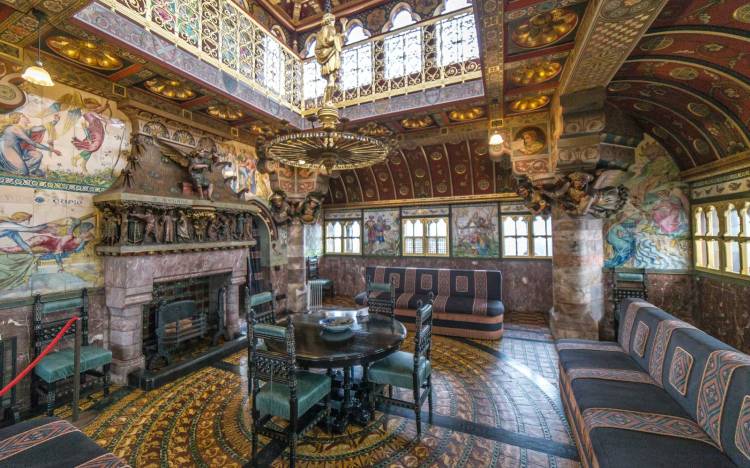
At Cardiff, Burges completely remodelled the existing accommodation within the castle as well as adding four towers, the tallest of which concluded in a double-height ‘Summer Smoking Room’ from which Lord Bute could look out to sea to the south and to the mountains of Wales to the north through an almost unbroken band of windows. One of the other towers provided a Guest Suite and within the existing accommodation he created an astonishing multi-vaulted Arab Room (largely inspired by his visit to Constantinople), a Chaucer Room, Nursery, Library, and Banqueting Hall, bedrooms for both Lord and Lady Bute and a vast new boundary wall topped with various animal sculptures. Castell Coch was completely restored from its ruined state and provided a similarly romantic summer lodge for Lord and Lady Bute.

The Arab Room

Almost every surface of Burges’ interiors is decorated either in brightly coloured murals, painted or gilt sculpture, carved wooden panelling or mosaic tiling and every space within the castles is furnished with his original furniture in gilt and painted wood and lit by various wrought iron chandeliers of his own design. As Ruskin prescribed, there was little repetition amongst the details and only an artist with Burges’ apparently limitless creativity could have fully responded to this opportunity. But perhaps the most interesting aspect of his architecture is that, in contrast to much Victoriana, there is no hint of gloomy moralising or drippy sentimentality – every space, though often complex and rich, is fresh and invigorating.

Cardiff Castle

He later also designed and built his own house, The Tower House in Holland Park in London (1875-1881) which was described as “the most singular of London houses, even including the Soane Museum” and which fortunately, was superbly restored by Led Zeppelin’s Jimmy Page (before he moved on to Sir Edwin Lutyens’ Deanery Garden in Sonning, where he currently lives).

If you don’t want to miss out on further blogs then please follow me on johngooldstewart.com

Blog 62

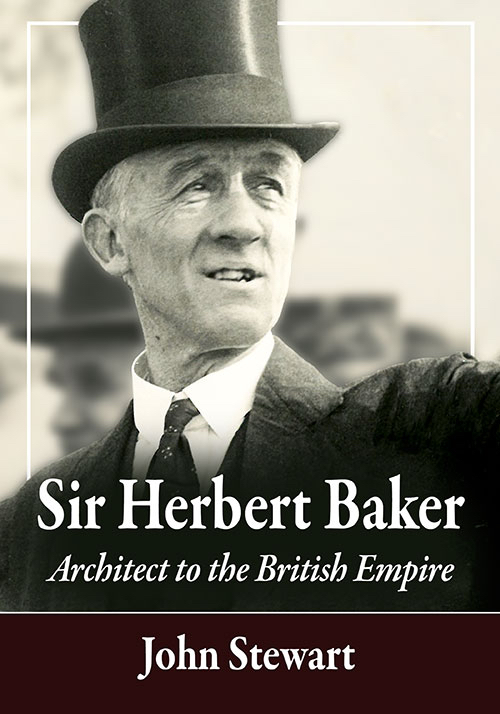
Sir Herbert Baker

My biography of Sir Herbert Baker will finally be published at the end of this month and is now available to pre-order on Amazon and elsewhere. His life story is fascinating and little known – his best architecture is outstanding (as his contemporaries recognized) and his reputation and contribution to British architecture is now long overdue for reassessment.  

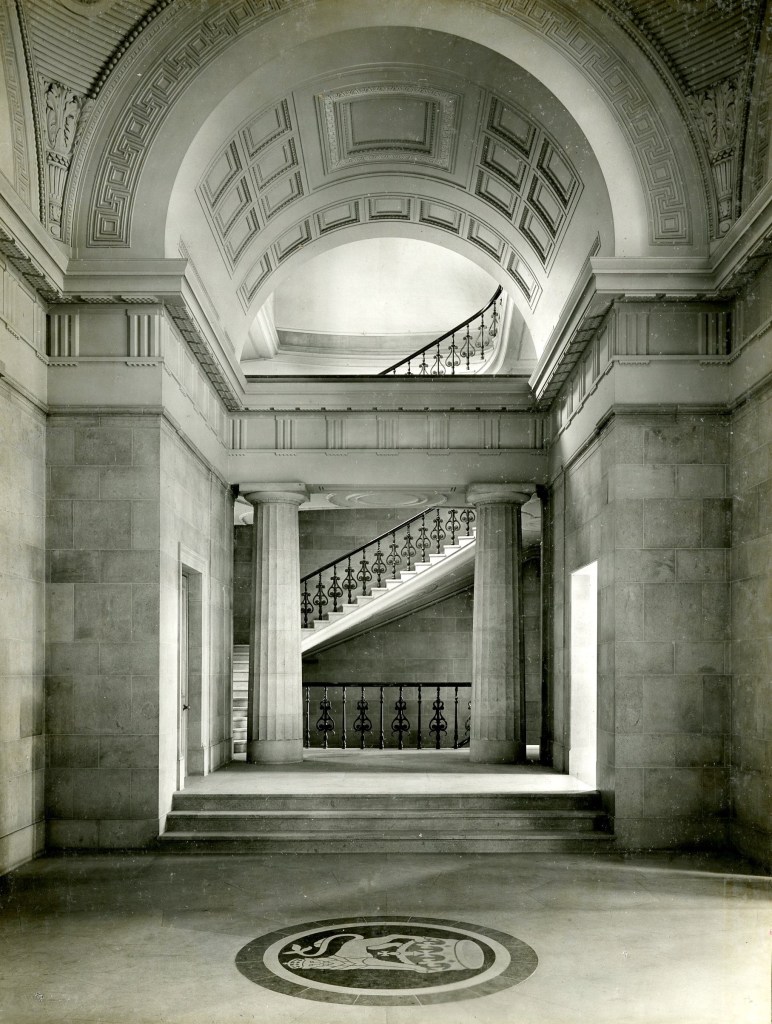
The Bank of England

“Every Year, the Royal Institute of British Architects awards its Royal Gold Medal to an architect, of any nationality, who has made a truly outstanding contribution to the art of architecture. Their names are carved in stone in the entrance hall of the RIBA’s Headquarters building in Portland Place in London. It’s an impressive list and, in the midst of this role-call of the greatest architects of the 19th, 20th and21st centuries, is one Sir Herbert Baker, who was awarded the medal at a banquet held in his honour on the 24th of June 1927. That London summer evening of celebration represented the pinnacle of both his career and his highly-valued professional reputation, which was soon to come under sustained attack”. 

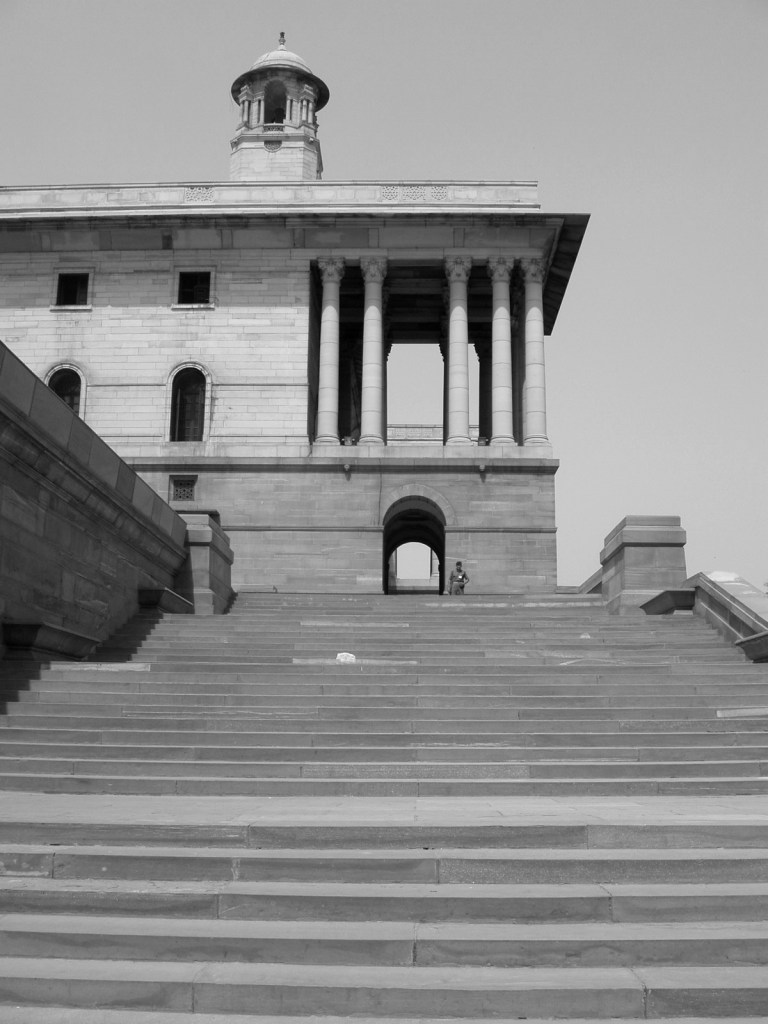
The Secretariats, New Delhi

“His work is relatively little-known today and usually summed up, by those who have heard of him, as “the architect who demolished Soane’s Bank of England.” There is a vague recollection that he worked with and fell out with, Sir Edwin Lutyens in New Delhi, but in some kind of a bumbling supporting role, which nevertheless allowed him to make a mistake which damaged the great Sir Edwin’s design – “his Bakerloo” – as he wittily called it. The few portrayals of him make it clear that he lacked both Lutyens’ natural brilliance as an architect and certainly his wit, with Baker often described as a ‘dull committee man’. In South Africa, where he worked for many years, he is better known, principally as the architect of Cecil Rhodes’ house in Cape Town – which today is hardly likely to further enhance his reputation. His work is inextricably linked to the British Empire and the subjugation of its native peoples and their cultures and as if all this were not bad enough, most of his architecture is Classical and thus held in contempt by what are now several generations of Modernists who have been trained to reject the past and to regard Classical architecture as a reactionary irrelevance. Sir Nikolaus Pevsner, that pioneering Modernist and one-time arbiter of British architectural taste, dismissed Baker as “naive and arrogant”. He remains – an unfashionable enigma”.

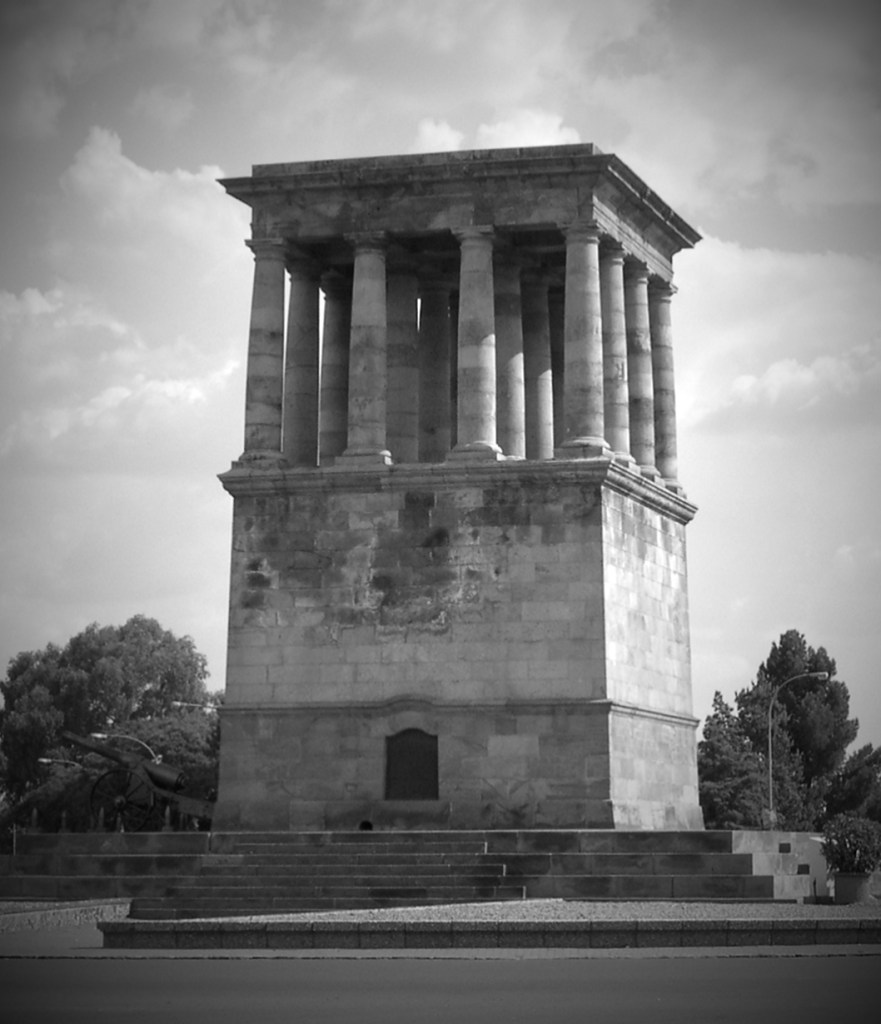
The Kimberley Memorial

“But the more I studied his work, the more convinced I became that he was both an exceptional architect and, in the context of his age, a man of the highest integrity. More than that of any other architect, his work celebrated the British Empire, which he firmly believed to be a civilizing force for good in a violent and divided world. Far from being naive, he was a well-respected friend of many of the leading figures of his age including Cecil Rhodes, Rudyard Kipling, Jan Smuts, John Buchan and Lawrence of Arabia and far from being arrogant, his architecture consistently shows a sympathy for its setting, his clients and the users of his buildings which many of his contemporaries often lacked. He is largely responsible for saving Soane’s great encircling wall at the Bank of England, was an equal partner of Lutyens in New Delhi and, as to being responsible for an error there, was shamefully blamed by Lutyens for his own mistake”. 

Lutyens and Baker

If you don’t want to miss out on further blogs then please follow me on johngooldstewart.com

Blog 61

The Clifton Suspension Bridge

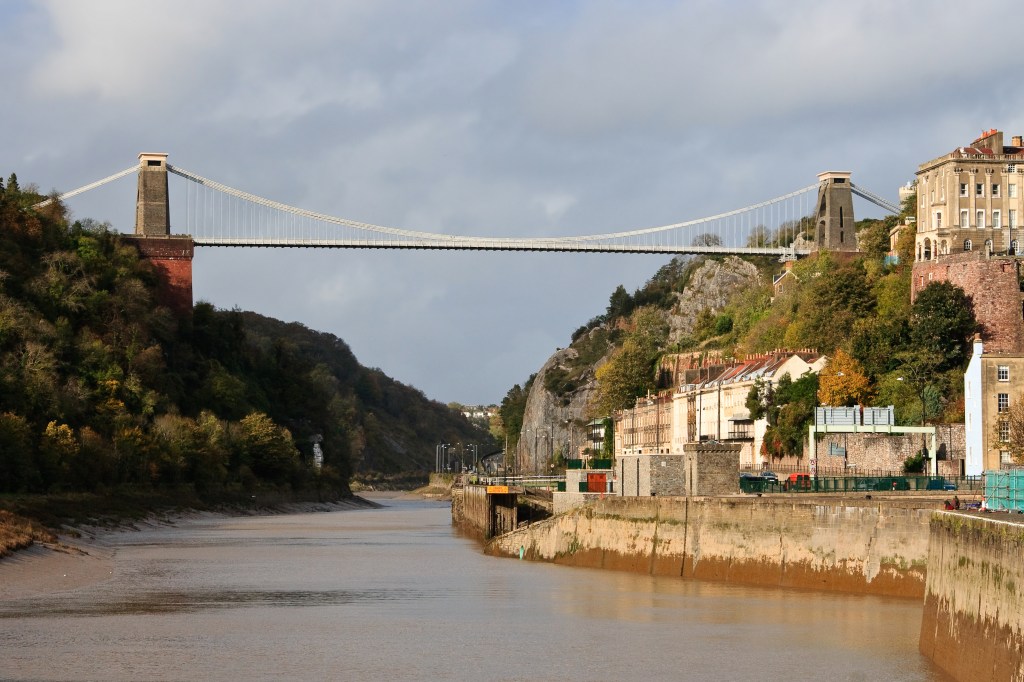
We are fortunate in Britain to have both a rich architectural and engineering heritage which includes numerous exceptional bridges throughout the country. Perhaps the most spectacular (though fans of the Forth Railway Bridge would probably dissent) is the Clifton Suspension Bridge over the Avon Gorge in Bristol which, despite being completed in 1864 and being designed for horses, carts and carriages, is still in use today and forms the most spectacular of all the routes into the city.

It is generally attributed to Isambard Kingdom Brunel who designed a suspension bridge on this site on which construction started in 1831. Unfortunately, within four months of the first rock being blasted, the Queens Square Riots broke out in the city (Bristol has a long and proud tradition of rioting) thus bringing work to a grinding halt. It was not until after Brunel’s death in 1859 that engineers William Henry Barlow and John Hawkshaw took up the challenge of spanning the gorge.

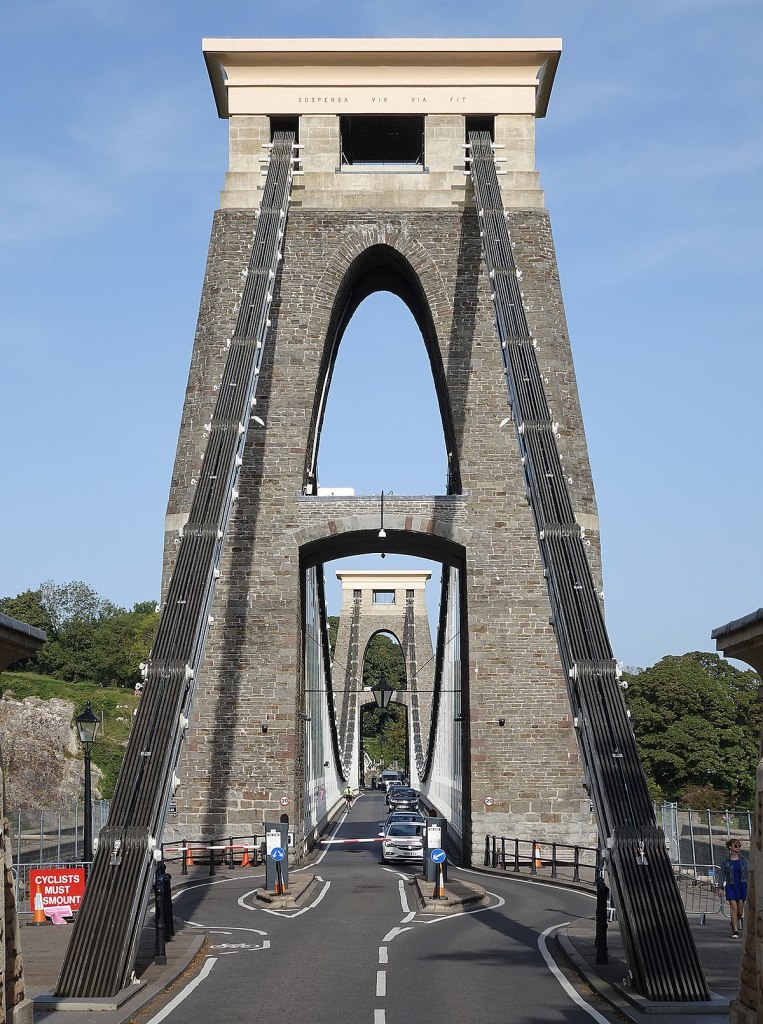
The extraordinarily elegant towers which support the wrought iron chain structure were a key element of Brunel’s earlier effort and while there are numerous suspension bridges throughout the country, none come close to the superb proportions, subtle tapering and swooping curves of these distinctly Egyptian pylons.

Interestingly, Brunel’s suspension bridge was far from the first solution to bridging the gorge and engineer William Bridges earlier design of 1793 would have been no less spectacular. What he proposed was an inhabited bridge, along the lines of the old London Bridge (1209-1831) which would have housed homes, taverns, offices, a corn exchange, a chapel, a market and even stables and perhaps most interestingly of all, two windmills, located in the spandrels. Bridges’ design was abandoned when Britain became embroiled in the French Revolutionary wars and the citizens of Bristol had to wait another 70 years until their shortcut was provided.

If you don’t want to miss out on further blogs then please follow me on johngooldstewart.com

Blog 50

The People’s Palace Glasgow

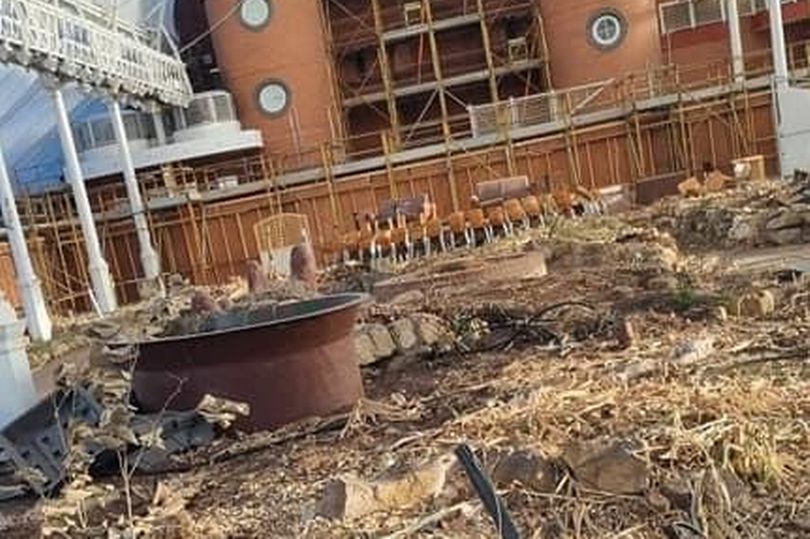
While the world’s leaders were driven from Glasgow Airport to the Conference Centre for COP26, few could have imagined the scene below their route. Glasgow City Council has descended into chaos in recent times and this once proud city now finds its streets strewn with rubbish and almost all recycling suspended.

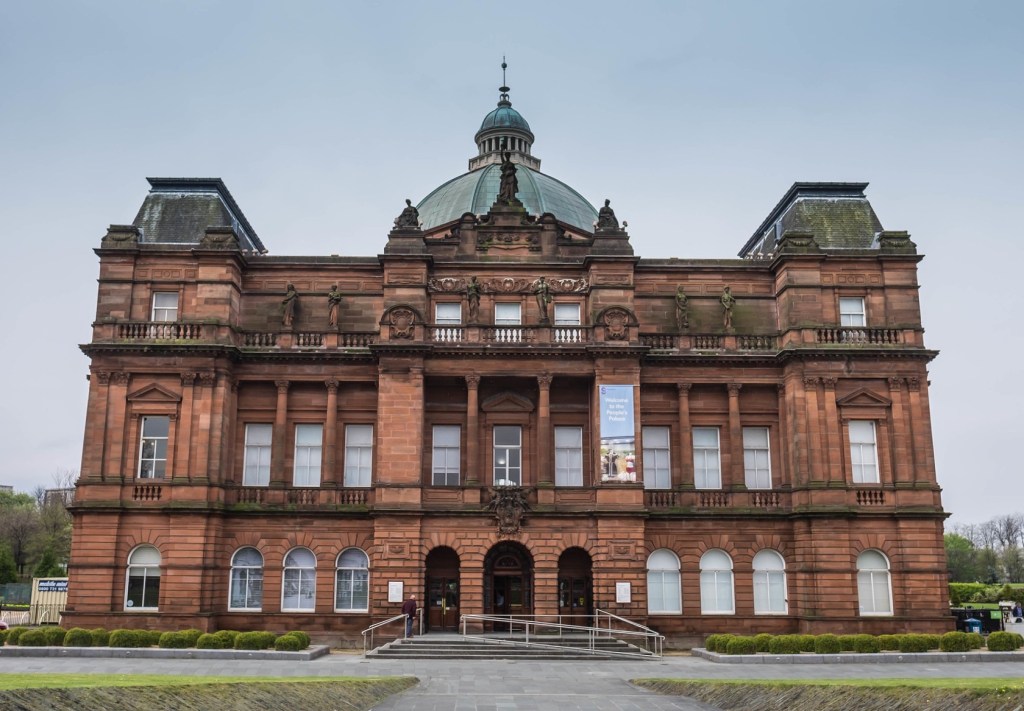
Unfortunately, the Council are also the guardians of many fine buildings within the city, including the People’s Palace and Winter Gardens. The idea of these ‘palaces for the people’ drew on the writings of Ruskin and Morris and there are a number around the UK, though few as fine as Alexander McDonald’s building of 1898. It originally provided reading and recreation rooms, an art gallery and museum in addition to the winter garden with its collection of exotic plants. More recently it has housed a museum depicting the social history of the city.

The Winter Garden

Sadly, it’s just one of the 81 council-owned buildings which are now closed to the public. It’s not that the Council have refused to spend money on it – they recently approved £350,000 to ensure that the public couldn’t see into the winter garden and to erect a steel fence around the building, but despite their efforts, photographs have now surfaced showing the current condition of the interior (below).

It’s a strange thing democracy – we give vast amounts of responsibility to elected leaders who if they had to apply for their positions wouldn’t have anything on their CV that would even get them onto a longlist. 

If you don’t want to miss out on further blogs then please follow me on johngooldstewart.com

Blog 59

Glasgow Empire Exhibition 1938

Glasgow has in the past played host to a number of major exhibitions during the 19th and 20th centuries. The first was in 1888 when James Sellars offered an oriental theme in celebration of the British Empire’s then ever-extending boundaries as a backdrop to a display of the city’s industry, innovation and commercial success. To mark the 50th anniversary of that event, a further exhibition was held in 1938, which its lead architect Thomas Tait used to promote Modern architecture in his native Scotland.

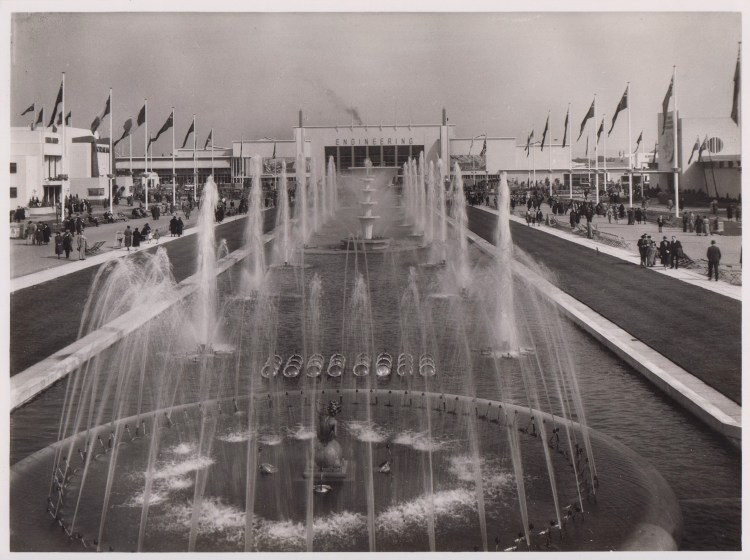
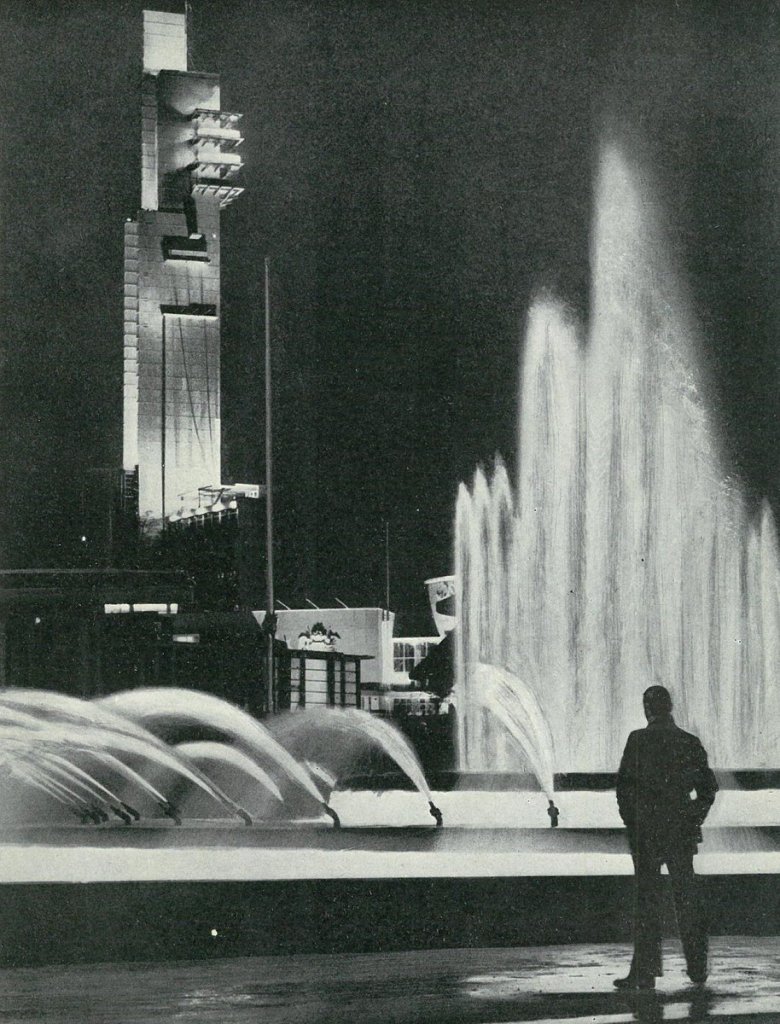
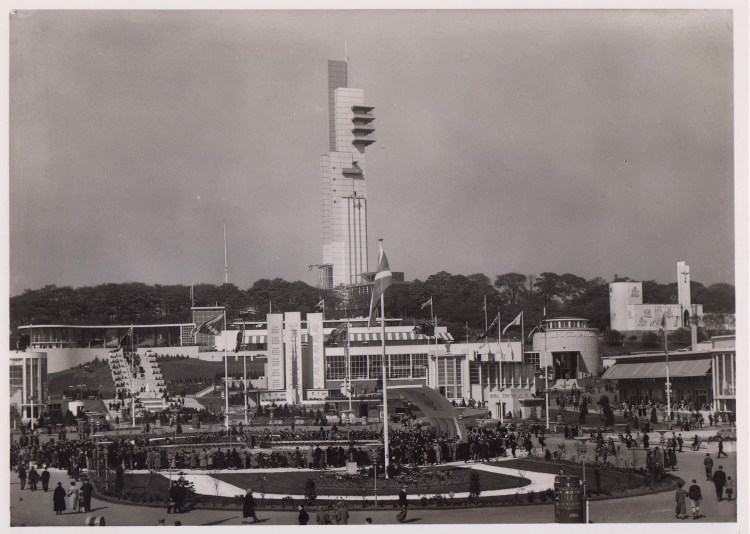
Tait’s inspiration was Asplund’s iconoclastic Stockholm Exhibition of 8 years earlier and he drew heavily on the Swede’s vocabulary of white rendered buildings, giant graphics, fountains, brightly-coloured banners, flags and search lights, with a vast tower once more dominating the site. As in Stockholm, where Asplund had been assisted by many other architects (including Sigurd Lewerentz, Sven Markelius and Uno Ahren), Tait was supported by a new generation of Scottish architects who would go on to lead their profession after the Second World War (including Jack Coia and Basil Spence). Unlike Stockholm however, (and in common with most of Tait’s contemporary buildings), the organisation of the site was essentially a symmetrical Beaux Arts plan with the main pavilions off a broad central avenue.  

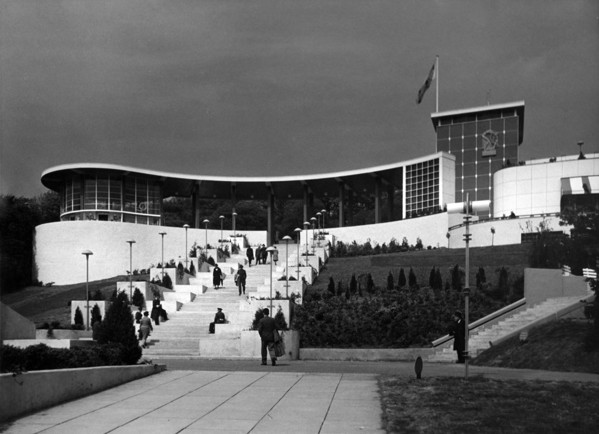
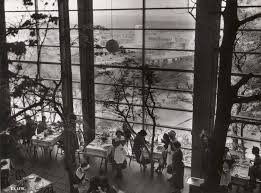
Tait used a small wooded hill on the site to provide a dramatic climax to the show, which was crowned by what became know as ‘Tait’s Tower’ and it was really only here amongst the trees that the architecture offered a hint of what the best of Modernism might provide. The tower was a stunning steel-framed asymmetrical composition of overlapping planes while the tearooms and restaurants were mostly glazed to enjoy the views of the exhibition below. Interestingly, this area was described as ‘The Garden Club’ with a three guinea entrance fee (the equivalent of £217 today) largely restricting its pleasures to a wealthy minority.

‘Treetops’ tearoom in the ‘Garden Club’

To the public, Tait consistently denied that he and his team were producing Modern Architecture, (as at the time the new Continental style was regarded with great suspicion in Britain and was largely the subject of cartoons in which avante-garde clients were shown practicing golf or dining on their flat roofs) and instead he adopted a strange Orwellian double-speak to provide a suitable rationale – “We cannot try to erect buildings in the old, Medieval style of architecture where there are certain structural features which necessitate modern treatment and modern requirements with big spacing which the old medieval architecture would not allow us to carry out.” Tait successfully sowed the seeds of Modernism however, and following the war that broke out just a year later, they eventually fell on the fertile ground of a period of radical social change, for which the conflict was the catalyst.

If you don’t want to miss out on further blogs then please follow me on johngooldstewart.com