Blog 58

Beaux Arts

Beaux Arts architecture and planning suggests a very formal and rather sumptuous form of classicism in which grand axes and monumental buildings combine to create magnificent civic spaces. The Mall in Washington DC is a prime example, along with Hausmann’s Paris and Imperial New Delhi. The style was developed in the 19th century at the impressively named École Nationale Supériuere des Beaux Arts in Paris. At that time, Paris was the undisputed capital of the art world and the École was the world’s leading school of architecture.
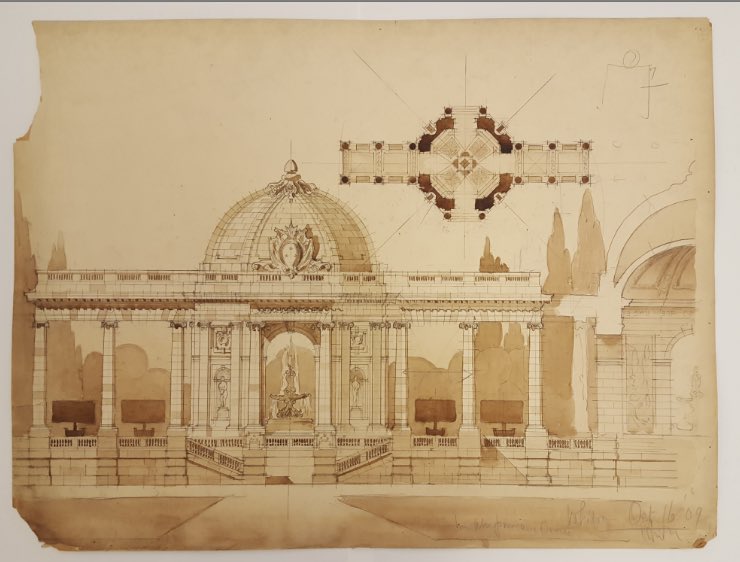
A typical Analytique

Its origins lay in the Academie Royale d’Architecture, which was established in 1671 during the reign of Louis XIV with the aim of assuring the highest level of taste for royal buildings. At first, its members met weekly to discuss architectural theory and practice as well as providing public lectures on architectural matters such as geometry, perspective and stone cutting but early in the eighteenth century these lectures had coalesced into a two or three-year course of study. By the end of the nineteenth century the Academy’s School of Architecture had developed a highly structured design methodology which was built around the atelier system with each student joining the office of a leading architect who also taught at the school. 
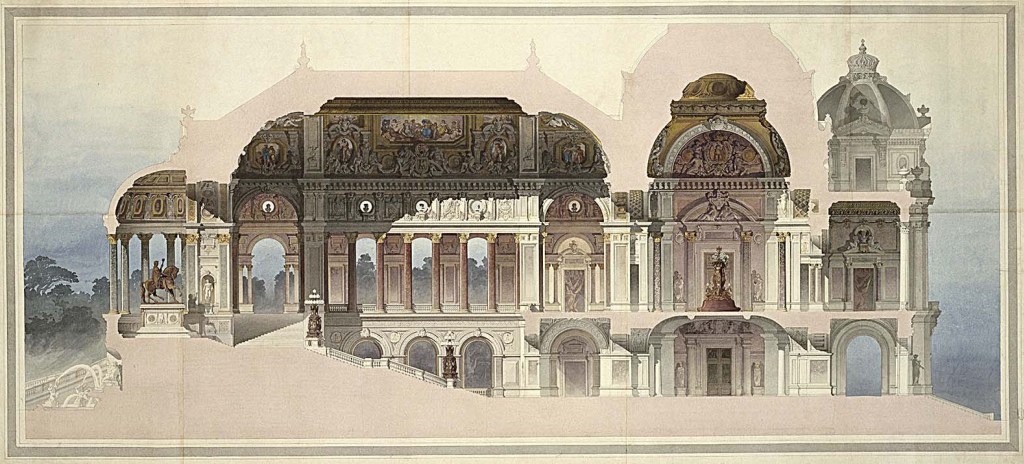
An Analytique Rendu

Students were not required to attend lectures but instead, from their first day, were set design projects which were treated as competitions. As a ‘nouveax’‘ they would be given second-class building types to design – single houses, a small library or school – earning a ‘value’ or medal, when a jury of professional architects judged that their design proposal had reached an acceptable standard. They then progressed to the next stage of ‘ancien’, at which point they were set first-class building types to design, such as an opera house, palace or museum. Every project was expected to be developed in the language of Classicism and the study of the great books of Classical architecture such as Vignola’s ‘Five Orders of Architecture’, were essential to the development of an understanding of every aspect of the style.
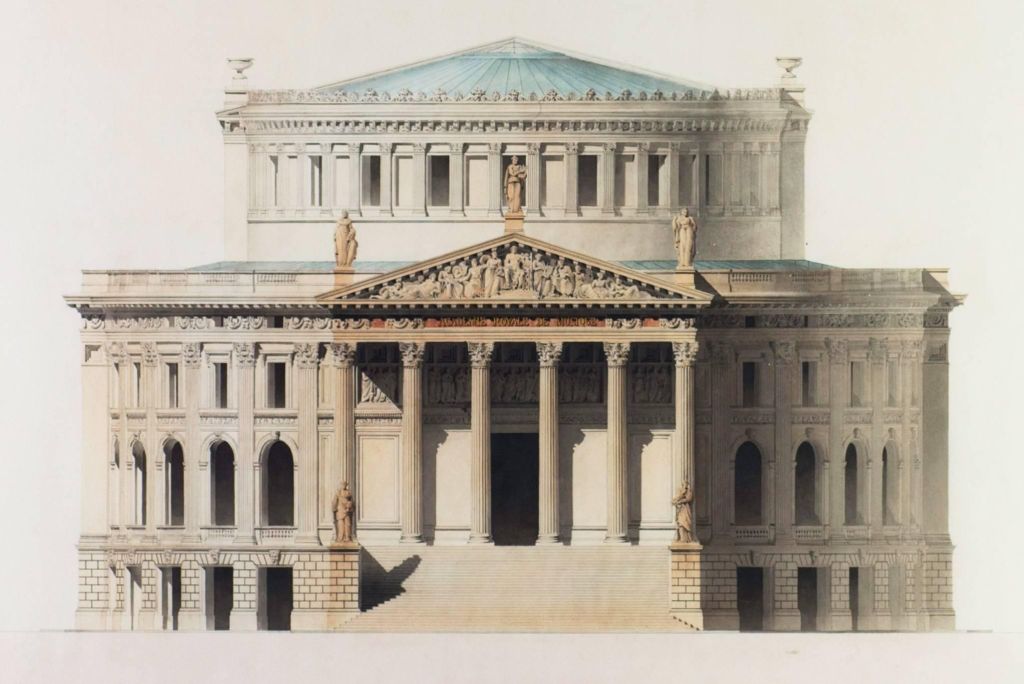
An Analytique Rendu

Even the method of developing a design was prescribed in detail, with students having to quickly produce a sketch or ‘esquise’, which must contain all the key elements of their proposed solution. Once their ‘esquise’ was accepted, an appropriate Classical order would be selected and the design further developed until it was presented as an ‘analytique’, which would be beautifully rendered in monochrome, before finally developing the design fully in plan, section and elevation, in a coloured ‘analytique rendu’. The standards expected were exceptional, and beautifully composed drawings with their immaculate draftsmanship and perfectly rendered shadows were required of all students if they were to receive medals for their work. 

The Mall, Washington

While principally a French school, it was also particularly popular with wealthy American students including Henry Hobson Richardson, Richard Morris Hunt, Charles McKim, Daniel Burnham and Louis Sullivan, for whom there was nothing comparable back home, and they imported the school’s neoclassical style to the United States where for many decades well into the twentieth century it was seen as the most appropriate style for all civic buildings and civic planning. Its proponents developed the style as an intrinsic part of the ‘City Beautiful’ movement which called for progressive social reform to counter the poor living conditions of many of the cities and as such (somewhat astonishingly from our twenty first century perspective) their Beaux Arts Neoclassicism represented a radical shift towards a new morality based on civic virtue.

The Chicago Exhibition of 1893

If you don’t want to miss out on further blogs then please follow me on johngooldstewart.com

Blog 57

London County Hall by William Walcot

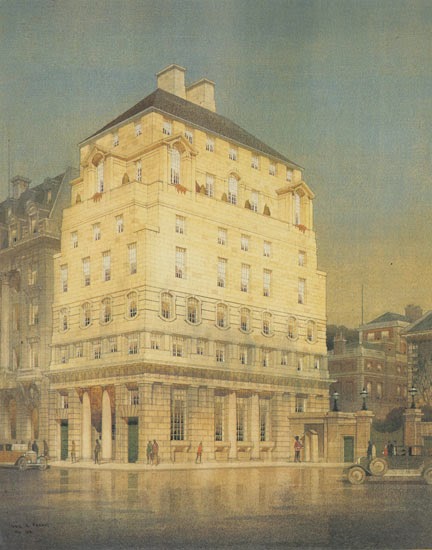
The extraordinarily realistic effects of current 3D rendering are quite astonishing but it remains a technical process, rather than an art. Before CAD, the only route to a three-dimensional representation of a proposed building was to set up two vanishing points and laboriously create a perspective drawing and in the early twentieth century, the production of illustrative perspective renderings became something of an art form in itself. Almost all the most sought-after illustrators were architects themselves and while they usually ran their own practices, it was as ‘architectural draughtsmen’ that they found fame. Two men dominated this art in the 20’s and 30’s – the brilliant Cyril Farey and William Walcot.

Marlborough Court by Cyril Farey

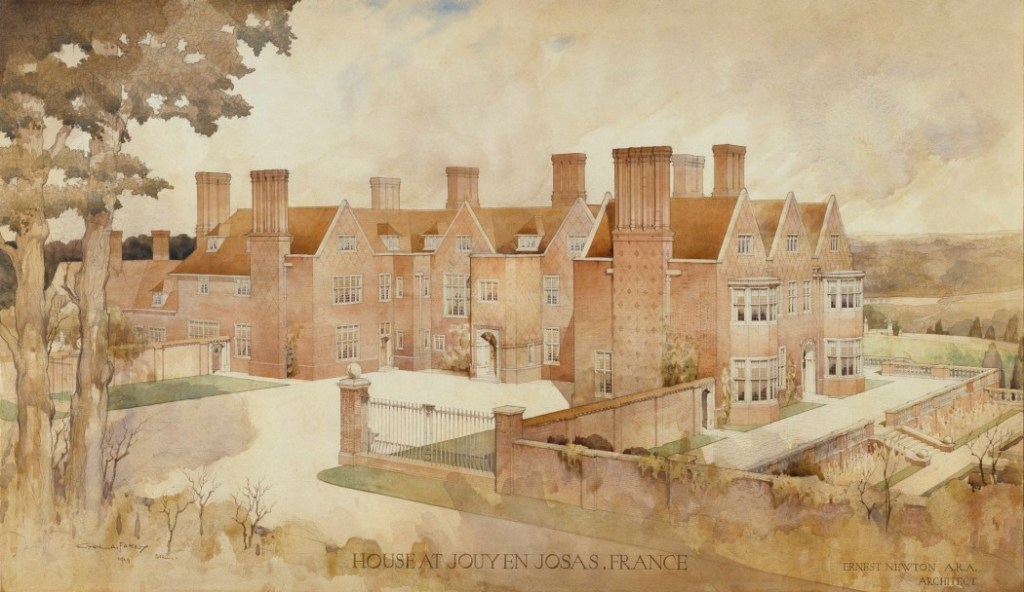
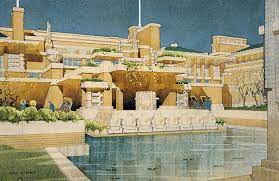
Farey (1888-1954) – Edwin Lutyens favoured perspective artist – was a prize-winning architectural student who ran a successful London practice specialising in small churches and private houses, but it was his draughtsmanship that made him one of the wealthiest members of his profession (reputedly earning over £5000 a year in the 1920’s). As well as perspectives of Midland Bank (Poultry), Castle Drogo, Marlborough Court and Liverpool Cathedral for Lutyens, he was even commissioned by the great Frank Lloyd Wright to produce a drawing of his proposed Imperial Hotel in Tokyo. His work was intensely atmospheric, whether portraying the bustle of London, the tempestuousness of Dartmoor or the tranquillity of Flanders Fields. Sadly, there was little demand for his soft washes, brooding shadows and subtle line weights after World War II. 

Design for house, Jouy-en-Josas by Cyril Farey

William Walcott (1874-1943) was born in Odessa to a mixed Scottish-Russian family and he studied in St Petersburg and Paris before establishing a successful architectural practice in Moscow, completing several major buildings, including the surviving Metropol Hotel. He moved to London in 1906 after which he established himself not only as a very successful architectural draughtsman but also as the leading etcher of his day. He developed a strongly impressionistic style in gouache and watercolour, becoming a regular illustrator of fellow architects’ designs at the Royal Academy Summer Exhibition. Of all his many superb illustrations perhaps the most famous were his set of perspectives of Imperial Delhi which he produced for Edwin Lutyens and Herbert Baker which were said to have ‘radiated the heat of India’. Lutyens later claimed that they had ‘misled’ him, but as the architect of most of the buildings, it was a pretty lame excuse for his own mistake. Unfortunately, WW2 brought his practice to a crashing halt and he committed suicide in 1943.

Imperial Hotel, Tokyo by Cyril Farey

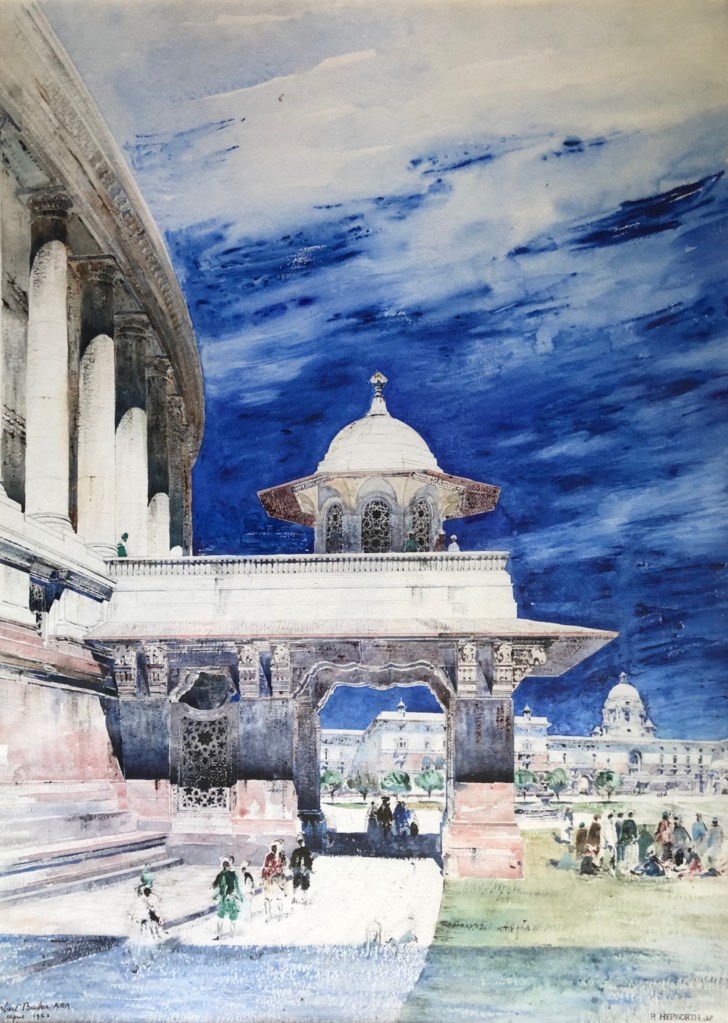
More successful as an architect and slightly less so as an architectural draughtsman was Philip Dalton Hepworth (1888-1963) who was a good friend of Cyril Farey. Hepworth studied at the AA and the École des Beaux-Arts, before establishing a successful practice after serving in the First World War, culminating in the suave stripped-down classicism of Walthamstow Town Hall. Described as “an architect of great speed and brilliance,” his free style as a perspective artist was also much sought after by his contemporaries to illustrate their schemes. Fortunately, he survived the Second World War and was appointed as a principal architect by the Commonwealth War Graves Commission designing a number of cemeteries and memorials throughout Europe until his death in 1963.

The Indian Parliament, Delhi by Philip Dalton Hepworth

If you don’t want to miss out on further blogs then please follow me on johngooldstewart.com
Blog 56

Albert Hodge

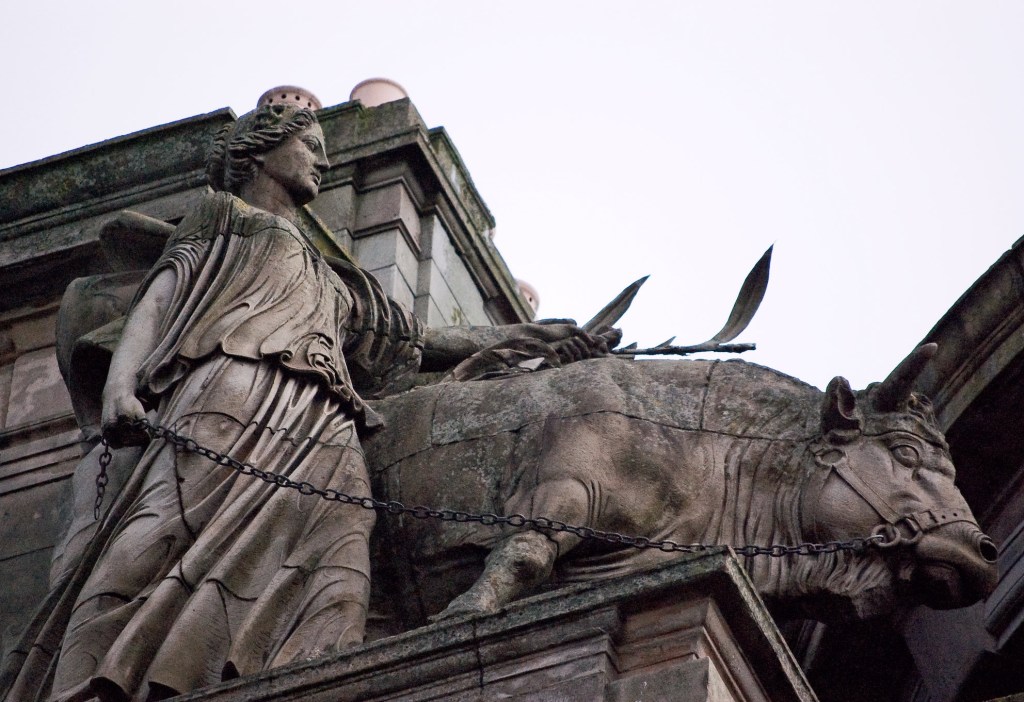
Demeter and the Bull

My latest book on British Architectural Sculpture examines the work of and relationships between British architects and the sculptors who together produced the extraordinarily rich British architecture of the 19th and early 20th centuries. In most cases, architects established long-term relationships with particular sculptors who were sympathetic to their approach and with whom they could communicate their ideas quickly and effectively. These partnerships included Sir George Gilbert Scott and William Brindley, William Burges and Thomas Nicholls and James Miller and Albert Hodge.

Clydebank Town Hall

Albert (Hemstock) Hodge (1875-1918) was one of the most interesting and prolific of the late Victorian and Edwardian British architectural sculptors. Born in Port Ellen on the Hebridean island of Islay, he studied at Glasgow School of Art before starting work in William Leiper’s architectural practice in the city. His exceptional talent as a modeller soon drew him towards sculpture however, while his architectural training and experience provided him with a unique understanding of the art of architecture.

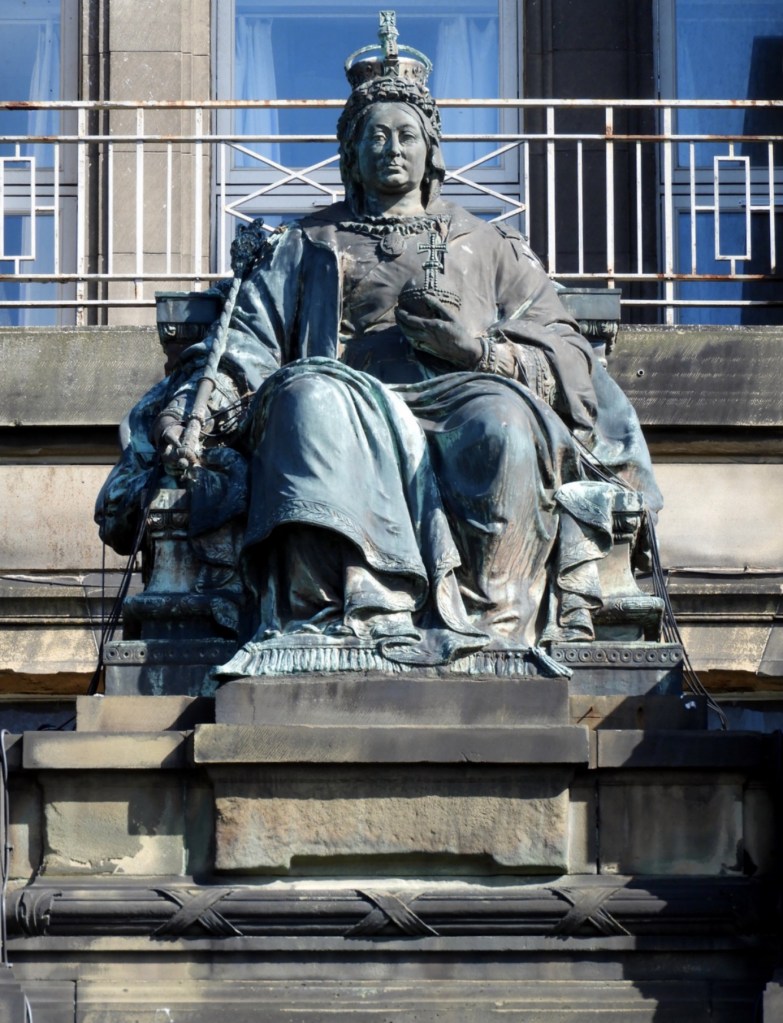
‘Victoria’ Glasgow Royal Infirmary

With his contacts within the local architectural profession he soon picked up work and within a few years was much in demand. One of his earliest commissions was for statues of Thomas Telford, James Watt and Henry Bell on the 1886 first phase of JJ Burnet’s Clyde Navigational Trust Building, where he worked under the guidance of the great James Mossman (whom Alexander Thomson worked with almost exclusively) but when it came to phase two in 1906, he was responsible for all the architectural sculpture including his powerful ‘Demeter’ and ‘Amphitrite’ which stand either side of Burnet’s corner dome. But it was to be James Miller with whom Hodge formed the closest working relationship, contributing to most of Miller’s major commissions from the Glasgow Exhibition buildings of 1901, onwards.

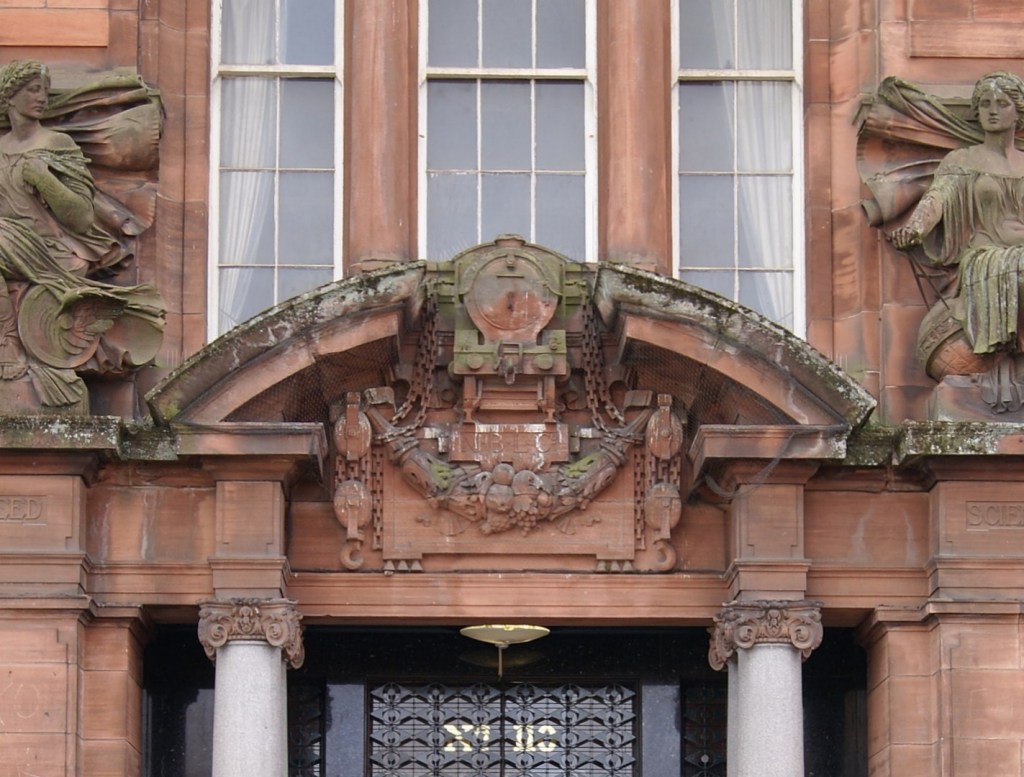
North British Locomotive Company Headquarters, Glasgow

Hodge produced all the sculpture on Miller’s Clydebank Town Hall of 1902 as well as his massive Caledonian Chambers of 1903 and the following year sculpted one of the finest and most majestic sculptures of Queen Victoria (following her death in 1901). This graced the south elevation of Miller’s Glasgow Royal Infirmary where, fortunately, she still looks down from her throne above the entrance upon the square in front of Glasgow Cathedral. As Miller and Hodge’s confidence grew, they became more inventive and in 1909 produced one of their most successful tympana over the main entrance doors of the head office of the North British Locomotive Company. In lieu of classical swags draped either side of a central shield, they gave this train manufacturer the boiler of a steaming locomotive, adorned with chains, blocks and tackle.

The Guildhall, Hull

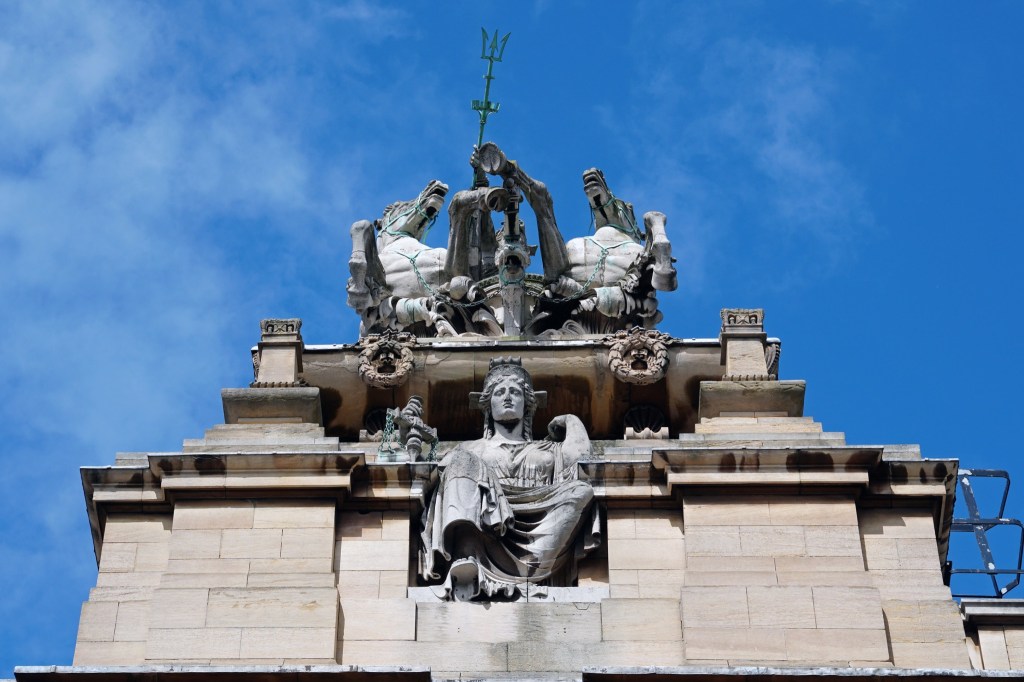
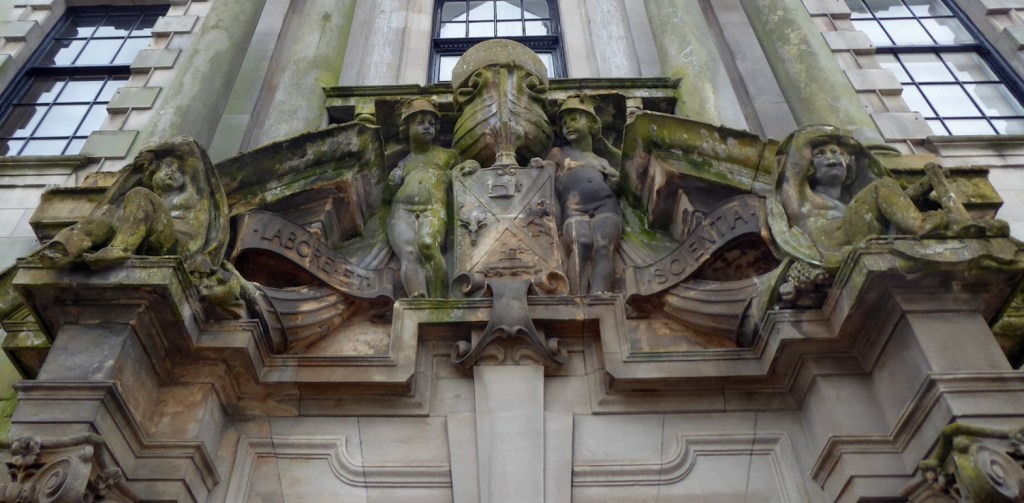
By then Hodge was based in London and working throughout Britain on increasingly grand commissions. He contributed to the vast civic centre project in Cardiff (along with numerous other architectural sculptors), led by architects Lanchester Stewart and Rickards which included the City Hall, Law Courts, University buildings, a National Museum and the County Hall for Mid-Glamorgan for which Hodge provided ‘Navigation and Mining’, but perhaps his greatest work is ‘The Daughters of Neptune’ atop the Guildhall in Hull of 1914. Hodge sadly died in 1917 in his forties, at the peak of his extraordinary powers, but was thus spared having to witness the decline of his art, as Modernism almost entirely stripped the nation’s new buildings of sculpture . 

‘Mining’ Cardiff

If you don’t want to miss out on further blogs then please follow me on johngooldstewart.com
Blog 55

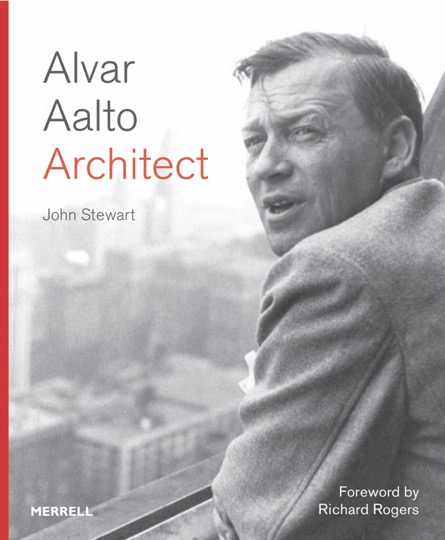
Alvar Aalto – Modern Master

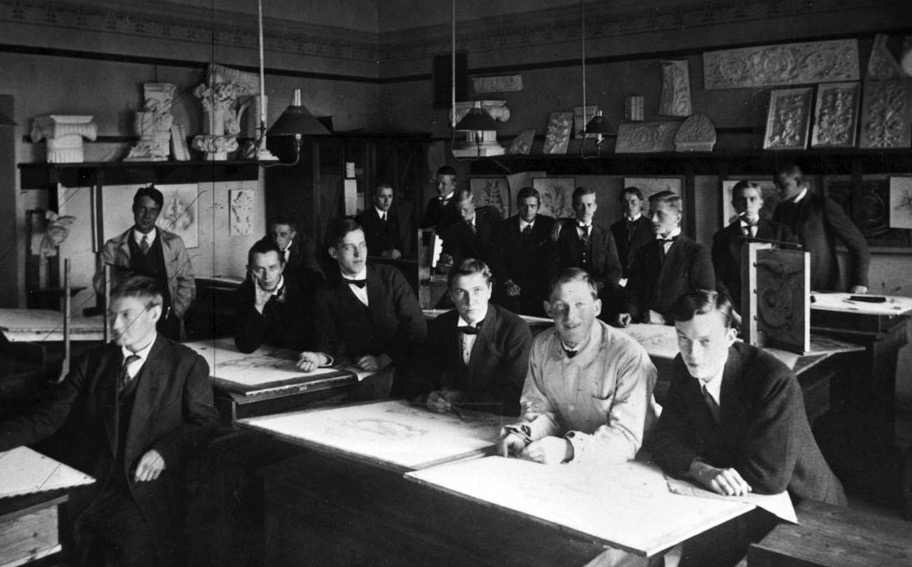
One of the most interesting aspects of Alvar Aalto’s career was that he was a distinctly average architecture student and a follower for many years before he became a leader of his art and profession. Most of his contemporaries that remembered him at all as a student, recalled only that he was “louder” than the rest of his class and his former tutors consistently commented on his behaviour rather than the quality of his work.

Aalto front and centre in the cream smock

As a young architect he was a dedicated acolyte of Gunnar Asplund (despite having been turned down for a job in his practice in Stockholm) and if you described his early designs after starting his practice as “owing a considerable amount to the work of Asplund” you’d be very generous. His early buildings such as the Workers Club in Jyvaskyla or the Civil Defence buildings in Seinäjoki were as good as anything else in contemporary Finland, but they were almost entirely reworkings of elements from the completed buildings of the Swedish master. 

His move from his hometown of Jyvaskyla to Turku on the west coast of Finland was partly to do with supervising the construction of the massive Southwest Finland Agricultural Cooperative Building which was sited there, but just as much to be nearer Asplund in Stockholm, just across the Gulf of Bothnia. But it was there instead that he met the quiet but extremely capable Erik Bryggman with whom he collaborated and who first exposed the young Aalto to the new European Modernism that would soon replace Nordic Classicism as the preeminent style throughout Scandinavia.

For Aalto it was a damascene conversion and he spent much of his energy in 1928 converting unbuilt Classical commissions into the new Functional style – out went the classical friezes and in came the tubular handrails. The drawings for the Cooperative Building were thus stripped of all Classical detail in January 1928 and Viipuri Library, the Jyvaskyla Defence Corps Building and Muurame Church were similarly transformed in the summer of that year. 

Unlike many of his contemporaries however, Aalto had immediately grasped, not only the stylistic expressions of the new Functionalism – but that it represented a new way of designing buildings based on a return to first principles and the needs of the building’s users and it was an approach which, as we know, he would soon master – eventually even enjoying the friendship and admiration of the great Gunnar Asplund. 

My book ‘Alvar Aalto Architect’ is available on Amazon and if you don’t want to miss out on further blogs then please follow me on johngooldstewart.com
Blog 54

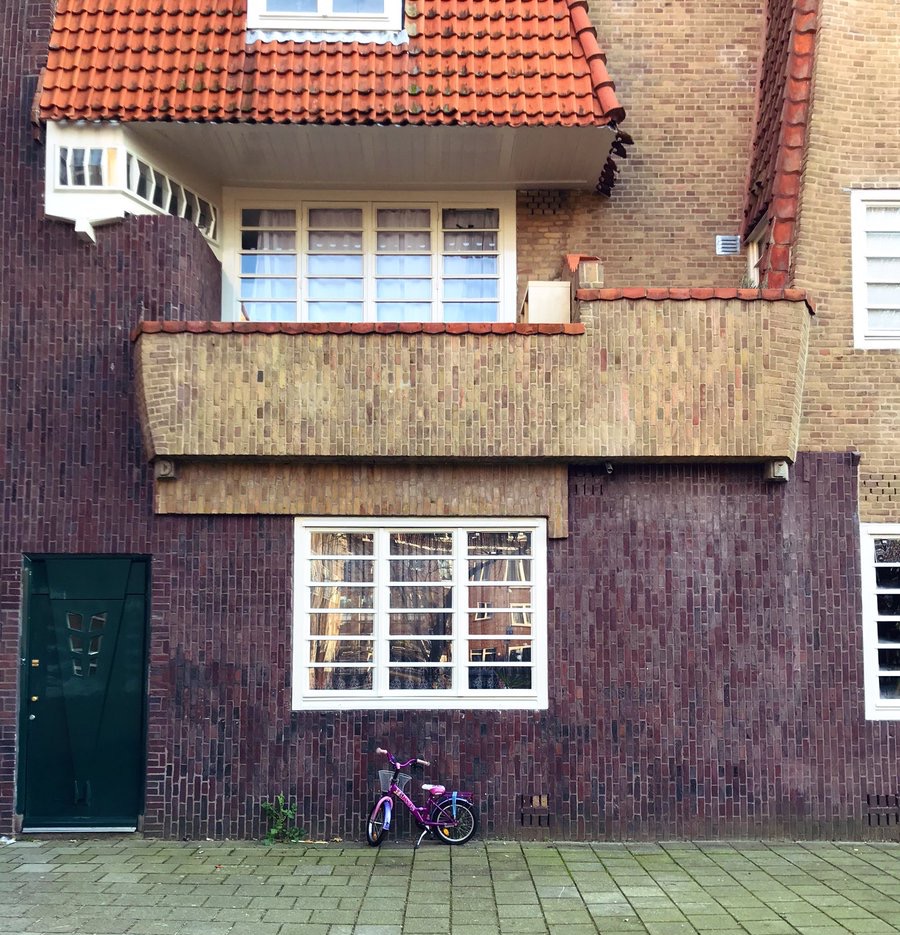
The Amsterdam School

The nineteen twenties in Holland (perhaps more than any other European country) was a period of architectural ferment, in which several tribes of architects offered very different responses to the changing world around them. In Amsterdam, Michael De Klerk established what has become known as The Amsterdam School, whose extraordinary expressionist, brick, workers housing for two housing associations De Dagerad and Eugenia Hard were hugely influential. Despite De Klerk’s tragic early death in 1923 at the age of 39, the style which he and Piet Kramer had developed continued to flourish throughout Holland in workers housing and public buildings up until the second world war – albeit without De Klerk and Kramer’s unique imagination and invention. 

Their work was an extraordinary marriage of modernity and tradition which evolved from the (more Calvinist) Northern European version of Art Nouveau – National Romanticism – but while it continued many of the themes of this earlier movement (such as the use of traditional materials), it was devoid of most of its typical medieval historical references in the form of massive buttressing, great boulder stones, hand-crafted metalwork and Norse imagery. It was also open to wider influences including both German Expressionism and interestingly, the early work of Frank Lloyd Wright (Blog 53). Wright’s prairie houses were published in Europe in the Wasmuth Volumes between 1910 and 11 and there is more than a hint of his horizontal dynamism, layering of space and use of materials in De Klerk and Kramer’s work.

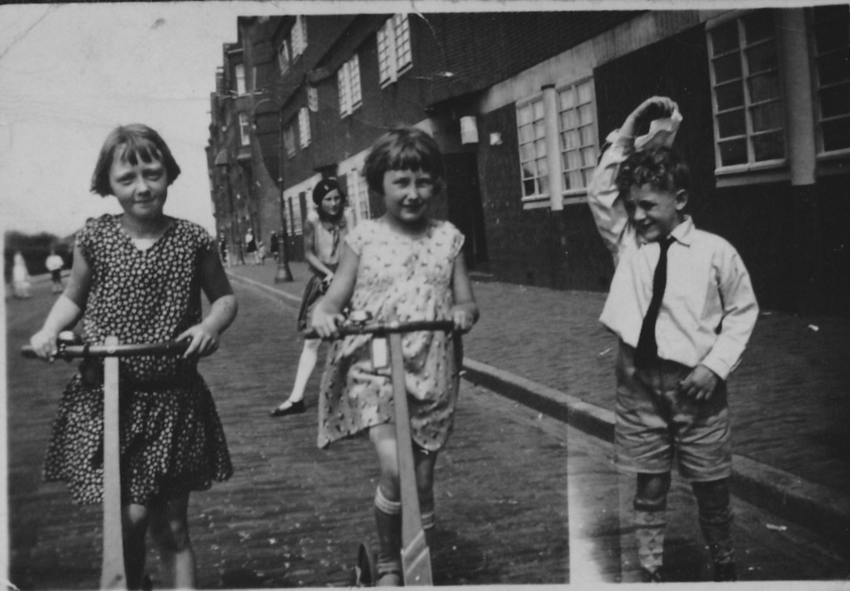
What they achieved was the creation of a fresh new architecture which provided decent homes for the rapidly growing working-class population of Amsterdam and such was its effectiveness that the style quickly spread throughout the country. It was low-rise, energy-efficient, humane public housing whose idiosyncratic forms and highly-creative detailing offered the poorer citizens of the city a degree of individuality which had previously only been enjoyed by the upper classes. As a sign of its success and the affection that its held in, it continues to fulfil this role a century later (albeit that it is now also hugely attractive to architects and other middle-class Amsterdammers). Sadly, as with so many architectural movements – successful and unsuccessful – after the second World War a new generation of young Dutch architects perceived the style to be simply old-fashioned and enthusiastically joined their colleagues around the world in the production of concrete tower blocks and system-built mass housing.

If you don’t want to miss out on further blogs then please follow me on johngooldstewart.com
Blog 53

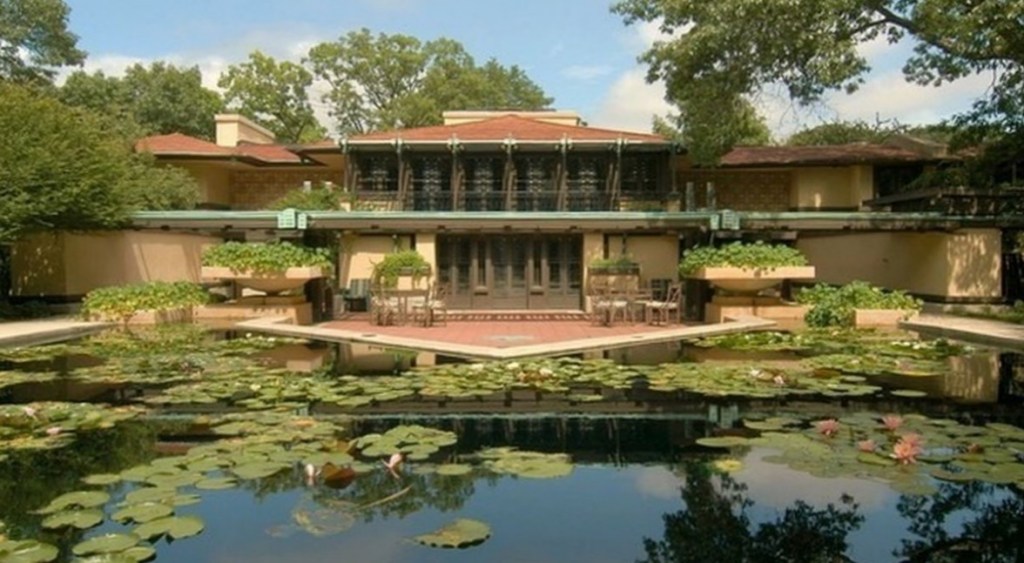
Frank LLoyd Wright

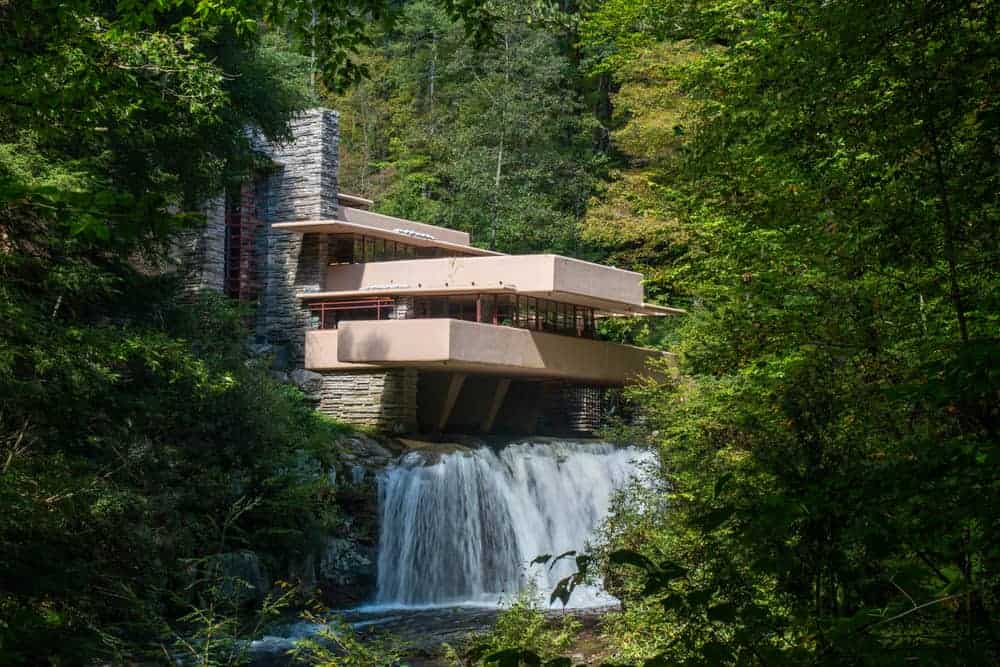
Fallingwater

If there is such a thing as an architectural genius – someone who appears to simply have an innate ability to produce outstanding original art – then Frank Lloyd Wright surely qualifies. From a relatively conventional architectural education and apprenticeship there emerged a revolutionary young architect who completely rethought the meaning of The House in the twentieth century. Wright literally exploded its traditional concept of enclosure and replaced it with a new model of horizontal planes floating around a vertical solid fixed anchoring point in space, in the form of a fire and massive chimney.

Wingspread

His early Prairie Houses also somehow managed to encapsulate the American Dream – free from all the constricting traditions of old, tired Europe – a land of endless possibilities, equal opportunities, natural beauty and vast spaces and yet – there were a remarkable number of architectural traditions which he maintained in contrast to the later heroes of Modernism such as Le Corbusier or Mies van der Rhoe. For example, he maintained the primeval concept of the family gathered around an open fire as the very centrepiece of all his houses (even later symbolically, in California, where fires would rarely have been lit). While most of his compositions were asymmetrical and responded to their site and surroundings, he also used symmetry as an ordering device in a way which became entirely unacceptable within mainstream Modernism.

Avery Coonley House

Far from rejecting traditional materials, Wright’s extraordinary imagination and creativity allowed him to recast them in entirely new ways and while he often adopted (and occasionally developed) the latest technology, he was also quite at ease providing the dramatic ‘Fallingwater’ with traditional slate floors or adopting the local Oya stone for complex carving in his Imperial Hotel in Japan. Differentiating himself even further from the mainstream, he also revelled in committing that greatest of Modernist sins – providing rich architectural decoration – in wood, stone, concrete and stained glass and while many of his spatial concepts were radical and much admired by later architects, the sheer creativity of Wright’s work at this level was quite extraordinary, almost entirely unique, and is generally quietly ignored.

Imperial Hotel

I’d suggest that while his (by all accounts) vast ego allowed him to fearlessly reimagine almost every problem or opportunity that he was presented with, it was his focus on providing spaces that supported, celebrated and enriched the simple timeless human activities that make up our lives, that produced works of architecture that have now become as popular amongst architects as they are with almost everyone else who has discovered them.

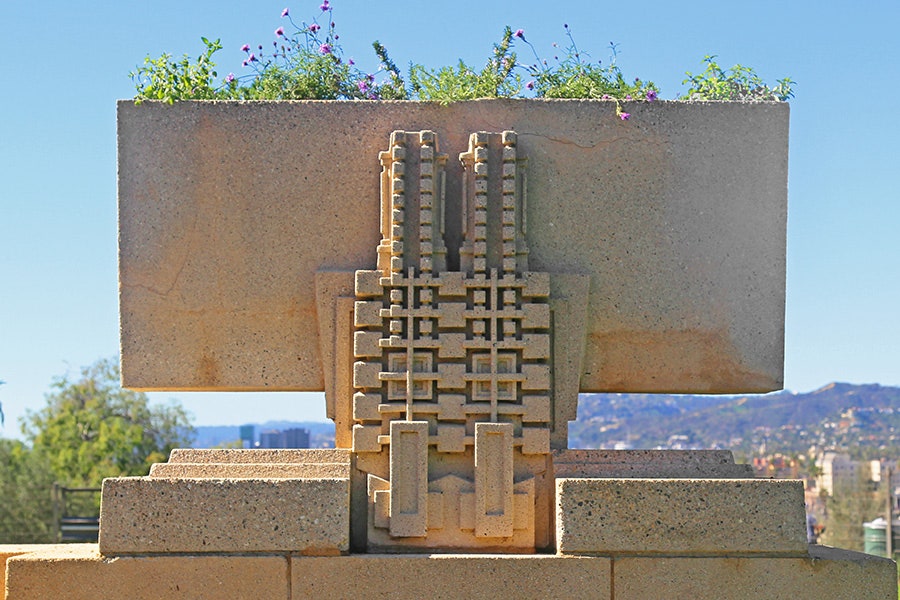
Hollyhock House

If you don’t want to miss out on further blogs then please follow me on johngooldstewart.com
Blog 52

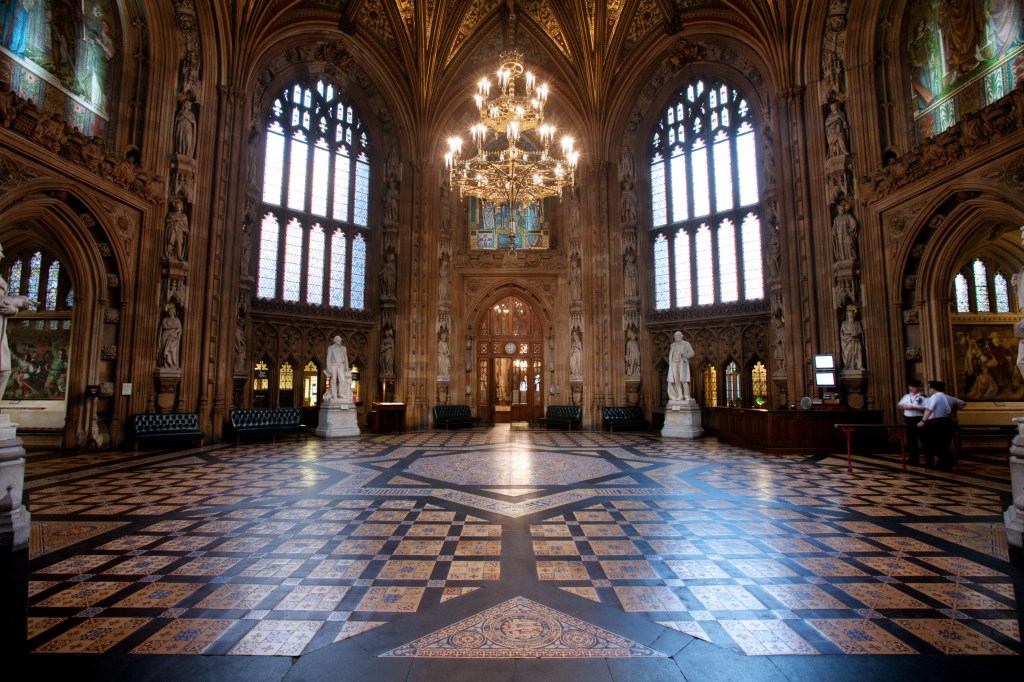
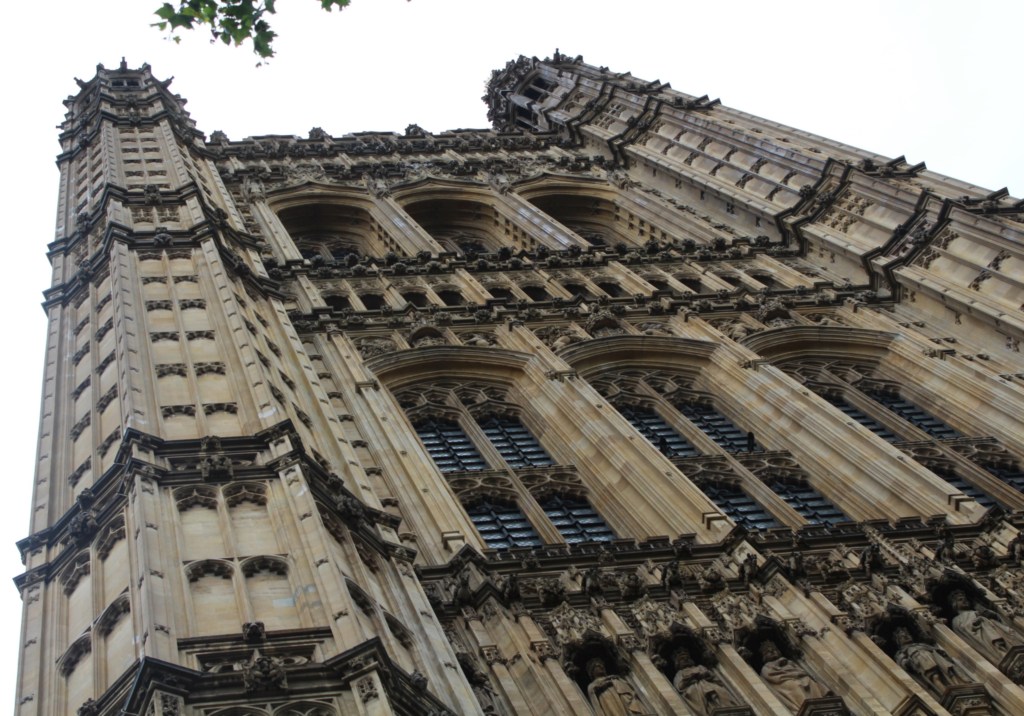
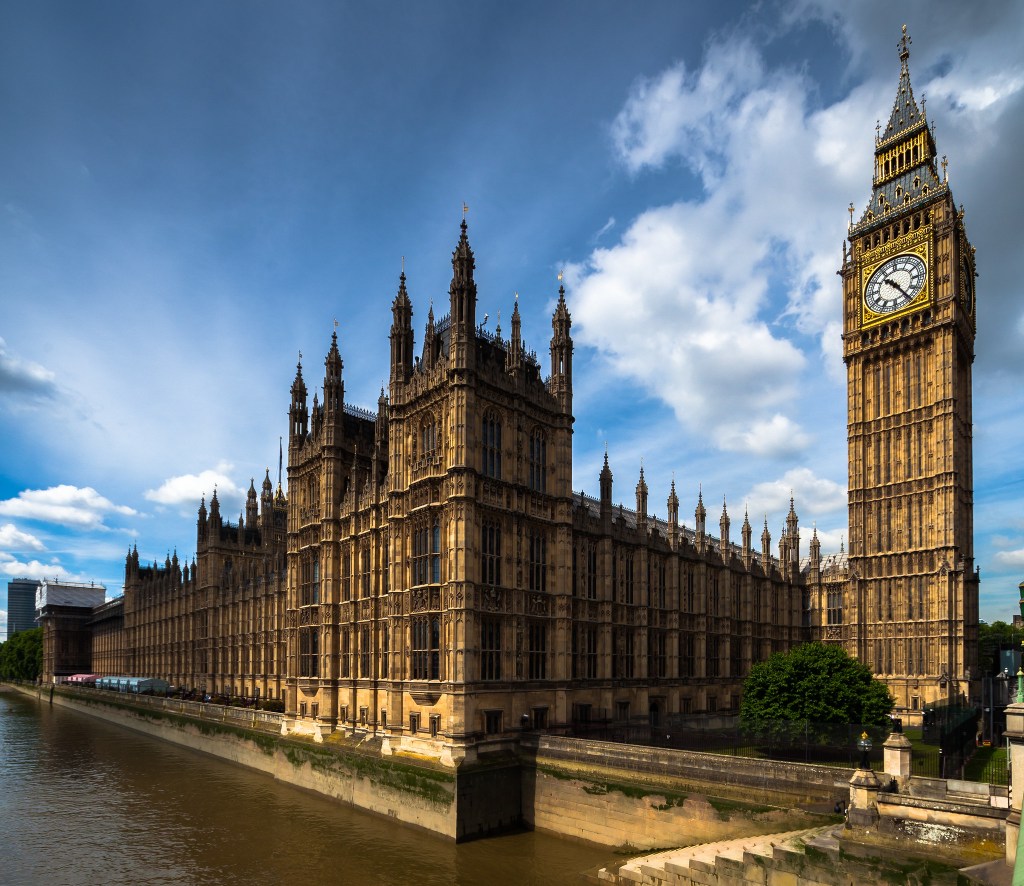
The Palace of Westminster

The Houses of Parliament, or to give them their correct title, the Palace of Westminster, are currently at an early stage of a long overdue refurbishment. Their official title reflects the purpose of the original buildings on the site which served as the palace of the Kings of England from the 11th to the 16th centuries before their move to the nearby Palace of Whitehall and their more recent occupation of Buckingham Palace. The Parliament of England and the Royal Courts of Justice had met on the site since the 13th century and continued to do so until the 19th century, when George Street’s Law Courts were built on The Strand.

Almost all the current Parliament buildings date from the middle of the 19th century, when they were constructed following a devastating fire which swept through the existing buildings on the 16th of October 1834, leaving only Westminster Hall, the Jewel Tower and the cloisters and crypt of St Stephen’s Chapel remaining. Robert Smirke (architect of the British Museum) was appointed to design the new buildings, but pressure from his competitors (who ran a very effective press campaign), led to a Royal Commission being established to oversee an architectural competition.

This was famously won by Charles Barry, assisted by leading advocate of the Gothic Revival, Augustus Pugin. Barry was one of those extraordinary architects of that period who could flip from his favoured Greco-Roman Classical architecture to Gothic, depending on the building type and his client’s taste and his adoption of Pugin as his junior partner for the competition proved to be a masterstroke, which won him both the largest commission of his lifetime and one which eventually utterly exhausted him by the end of its 26-year construction period.

Though the reconstruction of the Palace was forced upon them, the project was seen by the Victorians as an opportunity to both celebrate the success of Britain as it moved ahead of France and Russia to become the world’s leading economy and just as importantly, to express their values to the world. The Royal Commission had prescribed Gothic to all the competitors as the most appropriate style for a Christian country and one which was rooted, not in ancient pagan cultures, but in the churches and cathedrals of the land, and Barry, (briefly assisted by Pugin before his early death in 1852), delivered his masterpiece in Late Medieval Perpendicular Gothic. Let’s hope that, refreshed, it will survive for many more centuries and continue to symbolise the home of democratic government to the world.

If you don’t want to miss out on further blogs then please follow me on johngooldstewart.com
Blog 51

Baker and Lawrence

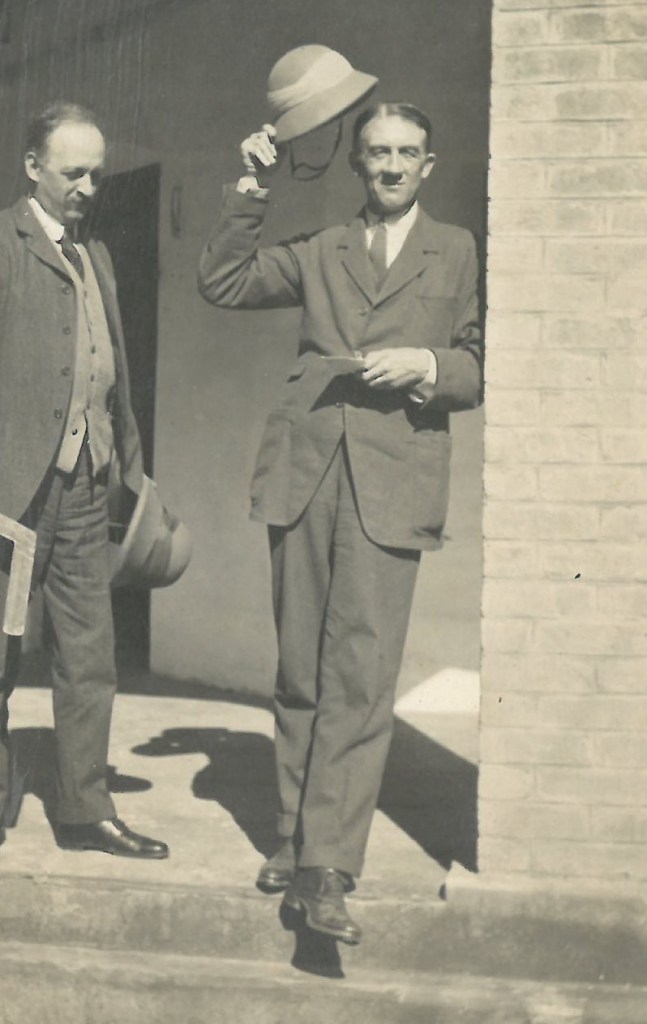
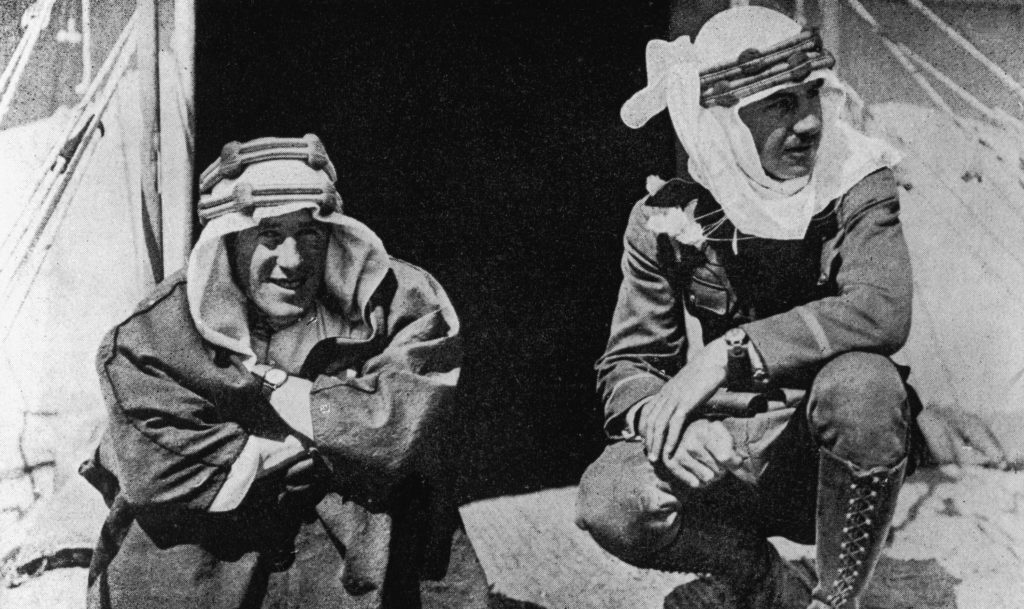
The architect Herbert Baker has always had something of an image problem. Edwin Lutyens and his supporters consistently referred him as “a dull committee man” but the reality could not have been further from this rather cruel characterisation. Baker was much better educated and better read than Lutyens and was also much more interested in current affairs, counting many of his leading contemporaries as friends. He was a confidante of Cecil Rhodes, the wealthiest and most powerful man in Africa, John Buchan, the author and politician, Lord Milner, a member of Lloyd George’s five-man First World War Cabinet and was able to converse with them all as an equal, (rather than, like Lutyens, amusing their wives with his puns). Perhaps the most surprising of these relationships however, was between Baker and T.E. Lawrence, or Lawrence of Arabia, as he became better known.

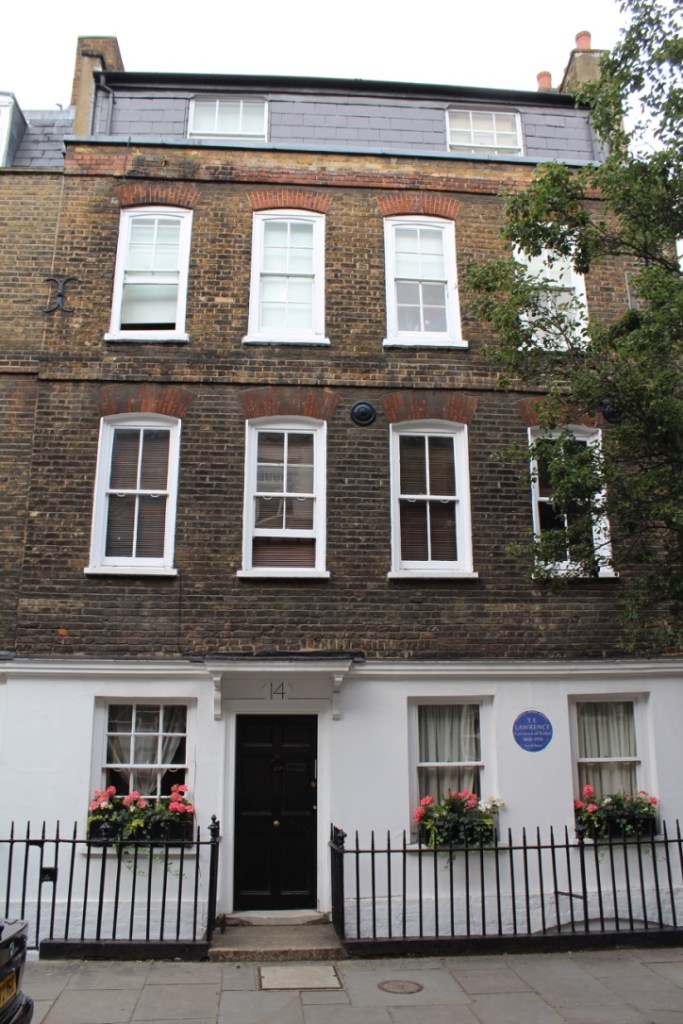
The two met at dinner after evening chapel in New College Oxford and, finding a common interest in archaeology, conversed easily leading to an unlikely friendship between the eminent architect and the leader of the Arab Revolt. Baker offered Lawrence a trustworthy companion, while Lawrence to Baker was simply one of the greatest heroes of Imperial Britain. During the following years, Lawrence’s fame grew and as with many modern-day celebrities, he was soon hounded by the press wherever he went. Baker offered him the use of the flat above his office at 14 Barton Street in London when Lawrence was in town and the two would often stroll around Westminster together in the late evenings when the crowds had dissipated.

After the theft of Lawrence’s draft manuscript of ‘The Seven Pillars of Wisdom’ (his record of the desert campaign) in 1920, Baker offered him the peace of the Barton Street flat to rewrite his book, where he lived for almost a year, with the office staff all sworn to secrecy. So effective were they in guarding Lawrence’s privacy during his stay that the office boy even turned away George Bernard Shaw who called to visit, telling him he’d “never heard of him.” The two men remained close during what remained of Lawrence’s life, corresponding regularly and with Lawrence often visiting Baker in London and at his family home in Kent. At one point he even asked Baker if he could act as night watchman on the Bank of England building site as he’d enjoy the peace and solitude.

Shortly before his tragic death in 1935, Lawrence wrote to Baker, thanking him again for his friendship and adding – “I’ll always remember Barton Street, as the best – and freest place I ever lived in: and I’m most grateful to you for having let me live in it after my odd fashion”. Ironically, the office of one of Britain’s most prolific architects is marked with a blue plaque confirming only that “T.E. Lawrence once lived here.”

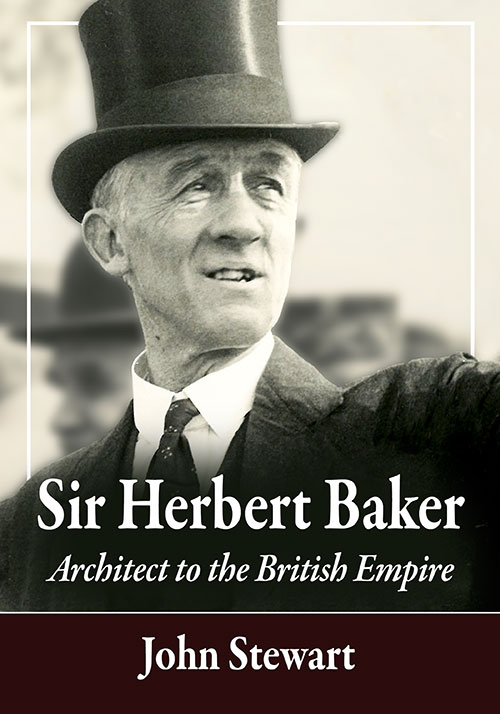
My biography of Herbert Baker is due for publication later this year. If you don’t want to miss out on further blogs then please follow me on johngooldstewart.com
Blog 50

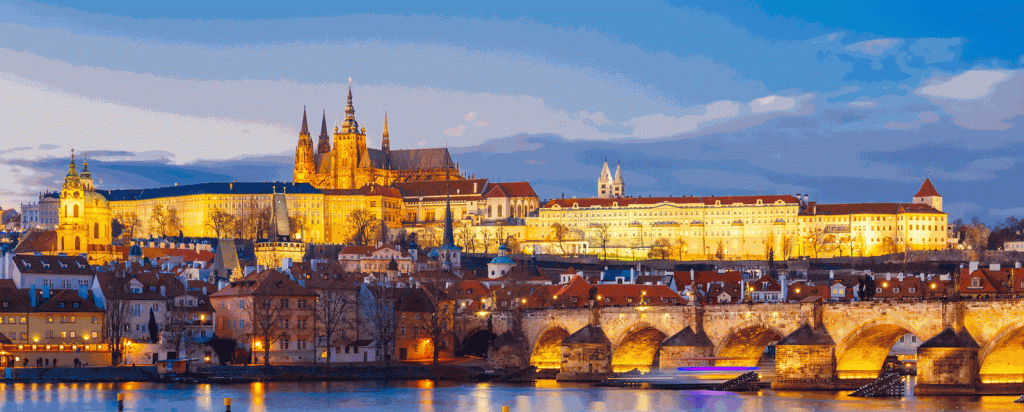
Prague Castle

The architect Jože Plečnik emerged from that crucible of creativity that was Vienna around 1900. Gustav Klimt, Joseph Maria Olbrich and Josef Hoffman founded the Secession in 1897 with Otto Wagner joining them a few years later and it was in Wagner’s office that Plečnik learnt his trade before moving to Prague, to take up the position of Professor of Decorative Architecture at the Academy of Applied Arts in 1910. In 1920 he was appointed as architect for the renovation of Prague Castle by Tomáš Masaryk, the first president of the new Czechoslovak Republic, who wished to establish it as the official presidential residence and Plečnik continued to work on the project until 1934.

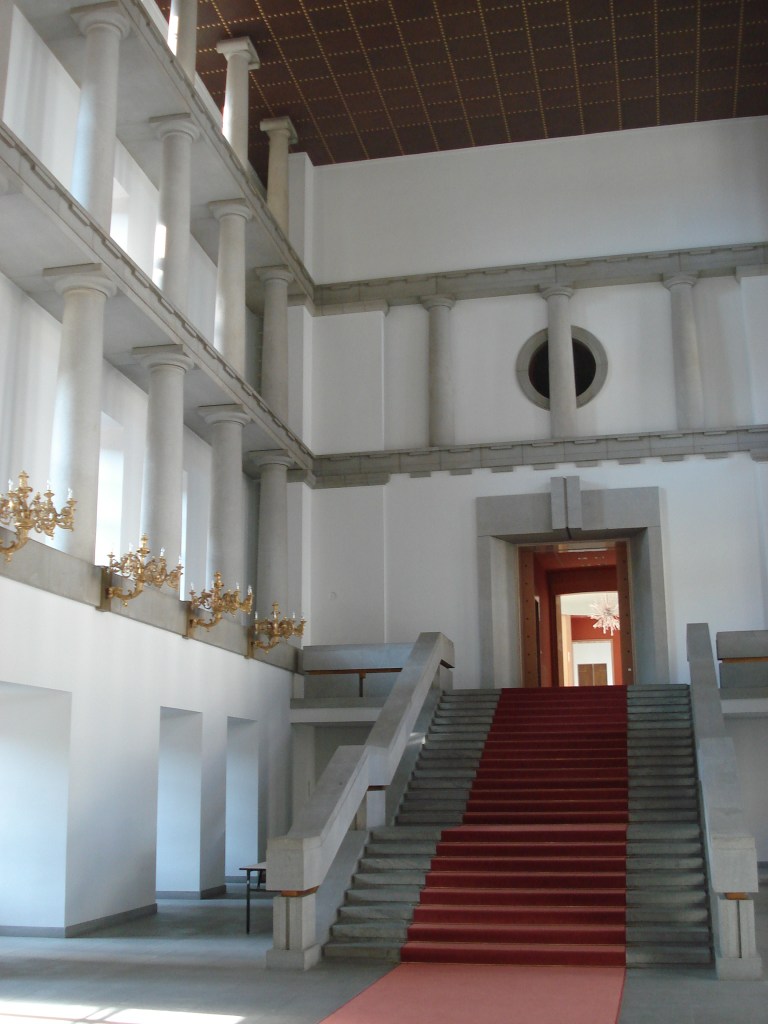
Plečnik Hall

The castle is actually a vast hilltop fortified town within the city, which had previously served as the seat of the Bohemian kings and the Holy Roman emperors but by the end of WW1 it had fallen into considerable disrepair. As well as the renovation of the castle, Plečnik’s brief was to provide a series of new internal and external reception spaces to serve the new government and to act as a symbol of their new-found independence and commitment to democracy. Plečnik’s strategy was to respect the extraordinary 1000 year history of the buildings while reorganising the spatial sequence of the complex to better reflect its new role.

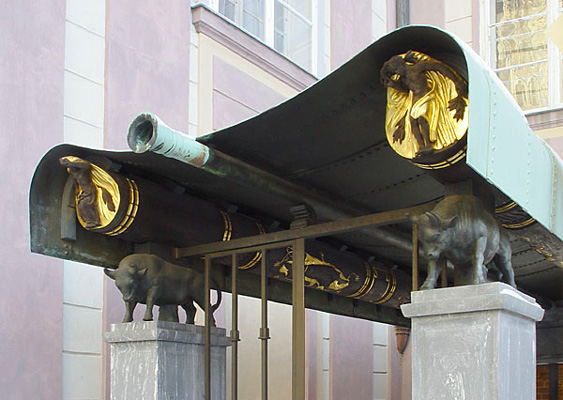
Bull Staircase

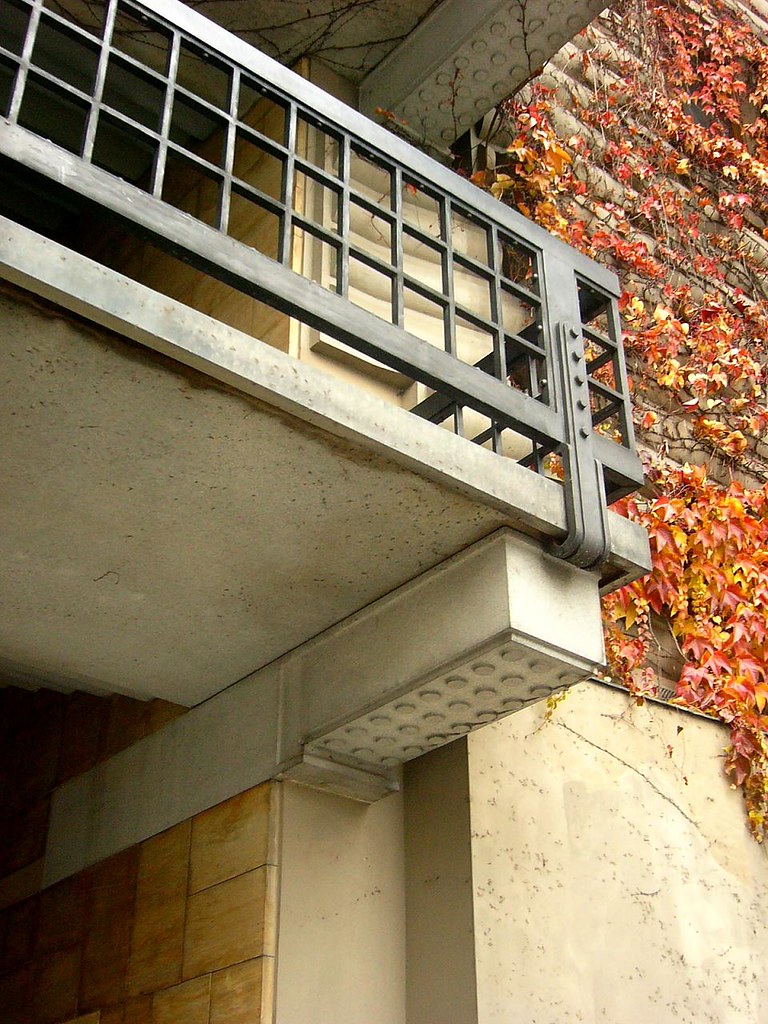
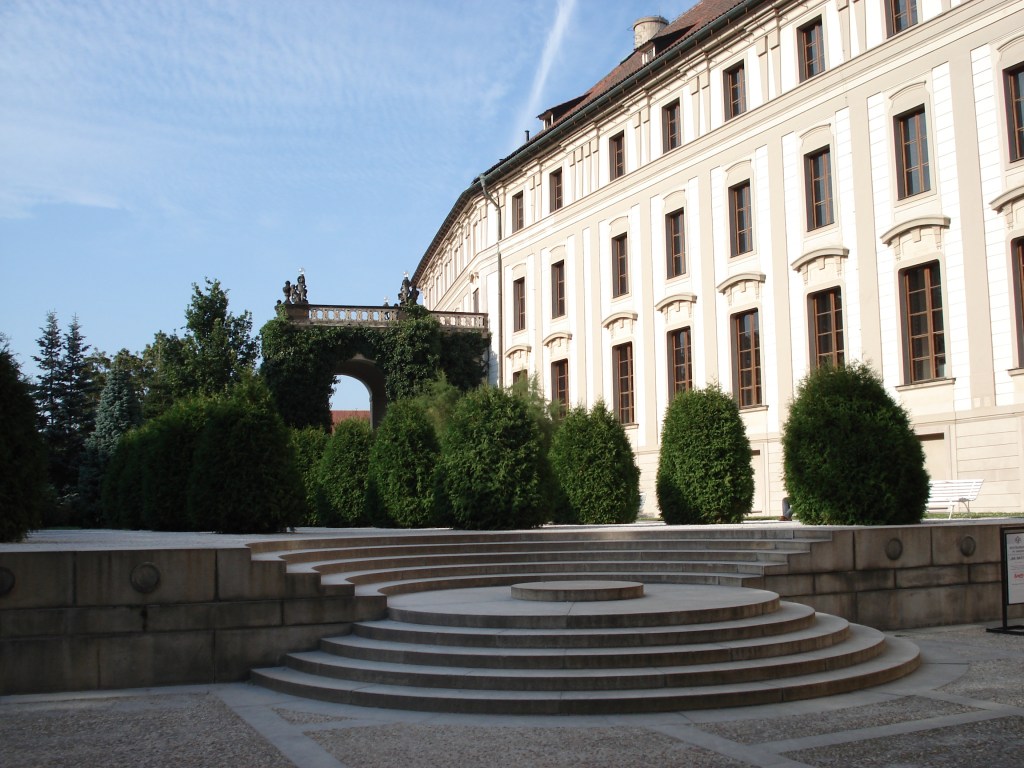
Unlike Carlo Scarpa in his Castelvecchio Museum (Blog 17), rather than stripping spaces back to their basic structure and then adding distinctly contemporary interventions, Plečnik restored many of the interiors completely and designed his new spaces in a style which was sympathetic to the spirit of the building. Mannerism probably best describes his approach, but his extraordinary creativity went way beyond a single stylistic straitjacket. It was largely classical in its basic elements, but refreshed and invigorated, rather than simply reproduced correctly.

Balcony Detail

At first his work seems in complete contrast to the zeitgeist, but on closer study has much in common with other architects of the period such as Asplund in Sweden in his classical period prior to 1930, Heinrich Tessenow in Germany or even Edwin Lutyens at his quirkiest. They all demonstrate the continuing rich possibilities of the classical language when it is used to form the basis of a contemporary architecture which responds to today’s needs – many of which are new but more of which are timeless reflections of the human condition. 

Steps in the Garden

If you don’t want to miss out on further blogs then please follow me on johngooldstewart.com
Blog 49

Edwin Lutyens

Lutyens

Any discussion as to the greatest 20th century British architect must now include the brilliant Edwin Lutyens. His reputation has risen from the ashes of complete contempt in the decades after WW2 to being widely regarded as a title contender. His best work is now well known but his rather extraordinary career is less well understood. 
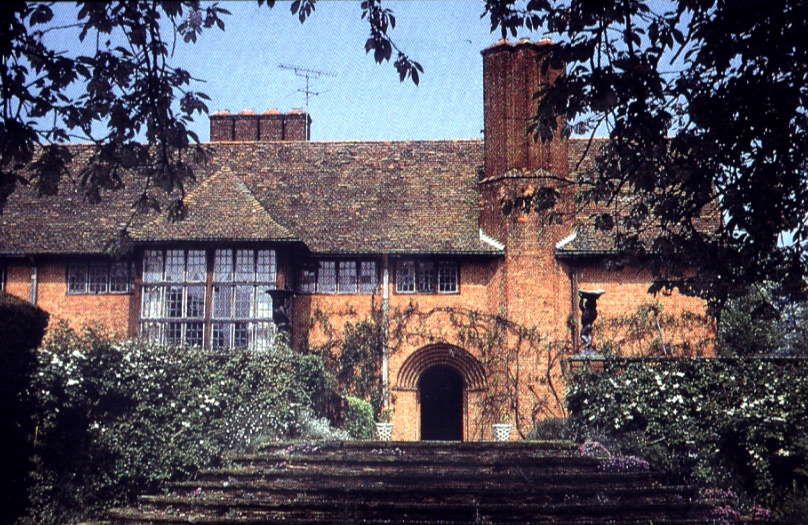
Munstead Wood

Like a number of other great architects, he started his own practice with little or no practical experience and in Lutyens’ case, without even a formal architectural education, having spent only two years at South Kensington School of Art and 18 months in the office of Ernest George. In 1889 at the tender age of 19, he was commissioned to design Crooksbury (which was to be a holiday home for Arthur Chapman who had known Lutyens since his childhood) and so he left George’s office and set up shop in his parent’s house in Onslow Square in London. Within a few years, an introduction to Gertrude Jekyll the famed garden designer provided him with a further client (her Munstead Wood of 1894-5 being the finest of his early works) an older and wiser muse, and of course, introductions to her own clients and her circle of wealthy acquaintances.
Deanery Garden

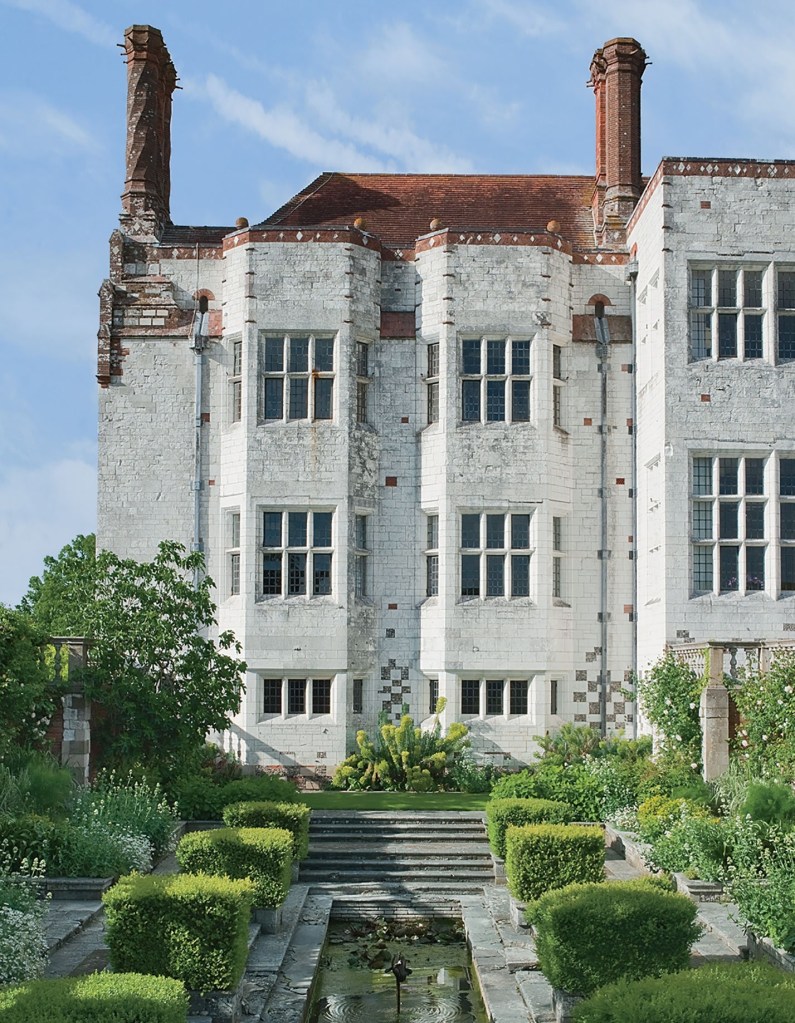
During the following, quite astonishing, ten years, Lutyens established himself as the leading designer of country houses in England and by 1905 had completed Deanery Garden, Tigbourne Court, Homewood, Little Thakeham, Nashdom, Greywalls, and the magnificent Marshcourt, as well as numerous further less well-known houses – but here lay his problem – he was now regarded as an architect who specialised exclusively in large country houses for the wealthy and as the years went by, he became more and more convinced that if he was ever to be mentioned in the same breath as Inigo Jones or Christopher Wren, he must attract public commissions.

Marshcourt

In 1907 he spent 9 months working on his competition entry for the London County Council buildings, but was utterly devastated to lose and shocked by both the expense of the exercise and his considerable loss of income. In 1908, he discussed a partnership with Herbert Baker, who had already completed numerous commercial, ecclesiastic and public buildings in South Africa, but Baker decided to remain there for a few years longer. In 1910 his wife, a leading theosophist, managed to steer the new headquarters building for the Theosophical Society in London his way, but it proved to be a disaster with him so exceeding the budget that construction was abandoned with only a shell completed.

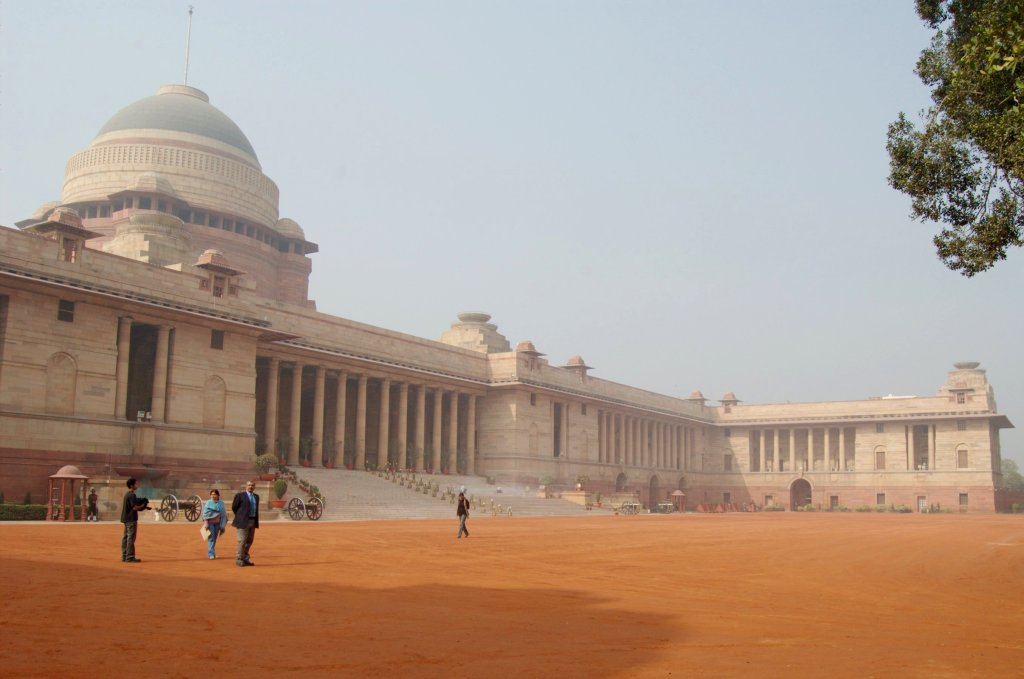
New Delhi

The turning point was his appointment as a member of the Delhi Planning Commission in 1912 (for which he and his wife Emily – a former Viceroy’s daughter – had to pull every possible string) and his subsequent appointment to design the Viceroy’s House the following year. Though this too was fraught with financial crises, it allowed him to finally undertake a major public building. His design of The Cenotaph in 1919 brought him public acclaim and was followed throughout the 1920’s and 30’s by a string of banks and headquarters buildings, before what would have been his greatest achievement –Liverpool Roman Catholic Cathedral – on which construction was halted by WW2 (by which time its estimated cost was running at three times its budget with only the crypt complete). By the time of his death in 1944 he was generally regarded as Britain’s leading architect, was a knight of the realm, an RIBA Gold Medallist and President of the Royal Academy and it’s highly unlikely that he’d have reached these heights had he not finally broken out of his early type-casting.

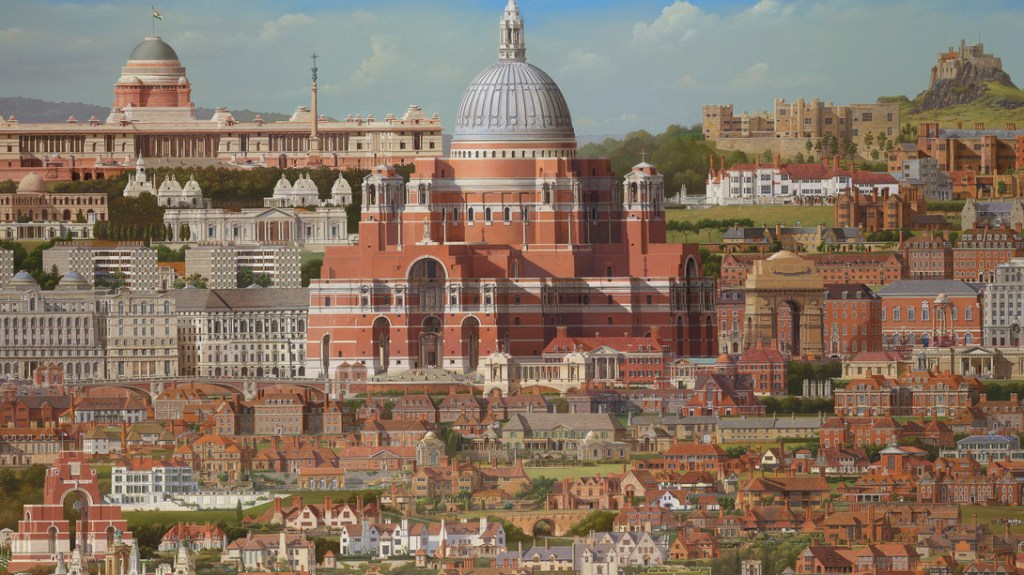
Carl Laubin

If you don’t want to miss out on further blogs then please follow me on johngooldstewart.com