Blog 48

Stormont

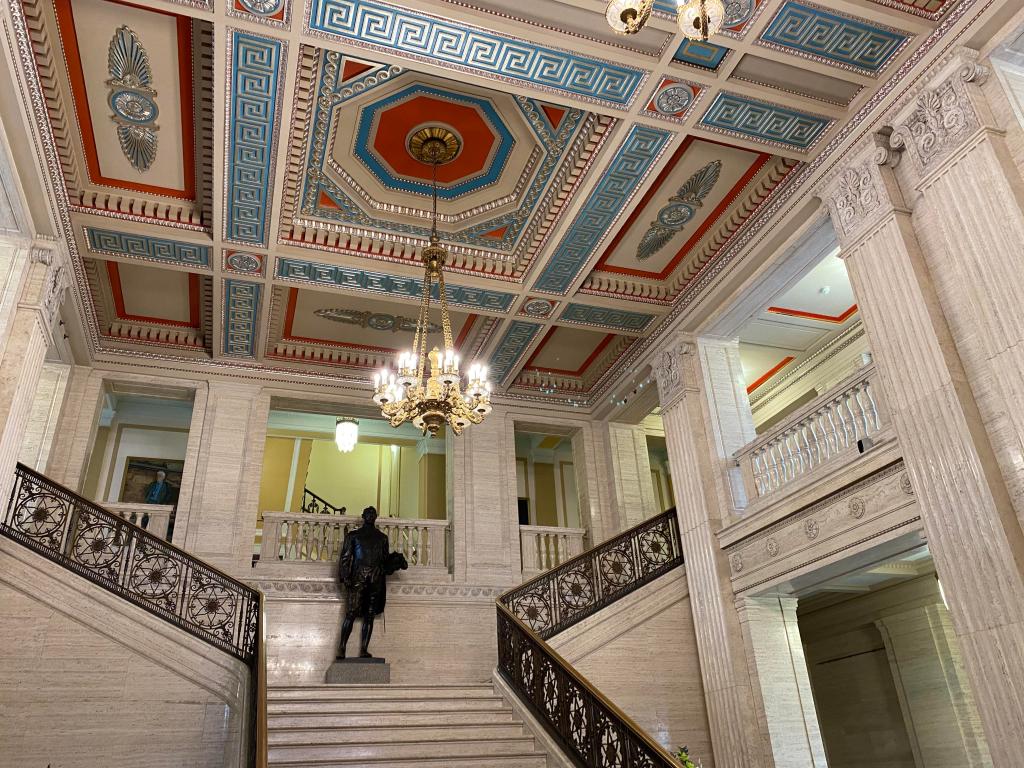
You probably recognise this building as a backdrop to various news reports on Northern Irish politics and it was here that the 700 hours of negotiations to secure the Good Friday Agreement took place. Its official name is ‘The Parliament Buildings’ of Northern Ireland, reflecting the original plan to have two separate office and parliament buildings, but as is so often the case with public projects – the money ran out and both functions were combined into one new building, by relatively little-known architect Arnold Thornely (1870-1953). Architecturally, perhaps what’s most surprising about it is that it was commissioned in the early 1920’s and officially opened in 1932.
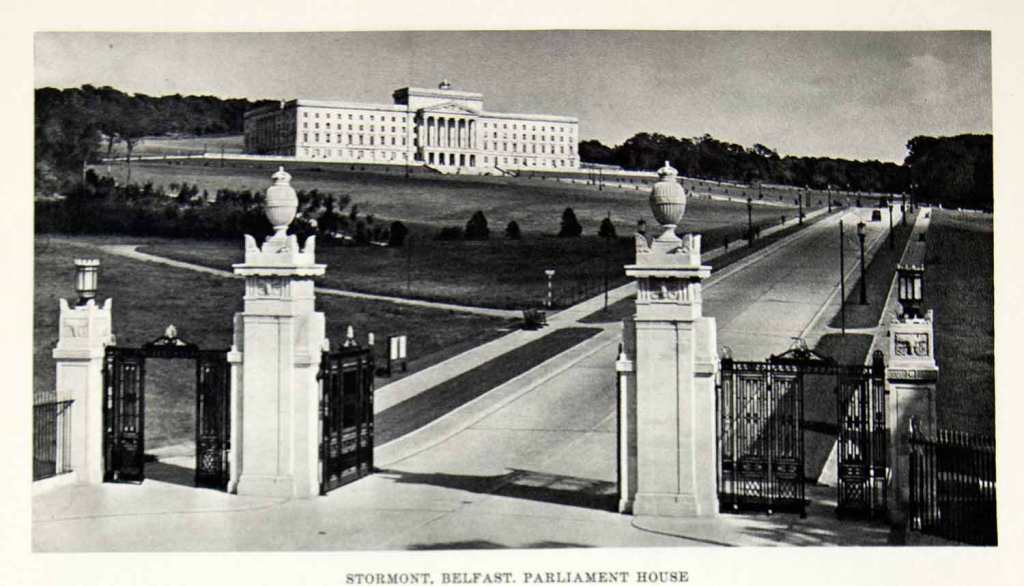
It certainly bears the stamp of imperial authority but this has much less to do with imposing Great Britain’s will upon the disputed province of Northern Ireland and much more to do with the final doomed attempt to sustain the British empire by creating largely self-governing dominions who having been given greater autonomy, it was hoped, would remain as loyal constituent parts of the empire. This building thus has to be read as part of a vast imperial building programme which was carried out across the globe in the first part of the twentieth century.
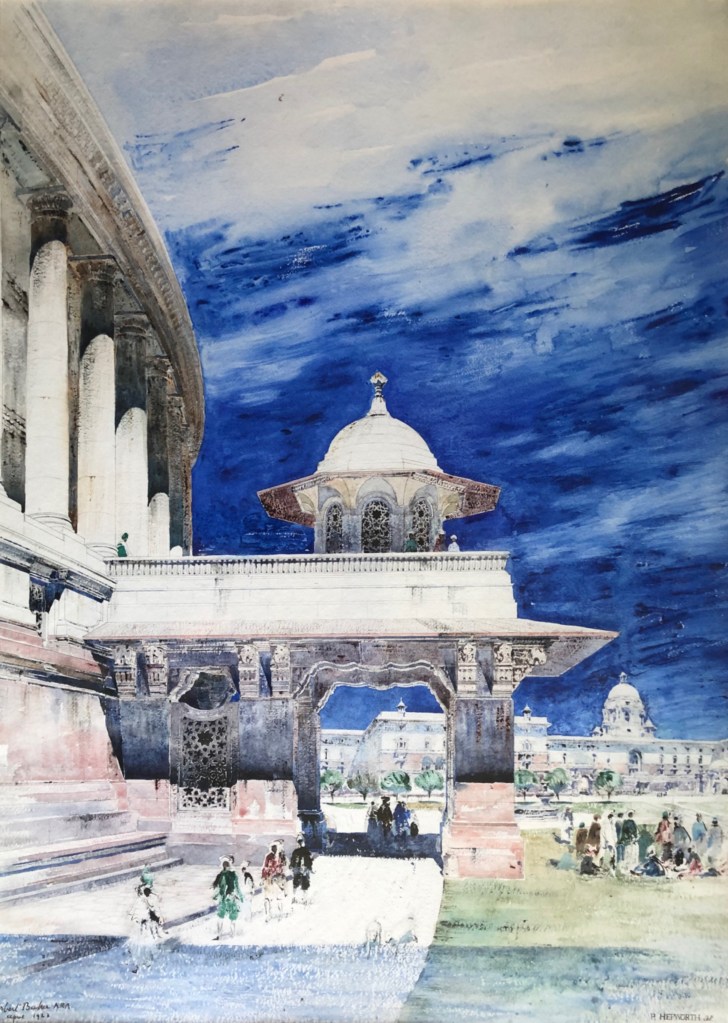
It is an Irish cousin to Herbert Baker’s Indian Parliament House in New Delhi (above 1921-27), his Union Buildings in South Africa (1909-13), John Campbell’s New Zealand Parliament House (1914-22) and John Smith Murdoch’s Old Parliament House in Canberra (1914-27) and was required following Dublin’s adoption as the capital of the independent Irish Free State in 1921. In Northern Ireland, the Stormont Estate on the edge of Belfast was purchased to provide a prominent site of sufficient size, high above the city, whose rising ground offered what was perceived as the perfect setting for a new parliament building.
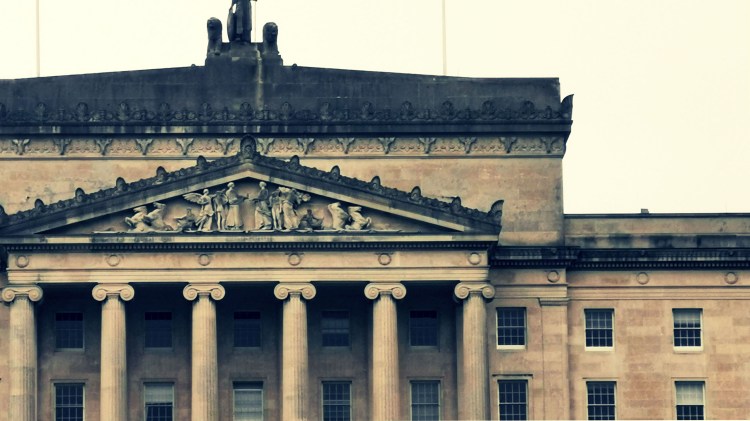
Thornely’s design originally envisaged a central dome, which would echo that of Belfast’s magnificent City Hall, but this too became the subject of cost-cutting, leaving just its mighty base, which was then, rather successfully (though unpatriotically), given a certain Germanic flavour with more than a hint of Schinkel. Otherwise, though very finely executed, it is all pretty straightforward stuff – two parliament chambers at right angles either side of the main central axis – all as ‘the mother of parliaments’ in what was then ‘the mother country’. The interiors are good with just a hint of what was then contemporary Art Deco.
Comparisons with its colonial cousins are interesting – New Zealand and Australia are similar classical blocks, India, as a result of the Indian Princes demanding their own distinct space, has three chambers, contained within the great colonnaded ring proposed by Lutyens, while Baker’s Union Building in Pretoria offers a much richer interpretation of the type (albeit minus the parliament chamber, which for political reasons, was located in Cape Town). Baker offered twin towers (as at Wren’s Greenwich), representing the two races – Boers and British (no – not black and white) who now jointly ruled the new South Africa. These enclose an external amphitheatre as a symbol of transparent government and the whole series of terraces upon which the complex is sited cascade down – not to a formal axial drive – but into a public park, which fortunately still remains open to the public, though it is now dominated by a statue of Nelson Mandela.

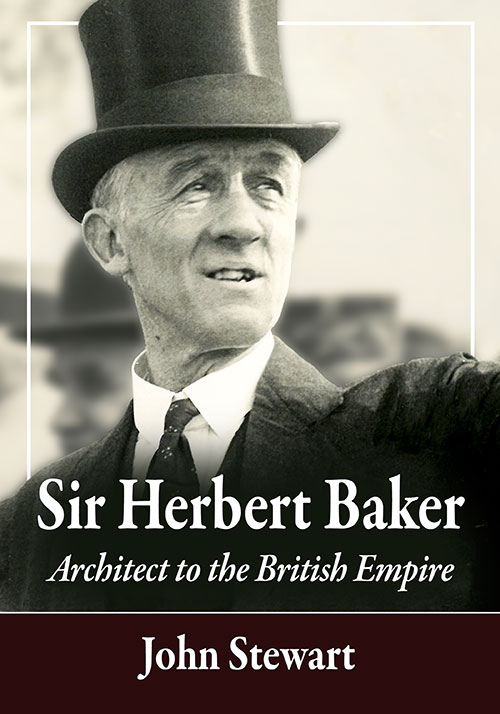
My biography of Herbert Baker is due for publication this autumn. If you don’t want to miss out on further blogs then please follow me on johngooldstewart.com
Blog 47

Glasgow Central Station

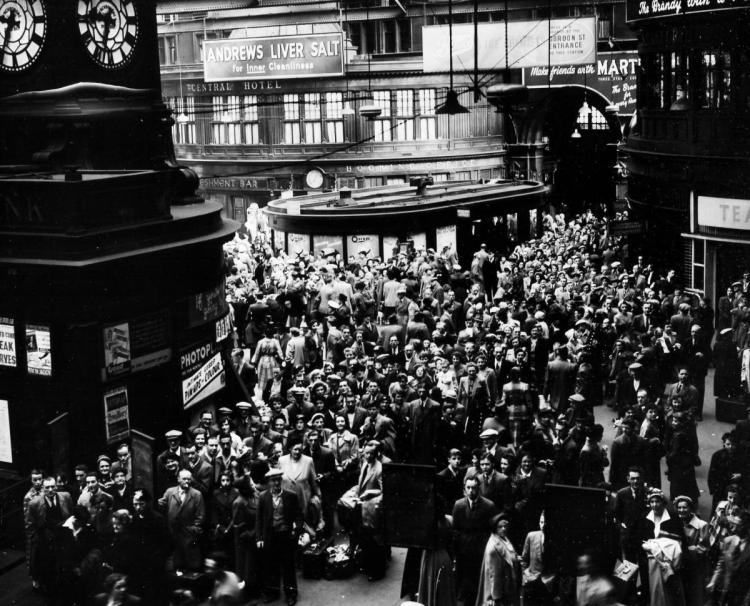
We are fortunate in Britain to not only have had so many fine Victorian railway stations, but also that so many have survived the onslaught of 1960’s and 70’s comprehensive redevelopment. In Glasgow, Buchanan Street Station is now a distant memory, we have lost St Enoch along with its magnificent hotel, but Queen Street survives (recently transformed by BDP while retaining its elegant glass roof) and the best of the lot – one of the country’s greatest stations – is Glasgow Central, which still serves over 30 million passengers a year from its 17 platforms and magnificent concourse.

The original station on the site was opened in 1879 by the Caledonian Railway Company to take trains north of the Clyde and directly into the city centre for the first time. In 1883 Rowand Anderson added his elegant Central Hotel with its great (somehow rather Scandinavian) tower but by the turn of the century the original eight platforms could no longer cope either with the daily commuters or the growing numbers of summer holidaymakers.

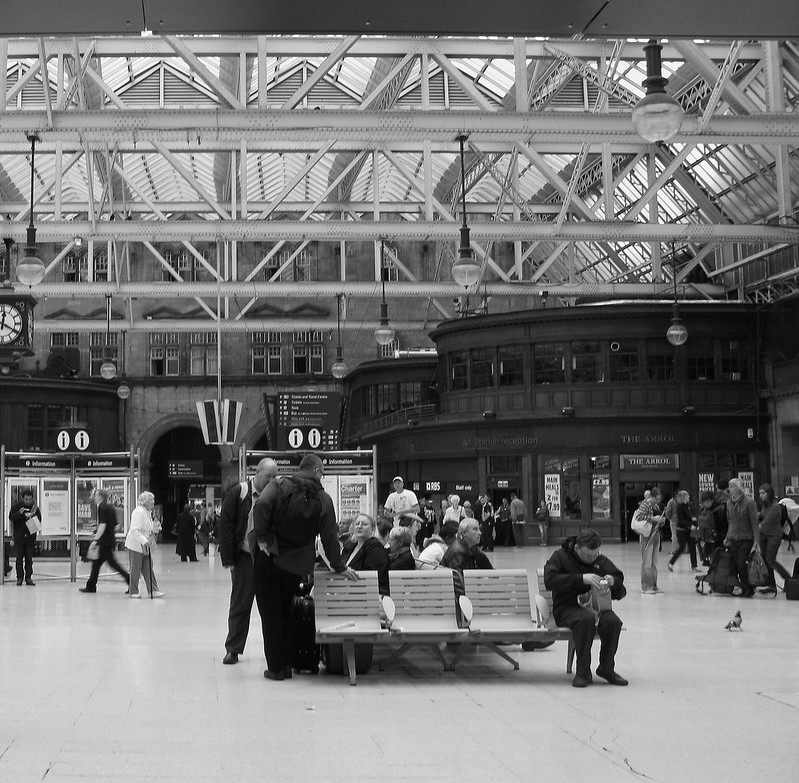
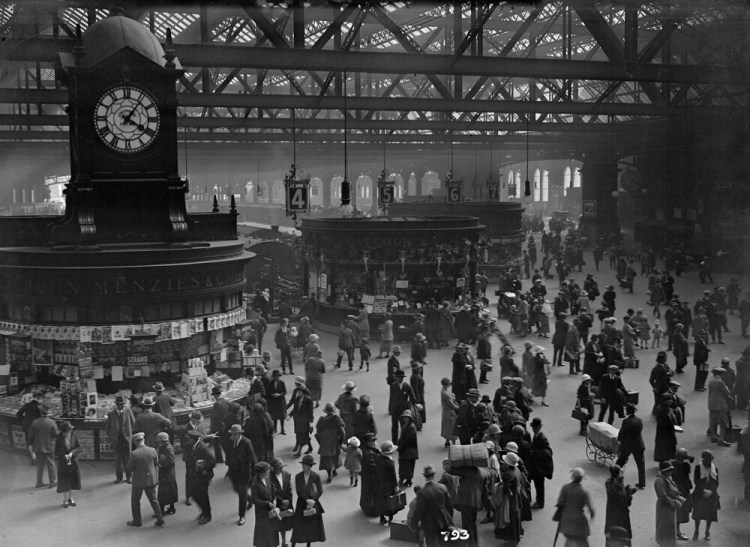
The Caledonian’s Chief Engineer Donald Matheson led the redevelopment of the station and engaged his old school friend and former Caledonian colleague, architect James Miller, to work with him. The scale of their redevelopment of the station was quite astonishing, starting with a new bridge over the Clyde which continued over Argyle Street to carry the additional lines into the expanded station itself. This now occupied an entire city block with Miller providing an extension to Anderson’s hotel and glazed screen to the Argyle Street bridge on the west side, and a massive new seven storey, twelve bay office block, Caledonian Chambers, to enclose the platforms and concourse on the east. Within, innovative elliptical arched girders on rivetted steel columns carried the station’s glazed roof (which was reputed to be the largest of its type in the world on its completion).

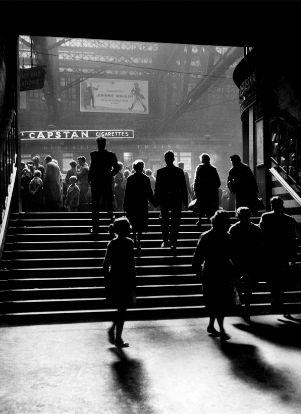
What lifts Central Station above the norm however is the vast sloping concourse over which crowds of passengers flow down to the exits on Gordon Street and out into the city beyond. Matheson had travelled to the States and witnessed the use of curved rather than rectilinear buildings to ease the movement of crowds noting “the tendency of a stream of people to spread out like flowing water and travel along the line of least resistance.” Miller immediately grasped the principle and provided all his kiosks, tea rooms, ticket offices and extensions to the hotel in a series of sinuously curved elements which contrasted with the insistent rhythm of the grid of the steel roof structure above. This brilliant urban space, designed entirely for human movement, has been the scene of many, often emotional, departures and arrivals over the last century, with Simon Jenkins even going so far as to suggest that it has become the “custodian of the city’s soul”. 

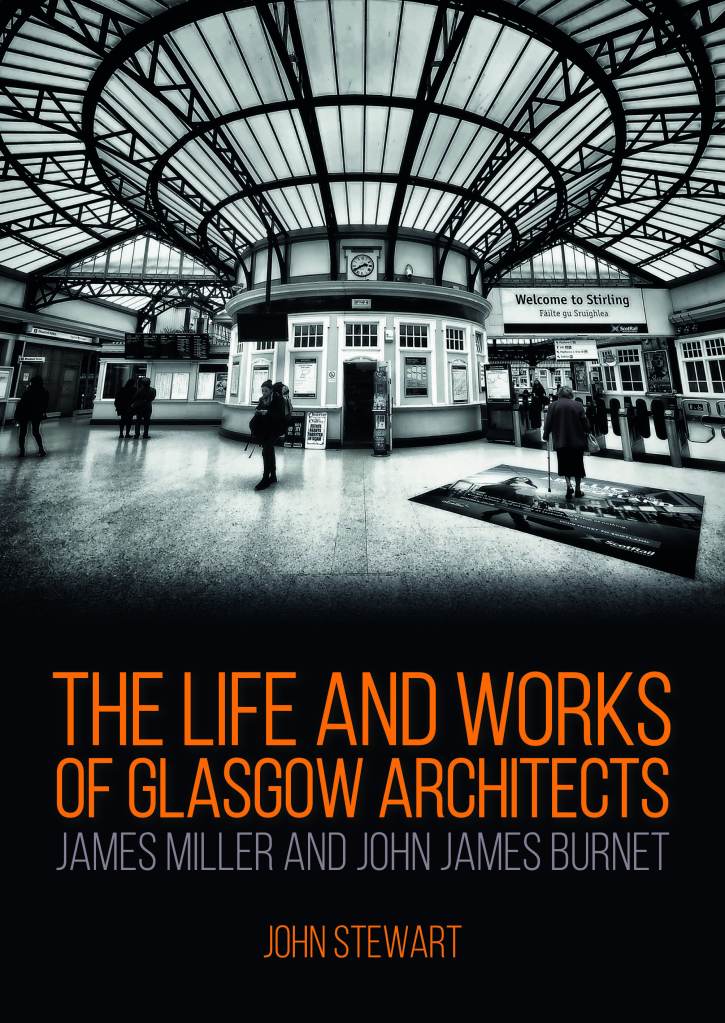
My book on the lives and work of James Miller and JJ Burnet will be published by Whittles in September this year. If you don’t want to miss out on further blogs then please follow me on johngooldstewart.com

Blog 46

Figurative Sculpture

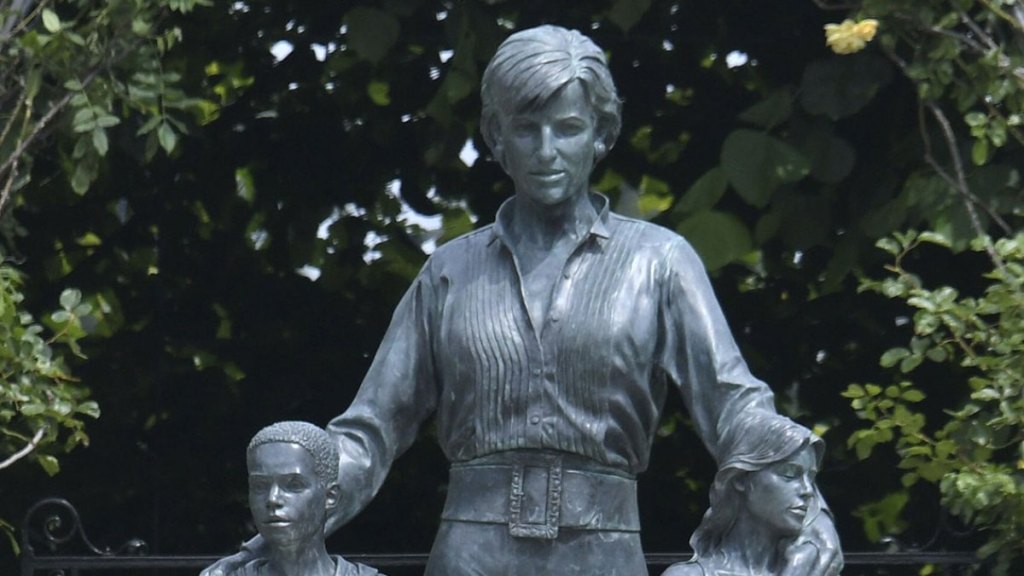
As a result of the ascendancy of abstract art, most people feel unable or inadequate to judge the quality of contemporary sculptural work. We are advised by critics as to which artist or whichever work should be viewed as outstanding and the market dictates their often astonishing values. When most sculpture was figurative or realistic, life was much simpler and everyone was quite happy to voice their opinions.

In the nineteenth century in Britain, there was a huge proliferation of figurative sculpture, largely as a result of the growing wealth of the middle classes, which allowed them to commemorate their own achievements in a way previously reserved for royalty and national heroes, and sadly, the increase in quantity resulted in an equal and opposite reduction in quality.

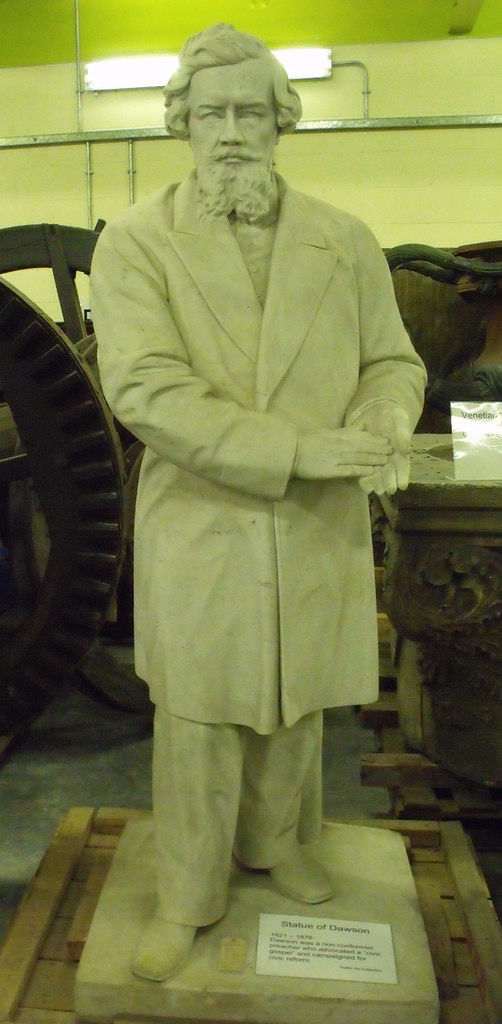
When the statues were erected in public, they were fair game for criticism and their contemporaries didn’t hold back. George Adam’s statue of General Napier in Trafalgar Square was described in the Art Journal as “perhaps the worst piece of sculpture in England” while Thomas Woolner’s sculpture of George Dawson in Birmingham was generally regarded as “so ludicrously bad that after the deceased fellow-townsmen had laughed at it for several years they agreed to take it down.” The Times even commented that “the low state of sculpture in this country, and the many failures which are conspicuous in our streets, have tended to cause a preference for a school or a hospital over an obelisk, a column or a statue”.

Most people were quite happy and confident to pass judgement because when it came to statuary, as the nineteenth century critic Francis Palgrave suggested – “There is but one standard for Sculpture – the look of the real thing” and it was against this criteria, that works were measured by one and all – the softness of flesh, the textures of hair, the apparent movement of drapery, the expression of the subject’s character and their vitality – simply, was it lifelike or not? When it comes to figurative work, it is a benchmark which still holds good today.

If you don’t want to miss out on further blogs then please follow me on johngooldstewart.com
Blog 45

Richard Norman Shaw

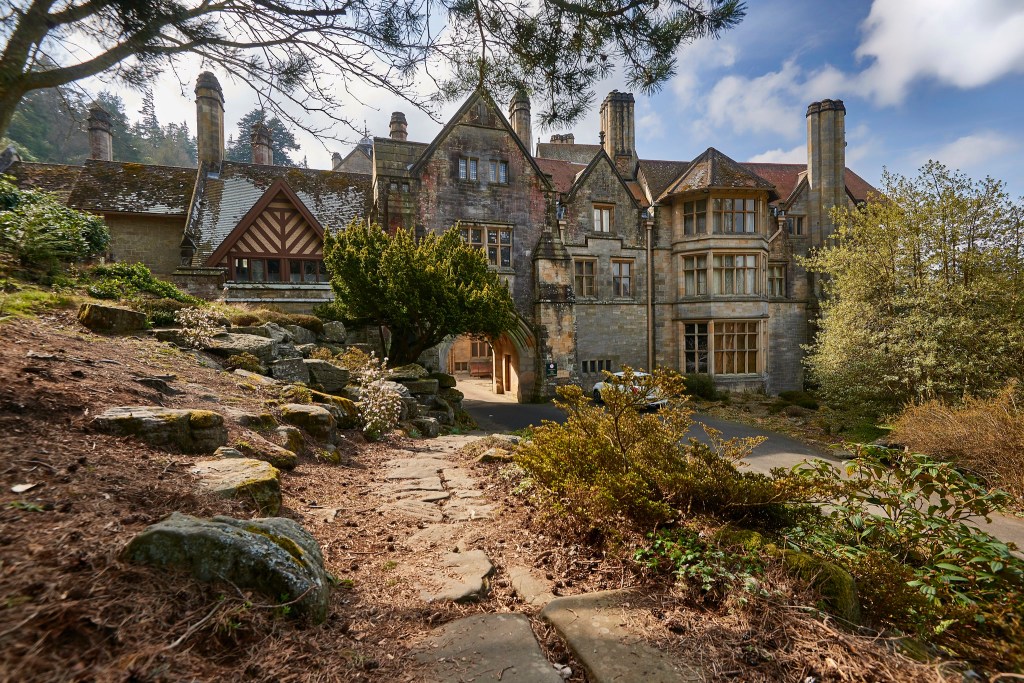
Cragside

I was recently looking through the list of recipients of the RIBA’s Gold Medal to check in which year the great Richard Norman Shaw won it and couldn’t find his name. Shaw (1831-1912) is just one of the many giants of our profession who produced architecture of outstanding quality and about whom you’ll hear next to nothing in your school of architecture. He dominated the last three decades of the nineteenth century in Britain as the most brilliant practitioner of his generation (to such an extent that the young Edwin Lutyens was utterly devastated when he failed to win a pupillage in Shaw’s office and such was Lutyens lifelong admiration of Shaw, whom he regarded as the equal of Christopher Wren, that he later leased Shaw’s old office at 29 Bloomsbury Square as his own office and home).

Bryanston

Born in Edinburgh, Shaw’s family moved to London when he was fourteen and within a few years he was accepted as a pupil of the great Scottish country house architect William Burn, while studying under Charles Cockerell at the Royal Academy School. After further work with Anthony Slavin and G.E. Street, he finally set up in practice with Eden Nesfield in 1863 with Nesfield’s family connections quickly bringing the new partnership a string of commissions, which they divided between themselves and worked on entirely separately.

Cragside

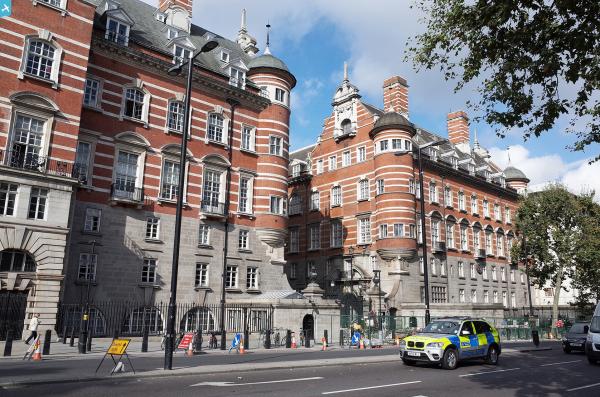
Most people are vaguely aware of Shaw’s work but probably haven’t quite connected the dots to appreciate the scale of his architectural achievements – Cragside in Northumberland, New Zealand Chambers in London (since destroyed), 170 Queens Gate in London (which established the Wrenaissance style, usually credited to Lutyens), New Scotland Yard, Bryanston House in Dorset and his last great work, The Piccadilly Hotel in London – more than enough, I’d have thought to deserve the Gold Medal.

New Scotland Yard

What I discovered was that this tall, quiet, modest Scotsman had actually declined the award of the Gold Medal on three occasions, wishing to have nothing to do with his fellow architects who aimed to turn what he regarded as the finest of the arts into a trade or profession. He believed that architects should learn as pupils of a master and that their natural home was as members of the Royal Academy of the Arts, not the Institute of Architects, and he advised his own pupils that “if you elect to be an architect, you choose one of the noblest as well as the most delightful pursuits – always supposing you follow it nobly and as an art.”

The Piccadily Hotel

If you don’t want to miss out on further blogs then please follow me on johngooldstewart.com
Blog 44

‘A Pattern Language’

The Gamble House

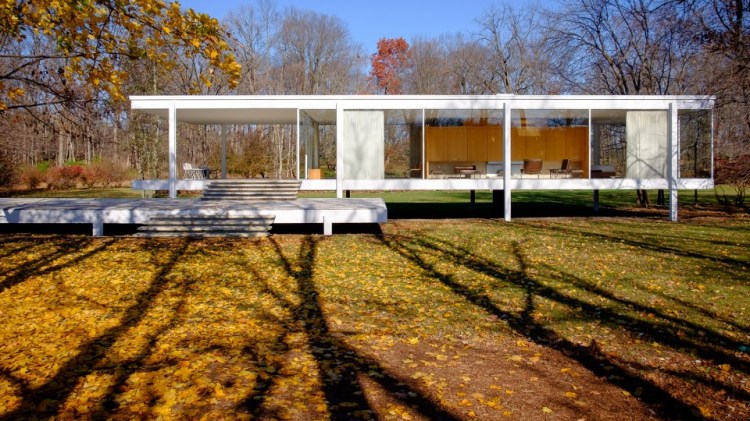
My last blog considered the Farnsworth House as an experimental domestic building which both celebrated 20th century technology and offered a new way of living. Mies van der Rhoe re-examined and re-engineered every aspect of domestic life to produce one of the most radical reinterpretations of the ideal home. It got me thinking about working in the opposite direction – starting with elements of the home which have a timeless appeal and a positive psychological effect and I was soon reminded of Christopher Alexander’s brilliant book – “A Pattern Language”.

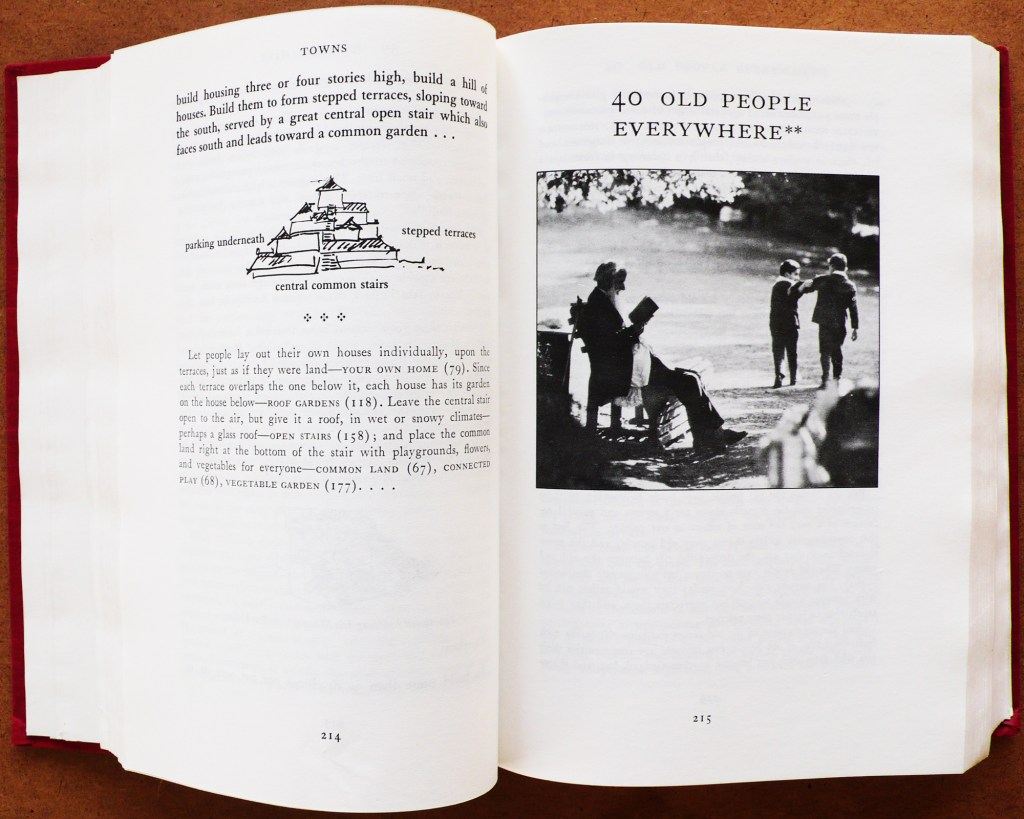
This was actually the second book of a series, which started with “A Timeless Way of Building” and though published in 1977, because of its nature, is still entirely relevant today. It is less a manifesto and much more a series of observations of what helps to create civilised and successful towns, cities, neighbourhoods and homes. It describes 253 timeless ‘Patterns’ which Alexander and his colleagues identified, which when combined, can be used to create a rich ‘Pattern Language’ or tapestry in which minor patterns are inter-related and form part of larger patterns.

The patterns range from the scale of The Distribution of Towns, City Country Fingers and Agricultural Valleys, through Community of 7000, Identifiable Neighbourhood and Scattered Work, right down to the minutiae of domestic life such as Bed Alcove, Children’s Realm and Interior Windows with each pattern based on what seems to have worked over the centuries (and even scored as to how confident Alexander’s team are of it holding good consistently). On one level it can read a bit like the kind of hippy tract that might well have emerged from California in the 70’s but get beyond that and there are many words of wisdom, based not on trial and error but on observed consistent success.

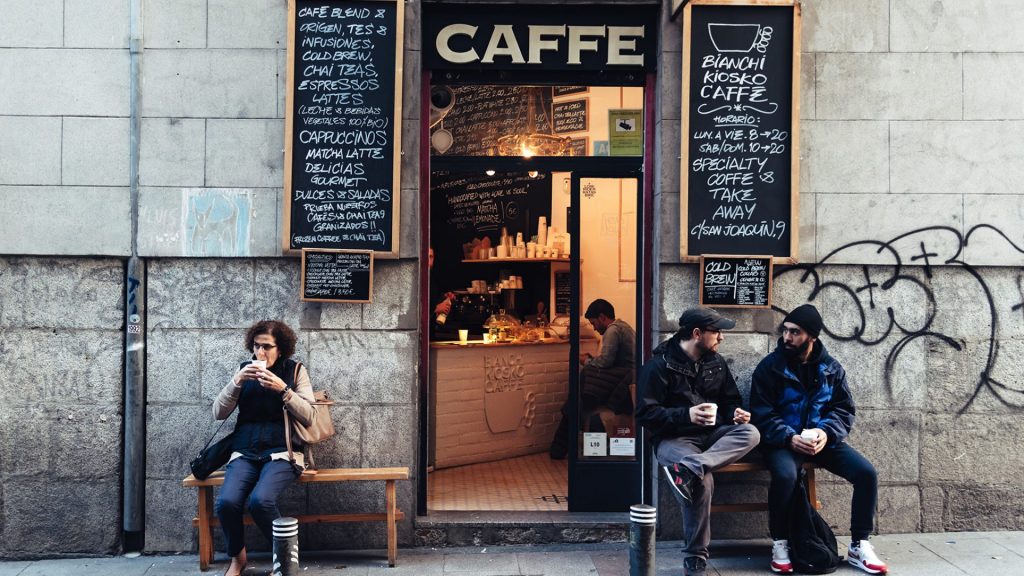
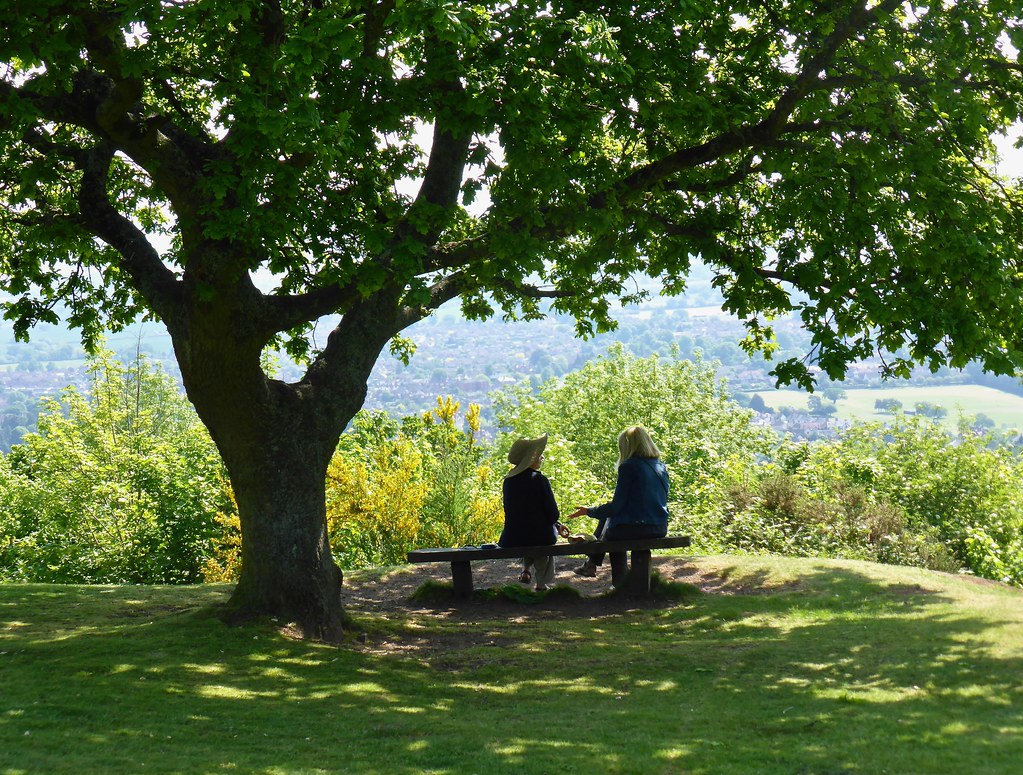
It is a celebration of the best elements and aspects of our public and private spaces from Arcades, Street Café, Sacred Sites and Promenade to Dancing in the Street, Built-In Seats and The Fire and much of it appears even more relevant now than when it was written – Green Streets, Garden Growing Wild, Different Chairs, Mosaic of Subcultures and Compost – its not that it was visionary, merely that its observations are based on timeless human activities.

In the past architects wanted to connect with and add to the sum of their existing architectural heritage rather than rejecting it – to learn from what works and what doesn’t – to produce good useful work rather than brilliant innovative unique solutions and to have a bit of modesty about their own contributions. The iconoclasts, like Mies van der Rhoe, will always look after themselves – we need to focus on improving the quality of the average and this book provides a wealth of advice.

If you don’t want to miss out on further blogs then please follow me on johngooldstewart.com
Blog 43

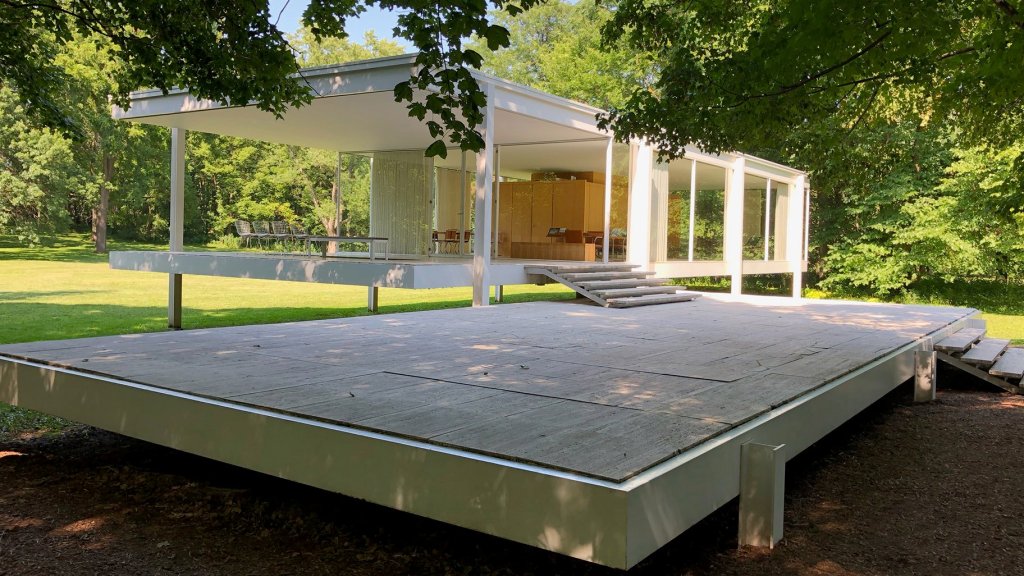
The Farnsworth House is, without doubt, one of the most iconic and influential buildings of the Modern Movement in which Mies van der Rohe completely dissolved the walls of this house to create an uninterrupted connection between the interior space and its unsullied surrounding landscape. It has spawned imitators across the globe since its completion in 1951 with almost every modern architect apparently aspiring to recreate this relationship between interior and exterior space – between the private and the public world and between man and nature. For many architects, its purity, its clarity and rigour and those extraordinary floating planes created by Mies’s apparently perfect resolution of every detail, remain as seductive as ever.

The problem is that, as Mies’s client Dr Edith Farnsworth very quickly found out, while it’s a fascinating place to visit and a truly remarkable and beautiful object, it’s a deeply uncomfortable space to live in. Despite sitting in the centre of a sixty-acre wooded site, even in daylight the perception of being overlooked is overwhelming, while at night when inhabitants are simply surrounded by black glass, it is quite impossible to relax. It provides no shelter, or sense of security and fails to respond to almost any of the most basic psychological human needs required of a domestic interior. 

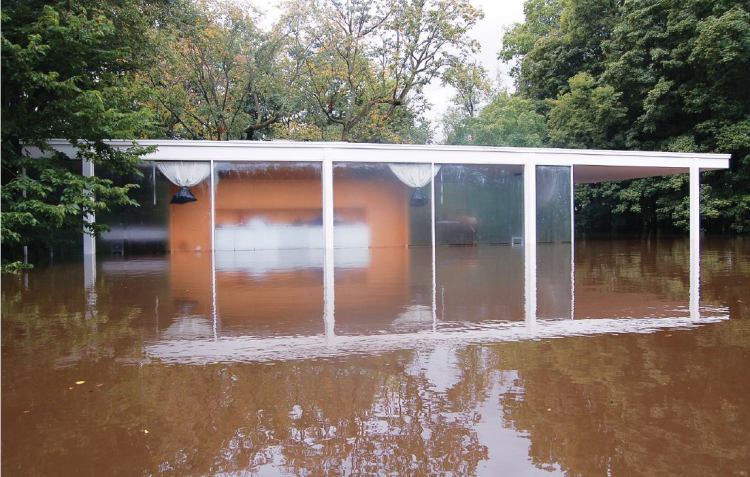
Dr Farnsworth sued Mies and lost (having approved his drawings) and thus used it as an occasional retreat for the next 20 years, but the problems were unending. When illuminated at night, it acts as a lantern, drawing swarms of mosquitoes, moths and architectural students to its glass. It has always leaked, and despite being raised above the ground, has been flooded on several occasions. It overheated unbearably in summer and the amount of energy required to heat it in the winter was ruinously expensive and is now obscene. Its steel columns rust and have to be regularly sanded and repainted and almost every original element of the building has had to be replaced during its short life.

Despite all this, it is still regarded as one of the greatest examples of 20th century architecture and continues to receive almost unanimous critical acclaim with flocks of architects from around the world still visiting every day that it is open. Fortunately, it’s now a museum, run by the National Trust for Historic Preservation and despite the cost, they maintain it in pristine condition. It continues to be a truly fascinating place to visit and savour – just a shame it was such a hopeless failure as a place to live.

If you don’t want to miss out on further blogs then please follow me on johngooldstewart.com
Blog 42

Gothic Revival Architecture

My latest book is on ‘British Architectural Sculpture 1851–1951’ (yes – I know – good luck finding a publisher for that one) which has required me to really study the Victorian architecture which makes up the first half of the book in some depth for the first time. I thought that I already had a pretty good feel for this period – Pugin – Ruskin – Morris – The Arts and Crafts Movement and then before we know it, we’re in the Twentieth Century and Modernism is lumbering into view. What I’ve found is that this is pretty much the taught history of 19th century architecture – largely as an introduction to Modernism and that actually – I didn’t have a clue about most of what was built during Queen Victoria’s reign.

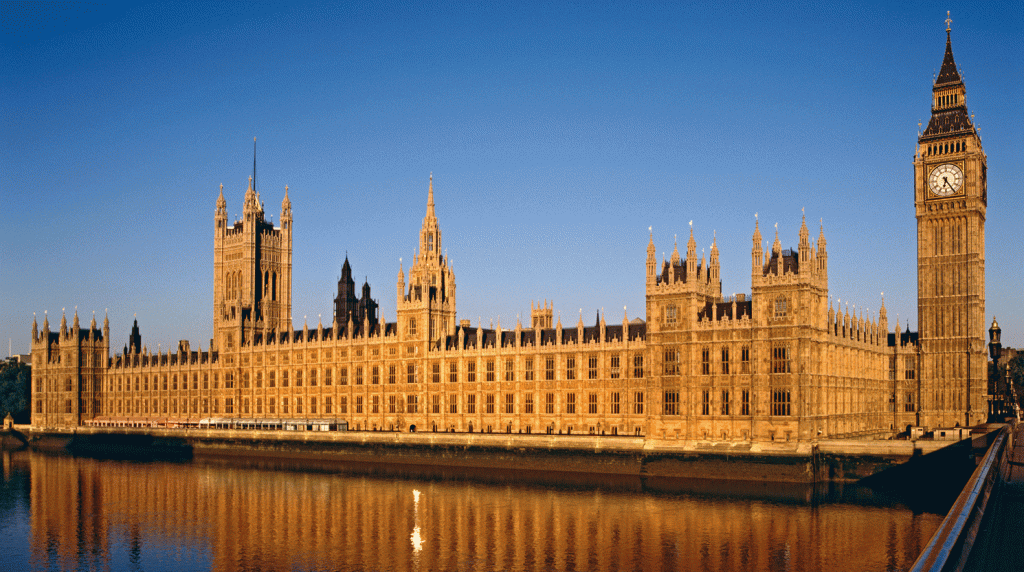
The period is usually categorised as ‘The Battle of the Styles’ between the Greek and Gothic Revivals and while the Greek put up a pretty good fight in commercial, country house and public architecture (and won resoundingly in other countries such as the USA, France and Germany) Gothic soon became the very clear winner in Britain. Pugin characterised it as ‘God’s Architecture’ and his work with Charles Barry on the rebuilding of the Houses of Parliament cemented it in the public psyche as the most appropriate style of architecture for an increasingly pious Christian country. (Classical architecture in contrast, was tainted by its Pagan roots not to mention its association with the immorality of the preceding Georgian period).

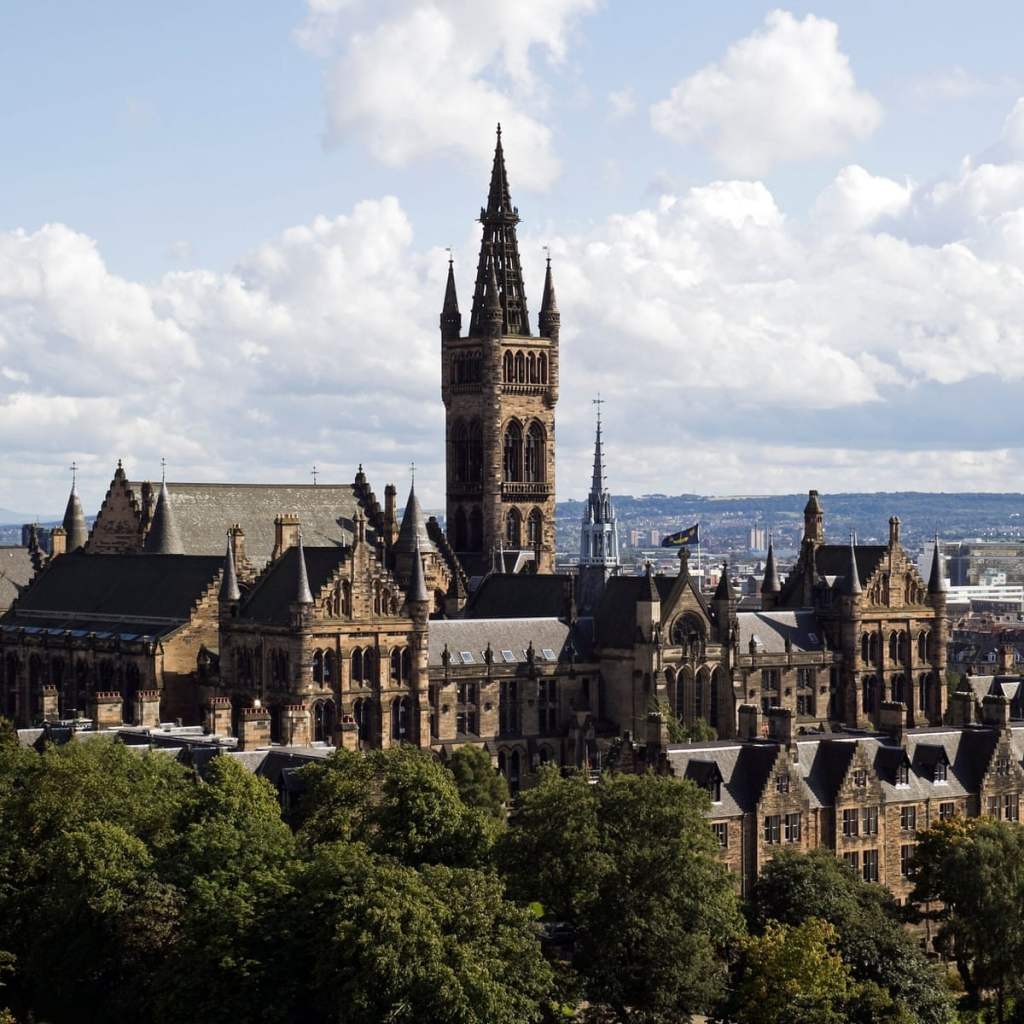
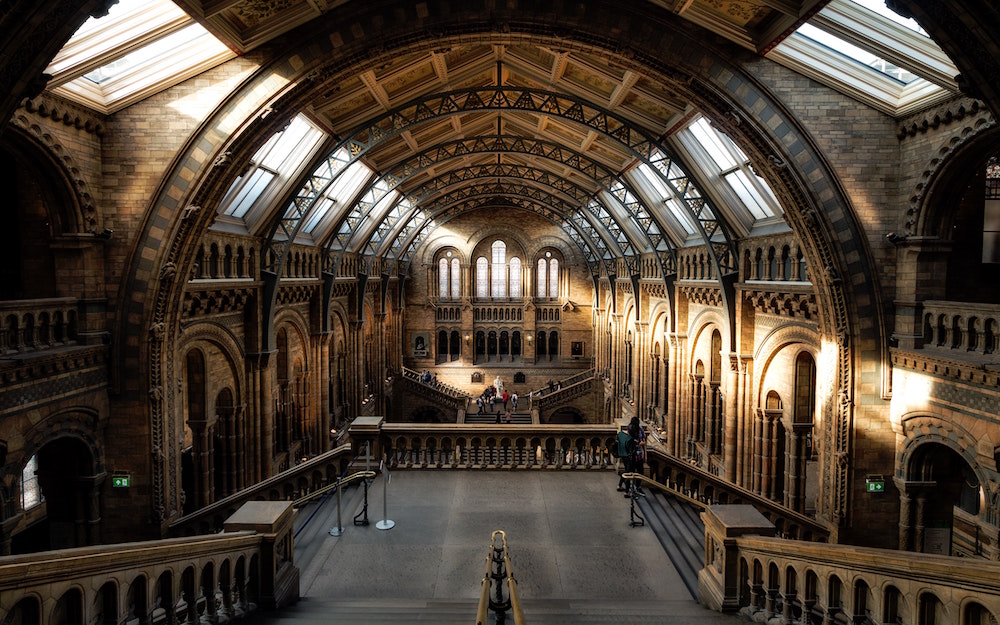
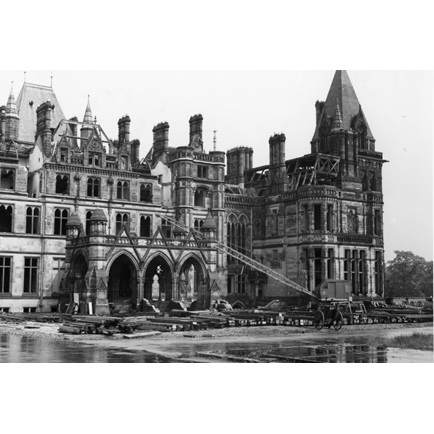
Now while most Victorian architects were happy to knock out a design in either Gothic or Greek depending on their clients’ preference, there were two giants of the profession who completely dominated the Gothic Revival, namely George Gilbert Scott (1811-78) and Alfred Waterhouse (1830-1905). Scott, as befits the period, established his reputation as the leading designer of workhouses, before going on to design the Albert Memorial, the University of Glasgow and the Midland Grand Hotel at St Pancras Station (below) as well as numerous other public buildings and a pretty large proportion of all the Gothic Revival churches throughout Britain and its Empire. Waterhouse was if possible, even more prolific during his long career, completing Manchester Town Hall, the Natural History Museum in London (above) and the vast Eaton Hall in Cheshire as well as several hundred further churches, offices, hospitals, university buildings and country houses.

Personally, I’ve never felt drawn to the work of either architect – their buildings, while often exceptionally fine, are just too redolent of Victorian values and the stark inequalities of that age to be attractive to most people these days, and here lies the problem when they constitute so much of our architectural heritage. Waterhouse’s Eaton Hall, numerous other country houses, churches and hospitals have already been lost, many are currently at risk and indeed it took a spirited campaign by John Betjeman some years ago to save the extraordinary (and now beautifully restored) Midland Hotel from demolition. Love them, quite like them or loathe them, they are a crucial part of our rich architectural heritage and national history and deserve to be treasured and treated as such.

If you don’t want to miss out on further blogs then please follow me on johngooldstewart.com

Blog 41

The Death of the High Street

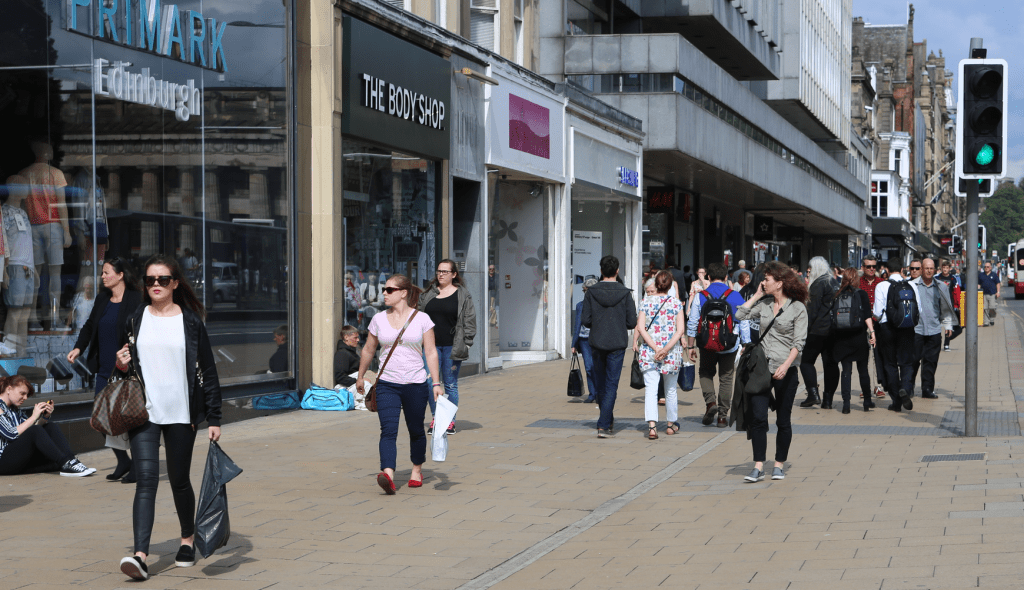
Apparently, our High Streets across the UK are in terminal decline. Largely as a result of the pandemic, ecommerce grew by 46% in the UK during 2020 and for many people it’s a new, incredibly convenient (and entirely anti-social) habit which will stick. Traditional retail is said to be doomed and it seems like every week another well-known household name is placed in the hands of the receivers. Apparently, if it carries on like this our shopping centres will be filled with nothing but charity shops and nail bars and civilisation as we know it will be pretty much over – but for most of their history, our town and city centre streets didn’t used to be exclusively retail.

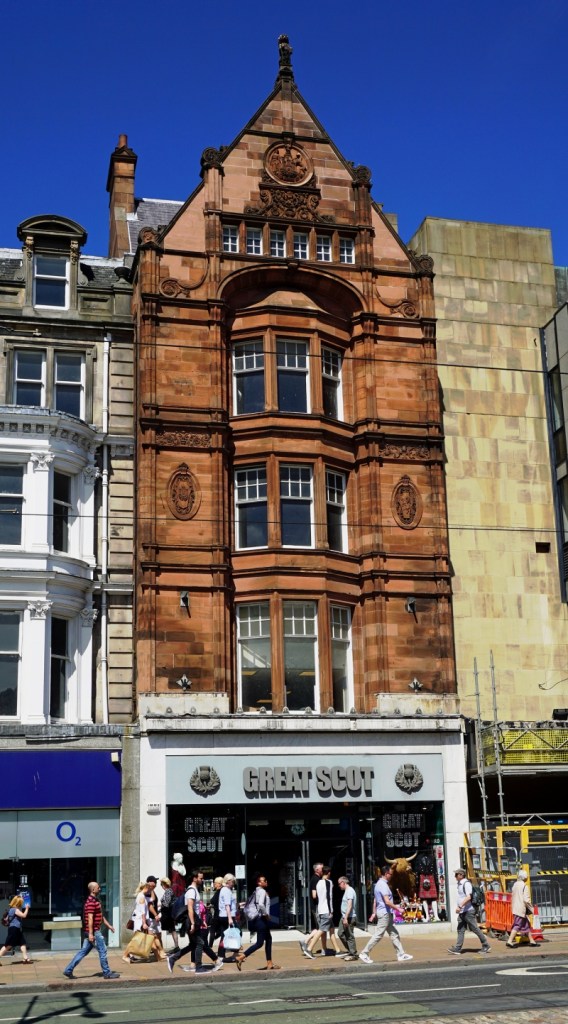
Princes Street in Edinburgh is, I would immediately acknowledge, rather special – a single row of shops facing one of the most spectacular urban views in Europe, but in many ways, it is also a typical British High Street. Most of its buildings have been there for over 100 years and during their life they have already served several different functions including their current retail use, indeed in the past, Prince Street was a much richer mixed-use environment than the wall-to-wall retail that it is today.

Take the very elegant number 70-71 for example, which is currently one of the many tourist junk shops that have become such a significant part of Edinburgh’s retail scene in recent decades – it was originally designed as a café over several floors and just as easily could be again, catering for tourists’ refreshment, rather than their apparently insatiable demand for fridge magnets, one-size-fits-all kilts or miniature highland cows.

Zara, at numbers 104-5, was originally built as a hotel and could be again. Like 70-71 and most of the other historic buildings in the street, it’s been cut off at the knees, with its ground floor entirely replaced with as much plate glass as possible, reminding one of the old adage – “never mind the quality, feel the width”. Its sandstone bays could easily be extended downwards once more and an elegant new central entrance recreated.

At number 60, we have part of Edinburgh’s branch of Marks and Spencer’s, which was originally built as a shop over several floors in 1903, and again, like Zara, could easily have its ground floor windows reinstated and serve either as a shop once more, or it too could be a café or boutique hotel or be converted into apartments – plenty of demand for all these uses in central Edinburgh.

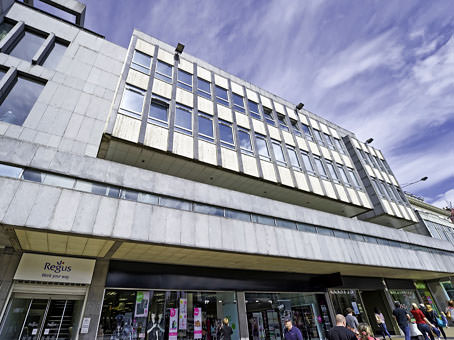
At number 83, we have good old ‘Superdrug’ in a building from the 60’s, of which there are a number on the street. As was the norm during this period, its designer started with a blank sheet of paper – erasing the stunning sandstone Italian Renaissance Palazzo that stood here – and it represents what was the strategy for the entire street at this time, namely demolishing all the existing buildings and replacing them one by one with similar slabs, to eventually create a continuous first floor balcony which would provide another ‘shopping street in the air’. My tutors in Glasgow used to bemoan the conservatism of Edinburgh – as it turns out, it’s what saved most of the city.

At ground level the net effect is a banal shopping environment which is typical of every High Street in Britain with sheet glass, plastic signs and retail chains from end to end. Less of this and a few more apartments, cafés, hotels and independent shops would provide both a much richer experience and a much more sociable town centre environment where you could have a coffee or a glass of wine while doing much of your shopping on your phone.

If you don’t want to miss out on further blogs then please follow me on johngooldstewart.com

Blog 40

The Hoover Dam

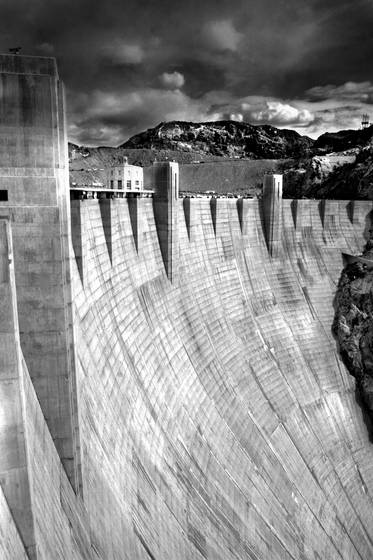
Now and then, engineers produce art of the very highest standard – Brunel’s Clifton Suspension Bridge, Calatrava’s World Trade Center Transit Hub or Joseph Paxton’s Crystal Palace and probably my all-time favourite engineering project – the magnificent Hoover Dam on the border of Nevada and Arizona. Originally known as Boulder Dam, it was constructed to hold back the mighty Colorado River thus providing hydro-electric power, irrigation water and flood control.

Although it became identified as one of the great public projects of the Depression years, it had in fact been in the planning for decades before its budget was approved and work finally started in September 1930. Such was the scale of the project that Boulder City was planned to be constructed nearby as a model urban settlement and a new railroad was built from Las Vegas simply to serve the site. It proved a magnet for the unemployed and long before permanent accommodation was completed ‘Rag City’ – a vast tented encampment – sprung up nearby, where the first workers and their families lived without running water or sanitation in summer temperatures that hit 48oC.

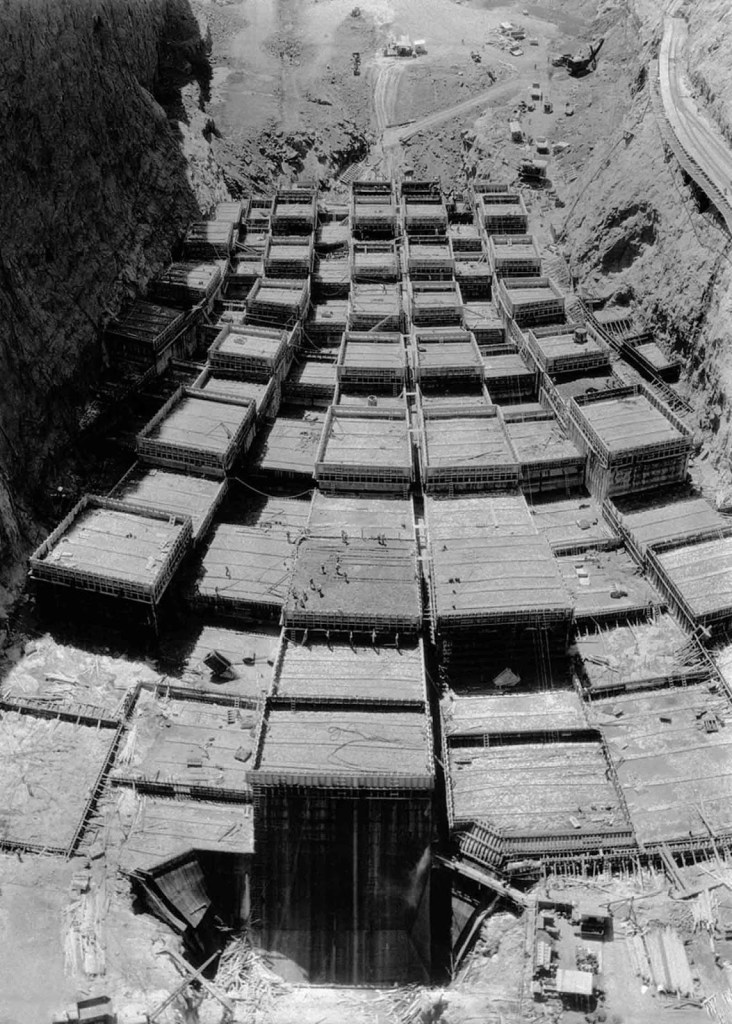
The first construction task was the diversion of the Colorado River, via two smaller dams and four immense drilled tunnels through the rock river banks and so it wasn’t until 1933 that work on the dam itself began. Its design had been carried out by the Federal Bureau of Reclamation led by their Chief Design Engineer John L. Savage who developed the great elegant sloping curve of the concrete arch gravity dam that we know so well today, not least, from Ansel Adams heroic black and white photographs. His engineers calculated that were the dam to be constructed in a single continuous pour of concrete, it would take around 125 years to cool and cure, so instead it was poured in blocks, with each block cooled during construction with refrigerated river water, with the total amount of concrete used capable of building a two-lane highway from San Francisco to New York.

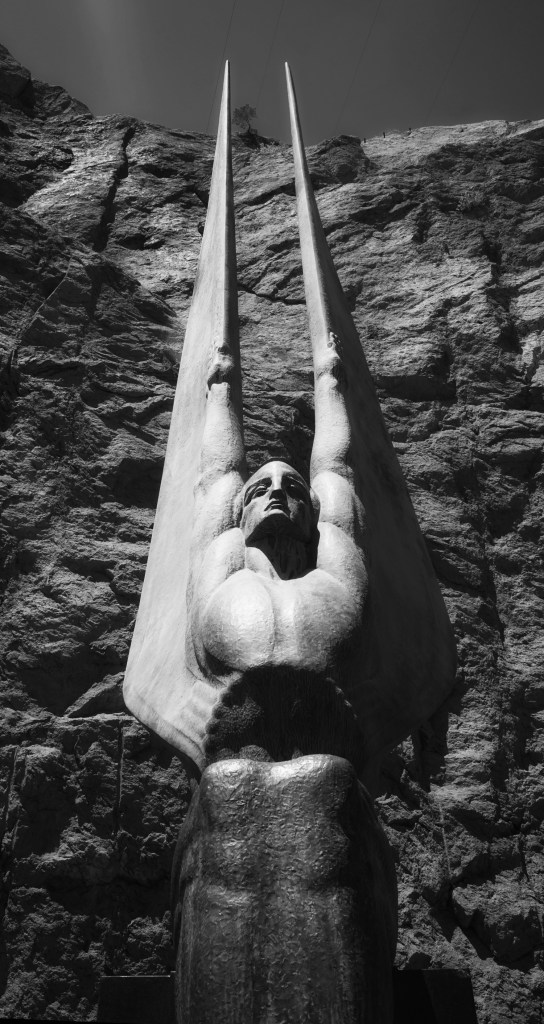
While the dam’s extraordinary power and beauty is derived from the contrast between its perfect man-made curve and the rugged sheer walls of the surrounding rock, it was raised to the sublime by Los Angeles architect Gordon B. Kaufman’s exquisite Art Deco detailing and the addition of several sculptures by Oskar C.W. Hansen, including his two magnificent bronze winged figures and his memorial to the 112 workers who had been killed during construction. Completed in November 1933, it remains one of the great wonders of the modern world.

If you don’t want to miss out on further blogs then please follow me on johngooldstewart.com
Blog 39

Groningen Forum

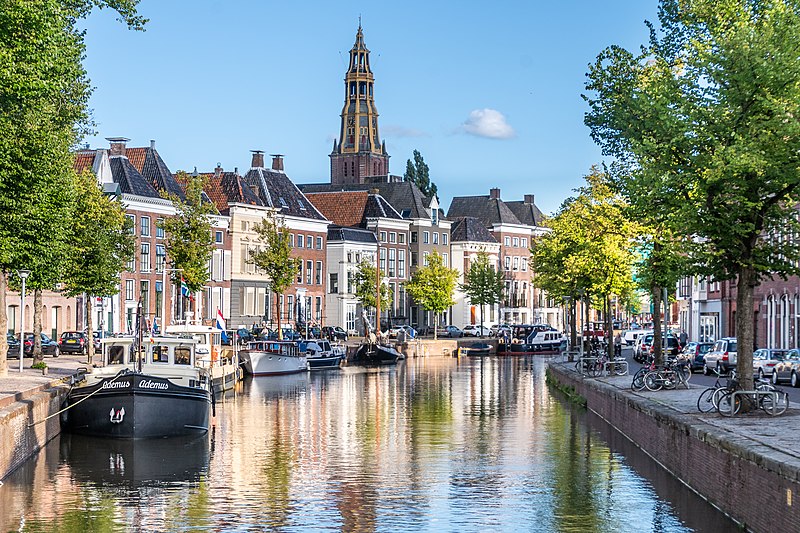
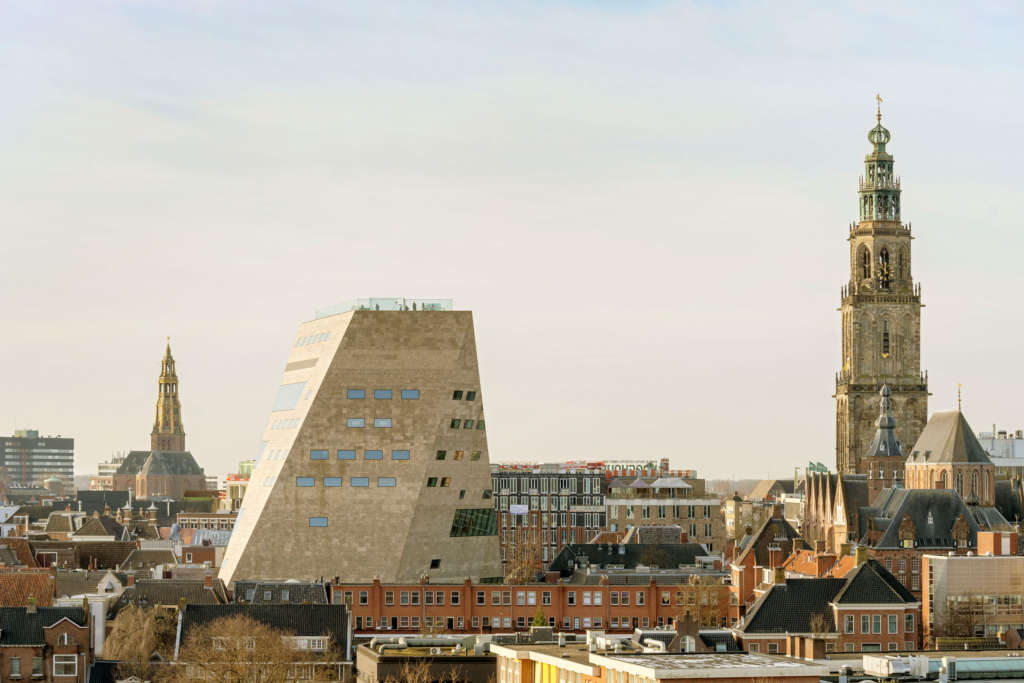
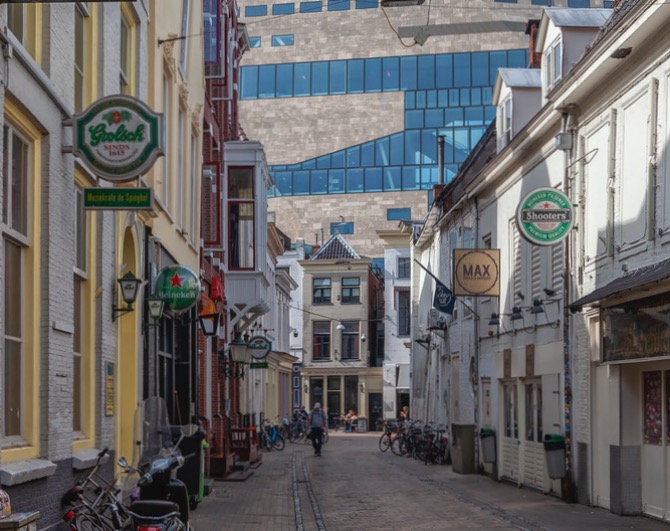
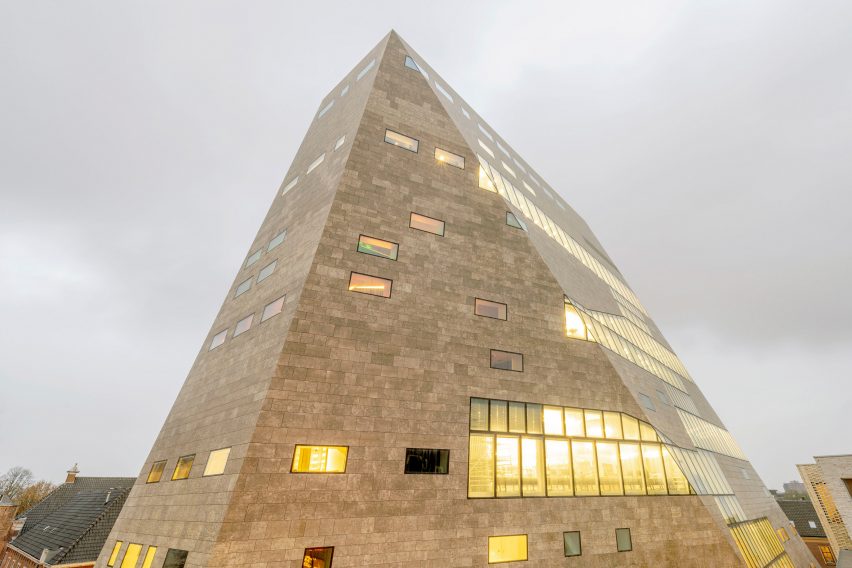
Groningen, if you haven’t had the pleasure to visit it yet, is a delightful university city in the very north of the Netherlands. It was founded almost a thousand years ago and like so many Dutch towns and cities, has maintained an architecturally and culturally rich historic core. It largely survived bombing in WW2 and until recently was still dominated by the towers of its main church and city hall, below which, for all its long history, the town’s other buildings had remained, creating a clear urban hierarchy that respected both those twin institutions and the cultural heritage of the city. That was, until ‘The Forum’ was dropped into the middle of this gem a couple of years ago.

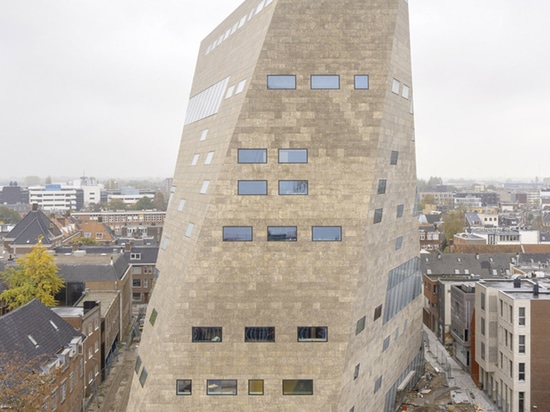
While I accept that, as a major new civic building, The Forum has a right to assert itself within the spatial order of the city, both its scale and worst of all, its banal mindless shape-making, make it a brutal insertion within this most sensitive of contexts. It is an act of sheer arrogance and little more than an expression of the astonishing ego of its architects, who it appears are happy to trash one of Europe’s most attractive minor cities, simply to establish their own global brand and grab as many pages of architectural magazine coverage as possible.

As you would expect, the architects of this shocker are rich on verbiage – “The building is designed as a single clear volume to express the desire for synergy, to strengthen the shared ambition to combine different facilities into one new compound” – it is “NOT a library, NOT a museum, NOT a cinema, but a new type of public space where the traditional borders between these institutes will dissolve” and unsurprisingly, it “aspires to be a platform for interaction and debate.” Why do our schools of architecture continually fail to instil the basics of design sensibility but excel in producing students who constantly spew out this drivel? Perhaps universities should re-categorize architecture as a Language subject?

It’s all very well for European architects to dump this stuff on clients in the Middle and Far East in some form of latter-day architectural colonialism, but this is in their own historic back yard. Unfortunately, the Netherlands, of all the European countries, has proved to be particularly receptive to this kind of meaningless lumpen shape and pattern-making. It is almost as if its a reaction to the Calvinist integrity of the generation of Hertzberger and Van Eyck.  Led by Rem Koolhas, they have charmed city council after city council into financing this ‘Krazy with a K’ junk. My only hope is that as it is all so desperately and superficially fashionable, a new and less damaging style will soon emerge, but sadly, this will still leave poor Groningen with The Forum.

If you don’t want to miss out on further blogs then please follow me on johngooldstewart.com