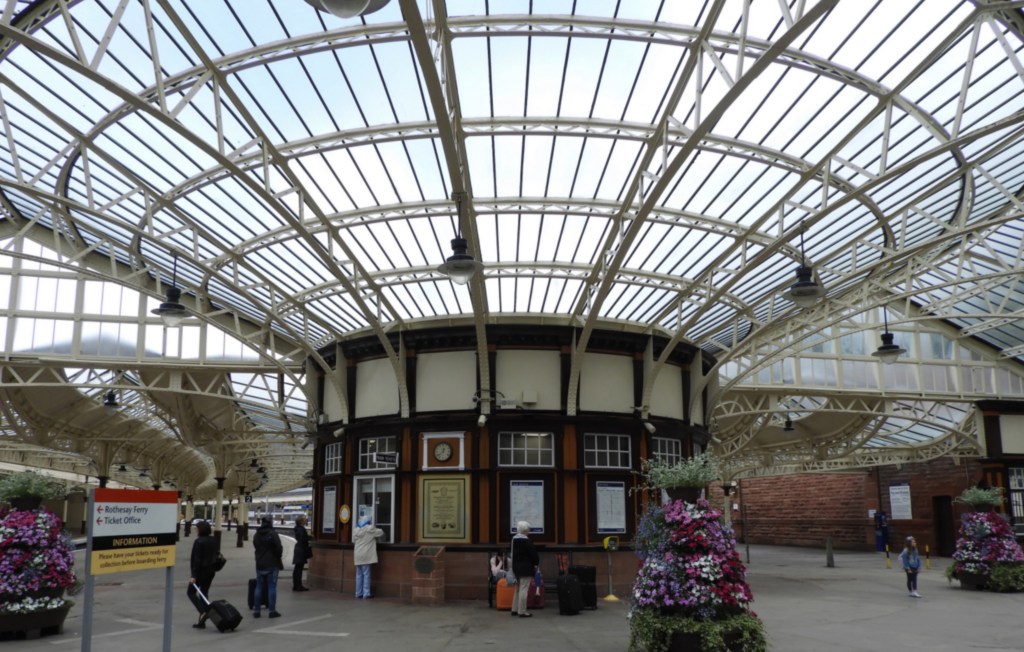
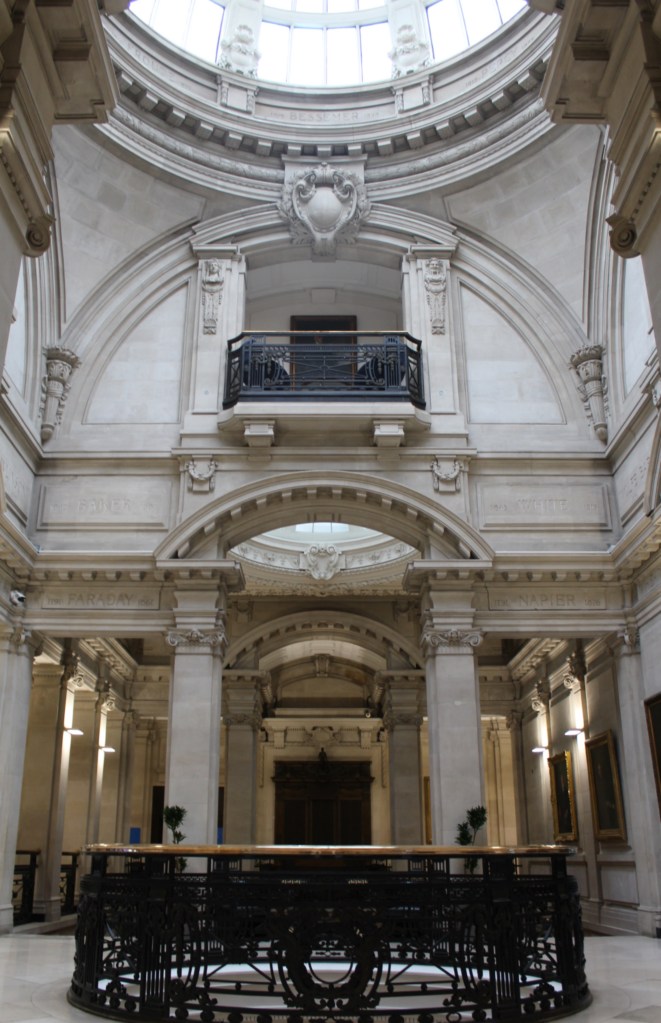
If you were an architect and you’d designed, Glasgow Central Station, Gleneagles and Turnberry hotels, Glasgow Royal Infirmary, the Savoy Theatre in Glasgow, Glasgow International Exhibition of 1901, the stunning Wemyss Bay railway station (above), the first Hampden Park football stadium, numerous churches including the excellent St Andrew’s East in Glasgow, Caledonian Chambers, the Anchor Line building, the North British Locomotive company’s offices, Caledonian Mansions, around half of the city centre banks in Glasgow, the interiors of the RMS Lusitania and Aquitania, St Enoch’s Underground Station, Kildonan (the largest 20th century country house in Scotland), Troon and Clydebank town halls, Forteviot model village and the Institution of Civil Engineers in London (below), you’d think that you might just have reached the level of being a household name, and yet despite being Scotland’s most prolific architect, James Miller (1860-1947) is almost entirely unknown.
Not only has he failed to register with the public (for whom only Charles Rennie Mackintosh is known in Scotland) but more seriously, he’s also almost unrecognised by most architects (whose training in architectural history in most cases remains a high-speed trip through 3,000 years to the start of the Modern Movement). He is one of dozens of Victorian and Edwardian architects of outstanding ability whose works we generally take completely for granted as we travel the world with a tick-list of Modern buildings that we’ve been trained to visit and value. For those architectural historians who know of him, he is also damned as having been just a bit too commercially successful, having worked his way up from a position in the engineers department of the Caledonian Railway (rather than attending the Ecole des Beaux Arts or having enjoyed a fashionable pupillage), and this has resulted in something close to a desperation to assign his best work to those of his assistants who enjoyed more blue-blooded architectural educations.
He rarely sought publicity and was by all accounts, “very reserved by nature, he did not enter much into public life and was well content to let others talk architecture while he was doing the job,” and largely as a result of this he was neither knighted nor awarded the RIBA’s gold medal. His quite extraordinary portfolio of work deserves to be finally fully appreciated and celebrated and the name of architect James Miller more widely known, in Scotland, at the very least.
Look out for my joint biography of James Miller and John James Burnet “Privilege and Perseverance” which is due to be published next year.
If you don’t want to miss out on further blogs then follow me on johngooldstewart.com
 John Stewart
Well done John. Point well made.
Miller was a genius. His buildings are technically and aesthetically superior to those of most of his contemporaries. It is as you say, odd that the Scots, who have innovated and achieved so much in architecture and whose influence is powerful and far reaching, do not sing it more.
If it is any consolation a man who didn’t seek laurels in his lifetime clearly had no concern about what posterity might make of him. Burnet, on the other hand…!
LikeLike