
Continuing my transatlantic theme – one of the advantages of working for a company who were headquartered in Los Angeles (to make up for the 11 hour flight, 2 hours in immigration and 8 hour time difference) was the opportunity to visit the city’s buildings. I know it’s fashionable to be ‘fascinated’ by LA but for me, as a city, it is just such a vast wasted opportunity. It’s a stunning location – a 60-mile-long, sun-soaked plain, bounded on one side by the Pacific Ocean and on the other by the Rockies and it’s been filled with a sprawl of 8-lane freeways, light industry, outlet centres and apartment blocks. Ok – there are a few nice suburbs like Pasadena (and a few pretty weird ones like Beverly Hills, which is constantly patrolled by private armed guards) but generally, it’s a grim low-quality urban environment.
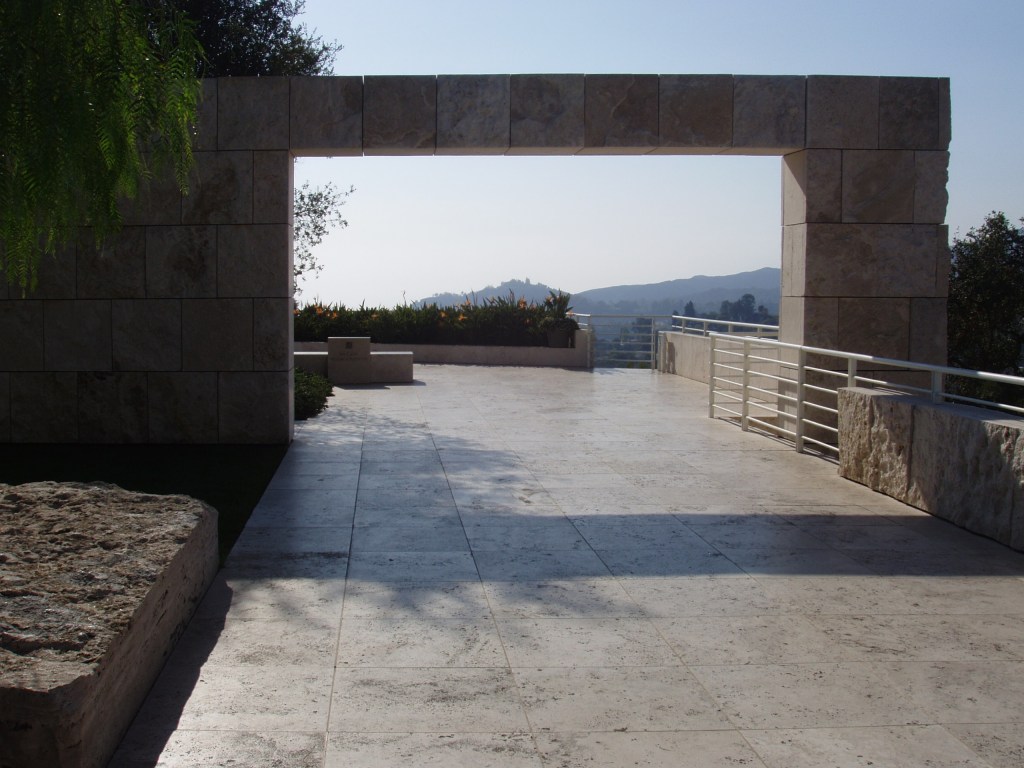
Sitting above it however, is the jewel in its crown – Richard Meier’s Getty Centre or ‘The Getty’ – as its known. This modern-day Acropolis is an architectural achievement of the highest order. Rather bizarrely, it reminded me most of Perugia, where you travel back in time as you climb up from the sprawling 20th century industrial town to arrive at a glistening Renaissance citadel amongst the clouds. Not only are Meier’s buildings here exceptional and certainly amongst his best, but equally convincing are the external spaces between and around them. It provides just the kind of civilised public realm that the city below it fails so miserably to deliver.
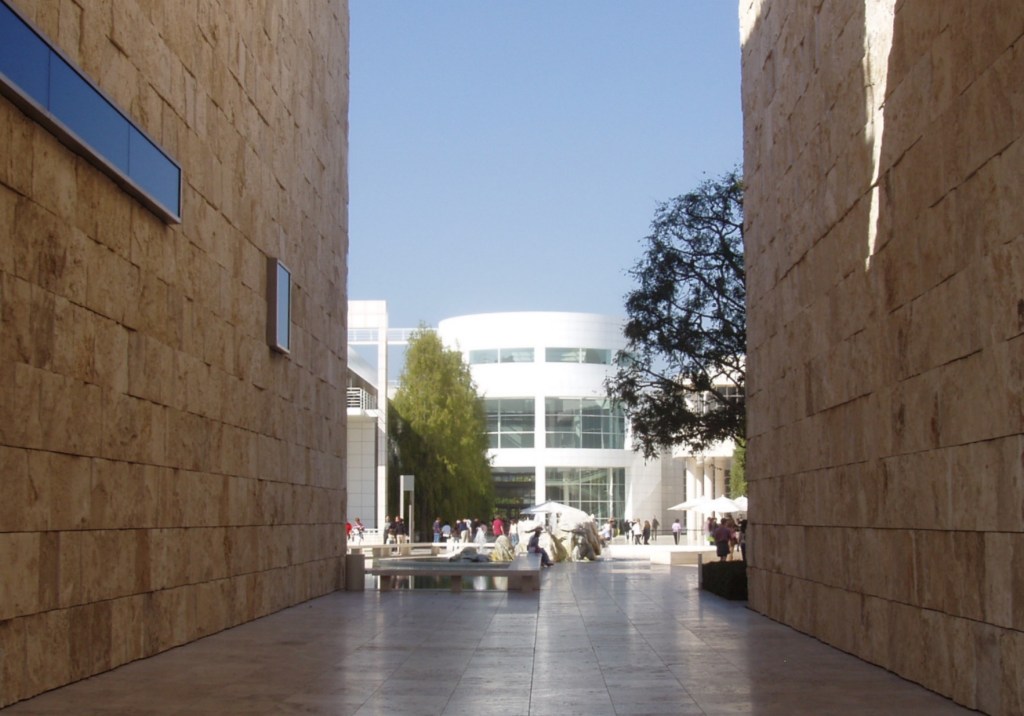
I’ll happily concede that the budget was humongous and that the entire complex is a well-policed ‘car-free’ environment, but more importantly I think, unlike LA, it was planned. It is a complete work of art over which Meier had total control and while you might think that a world containing nothing but Richard Meier’s endless trademark white grids would be the stuff of nightmares, in fact it is anything but, with roughly-textured travertine introduced to contrast with Meier’s enamel-clad panels, and extensive planting contrasting with the hard edges of buildings and paving. The views of the city, mountains and ocean from around the site are spectacular while the quality of the natural lighting within the pavilions themselves, is a masterclass (not to mention the world-class collection of art that they contain).

A lot of critics are a bit sniffy about Meier and he’s been rather pigeon-holed as simply taking the model of Le Corbusier’s early cubist villas and commercialising them, while contributing little more to the development of Modern architecture, but when you actually visit his buildings, you realise that far more than the superficial similarities, he is actually playing, what Le Corbusier himself described architecture as – “the learned game, correct and magnificent, of forms assembled in the light”.
If you don’t want to miss out on further blogs then follow me on johngooldstewart.com
 John Stewart