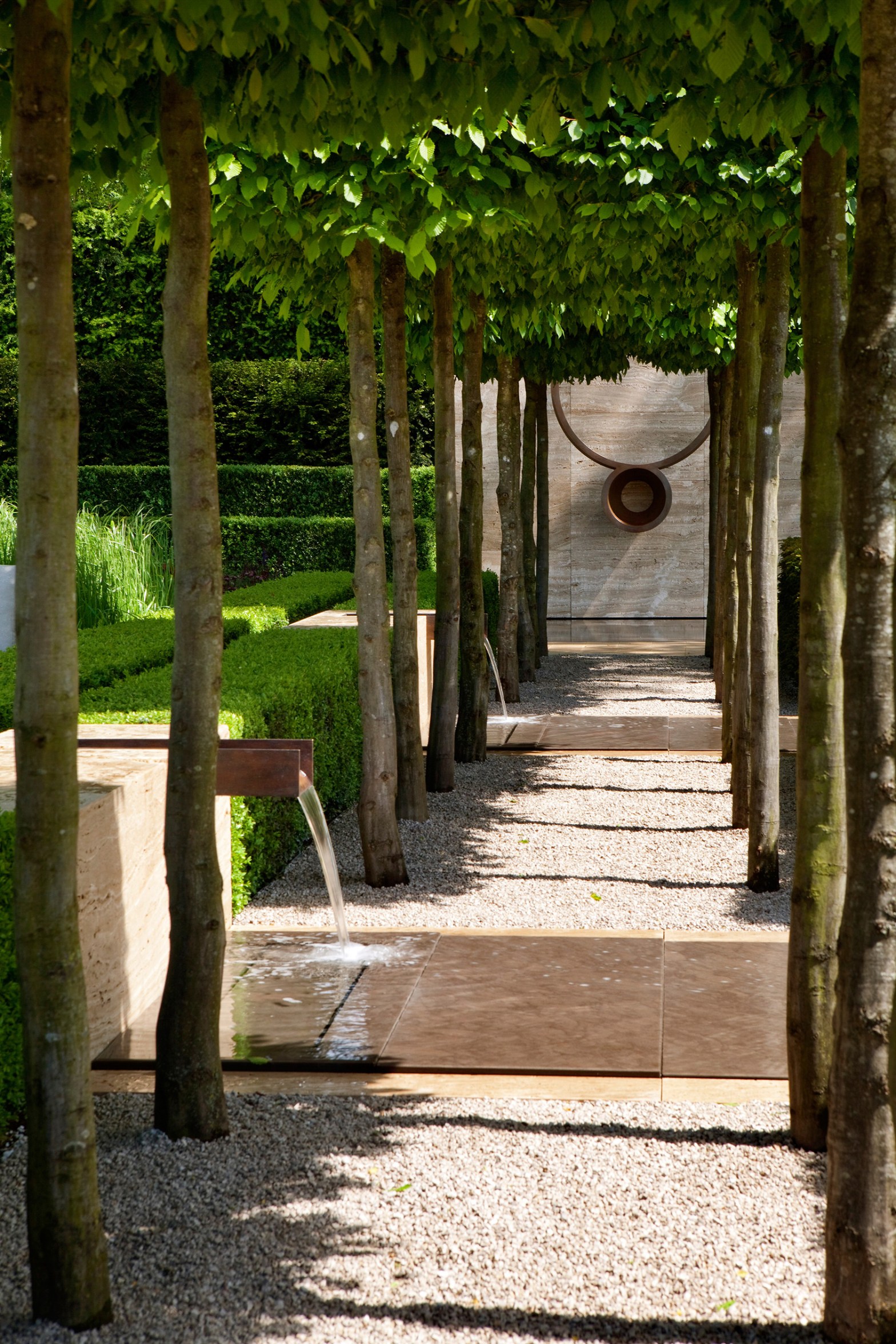
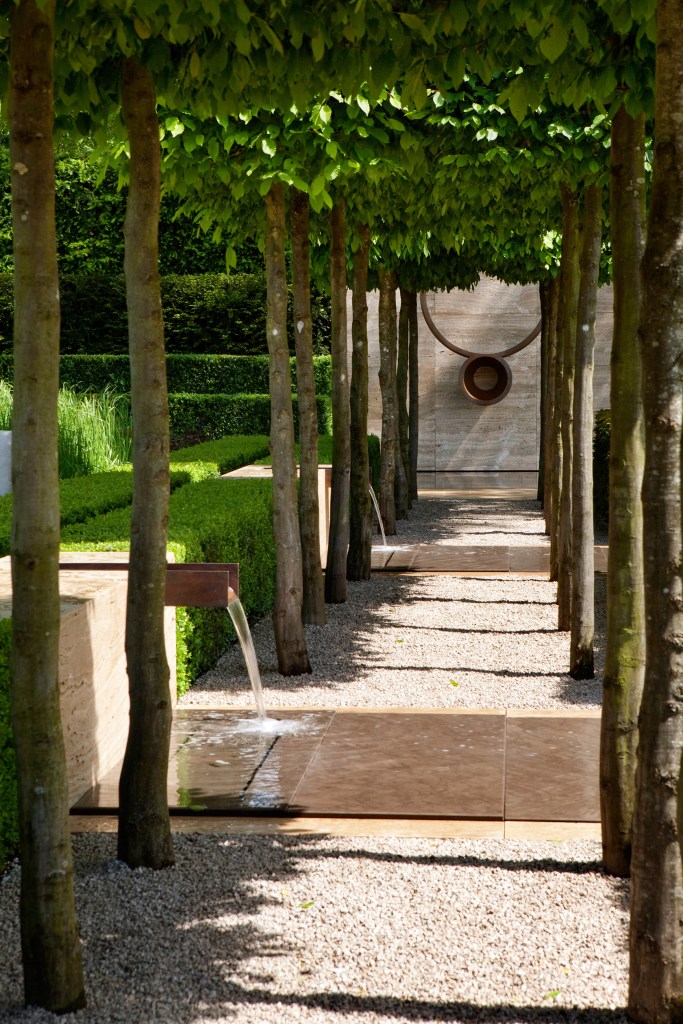
There are many contemporary landscape architects whom I admire including Christopher Bradley-Hole, Fernando Caruncho and Martha Schwartz amongst others, but for me personally, there’s one whose work just strikes a particular chord with me – the Italian Luciano Giubbilei. Born in Siena, he moved to London to study landscape architecture at the Inchbald School of Design and it was in London that he later founded and still maintains his practice which now works on commissions around the globe; and it was in London, with a series of intimate North London gardens, that he first burst on to the scene.

They were characterised by the utmost restraint, a very limited palette and yet a subtle and often complex layering of space which transformed what were often quite limited spaces into oases of calm and elegance in the midst of the city. At Pelham Crescent the planting is limited to hedges and a few (sculptural) multi-stemmed trees but the sound of the water and the crunch of the gravel awake the senses on the short walk to the warmth and enclosure of the outdoor room.
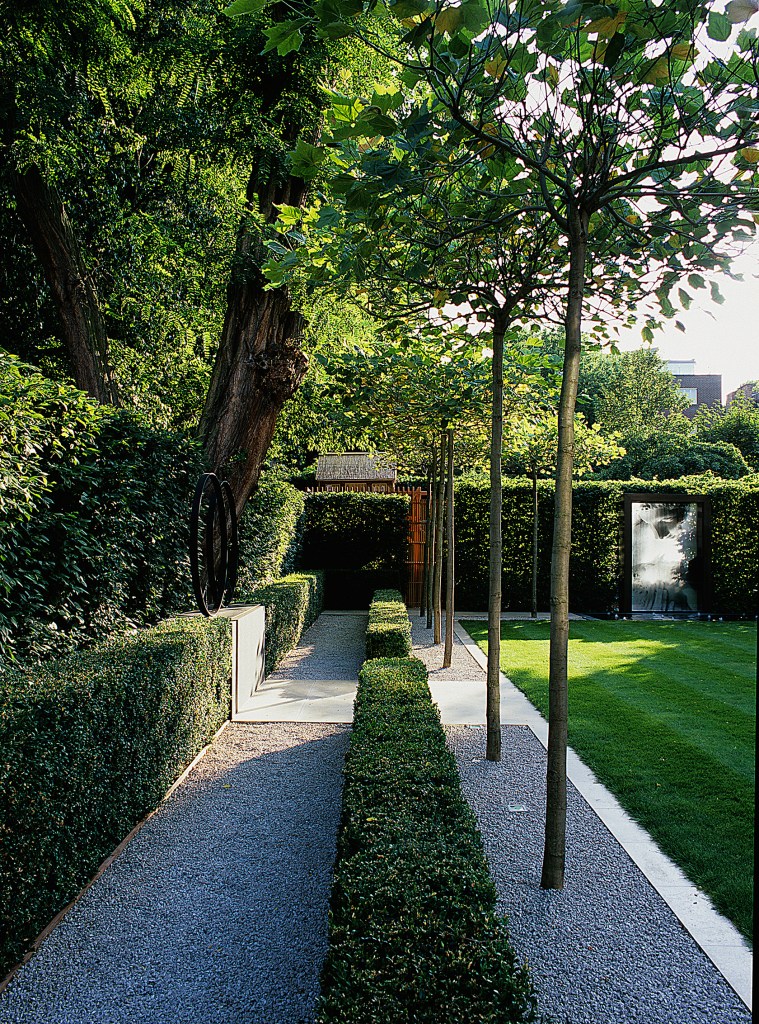
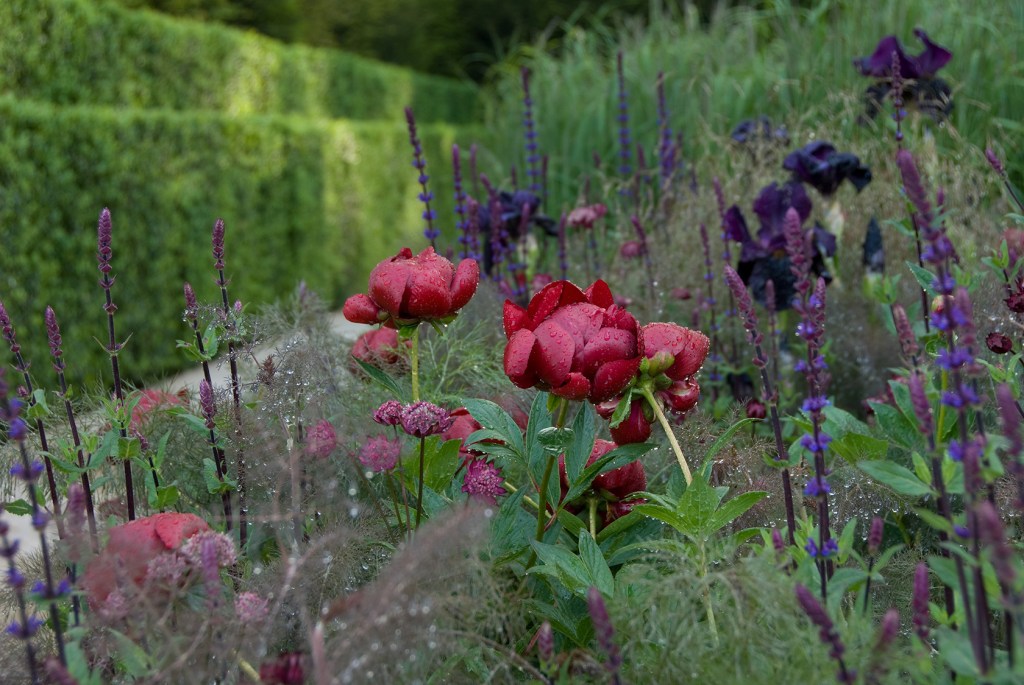
When the owners moved to a larger house in Addison Road, they employed him again to create something on a considerably larger scale which included the addition of sculpture for the first time and this was followed by a string of further city gardens for discerning (and suitably wealthy) clients. In 2009 he was invited to design a garden for the Chelsea Flower Show for the first time and, in deference to the show’s heritage, included a quite remarkable, richly planted flower border of blood-red paeonies, salvia and blackcurrant irises amidst his layers of hedging.
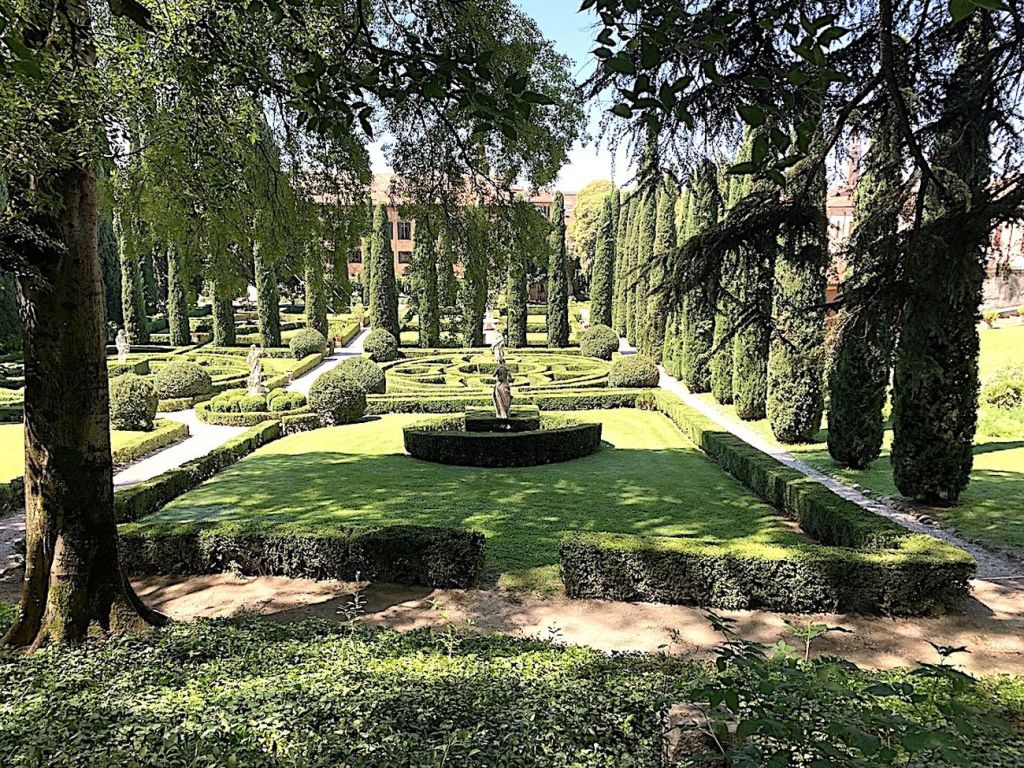
At first, his work seemed uniquely restrained but I soon began to understand that it drew deeply on the Italian tradition of landscaped gardens. The formal hedges, topiary, paving and gravel paths and the introduction of the sound and cooling effect of water were well established within the Renaissance gardens such as the Giardino Giusti in Verona or the rather grander Boboli Gardens of the Medici’s in Florence, but Giubbilei’s gardens, far from attempting to reproduce the originals merely draw imaginatively on their themes and ideas.
Following his early successes, Giubbilei’s skills are now in demand internationally and his more recent projects offer further examples of his approach in various new settings and environments such as his olive grove in Morocco underplanted with grasses and his recent roof garden in Barcelona. Merrell have published two beautiful books on his work – ‘The Gardens of Luciano Giubbilei’ and ‘The Art of Making Gardens’ – both of which I can strongly recommend.

If you’ve enjoyed this blog then please share or repost it and if don’t want to miss out on future blogs, please follow me at johngooldstewart.com.

